Contentsexpand_more
- Can You Eat After Getting Braces and When Can You Eat?
- What to Eat the First Week with Braces
- What Not to Eat with Braces
- How to Eat with Braces
- Comparison Matrix: Braces-Safe Foods vs. Prohibited Items
- Frequently Asked Questions (FAQ)
- Will I be restricted to liquid and soft foods for my entire braces treatment?
- Why is chewing gum strictly prohibited while wearing braces?
- What should I do if a bracket comes loose or a wire pokes while eating?
You have just left the orthodontic operatory, examined your new brackets in the mirror, and begun your journey toward an aligned smile. However, walking out of the clinic, your most pressing question is likely: "What can I actually eat?" Once brackets are bonded to enamel and ligated to flexible archwires, continuous biomechanical forces act upon the periodontal ligament. This force initiates cellular bone remodeling, accompanied by mild tenderness in the teeth and masticatory muscles during the initial days. Utilizing a well-structured braces-friendly food list protects your appliances from breakage while keeping mealtimes comfortable.
Many patients worry about not getting enough nutrition or accidentally breaking a bracket on a firm meal. With appropriate dietary adjustments and modified chewing habits, this adaptation phase can be managed smoothly.
Can You Eat After Getting Braces and When Can You Eat?
Addressing the immediate concerns of when can you eat after getting braces:
Orthodontic composite adhesives are cured instantly using high-intensity dental LED curing lights during the bonding visit. There is no need to wait hours for adhesives to dry. However, to allow oral soft tissues to adapt and avoid disturbing the initial bracket-wire engagement, you should wait approximately 1 to 2 hours after leaving the clinic before eating. Your initial meal should consist of lukewarm, smooth foods requiring minimal chewing.
What to Eat the First Week with Braces
During the first 3 to 7 days, as teeth initiate their physiological movement vectors, mild biting sensitivity is normal. Knowing what to eat after getting braces centers on nutritious, low-resistance foods:
Soups and Broths: Warm lentil, butternut squash, creamy tomato, and chicken noodle soups (avoid hard croutons).
Mashed Vegetables: Classic mashed potatoes, pureed sweet potatoes, carrots, and squash.
Dairy Products: Plain or Greek yogurt, smooth cottage cheese, kefir, and mild cheeses.
Soft Proteins: Scrambled eggs, tender shredded chicken, soft meatballs, flaked salmon, or tuna.
Grains and Pastas: Overcooked pasta, macaroni and cheese, soft risotto, oatmeal, and smooth hummus.
Fruits: Ripe bananas, avocados, applesauce, fruit purees, and blended smoothies.
Cool Desserts: Custard, pudding, and ice cream (cool temperatures help numb periapical soreness and ease archwire discomfort).
What Not to Eat with Braces
Loose or fractured brackets directly halt tooth movement, often adding weeks to total treatment time. To avoid appliance failure, adhere strictly to guidelines on what not to eat with braces:
Hard Nuts and Seeds: Almonds, walnuts, pistachios, cashews, and peanuts place heavy point forces on brackets.
Sticky and Chewy Confections: Chewing gum, caramel, taffy, licorice, gummy candies, and toffee wrap around wires and unseat bracket pads.
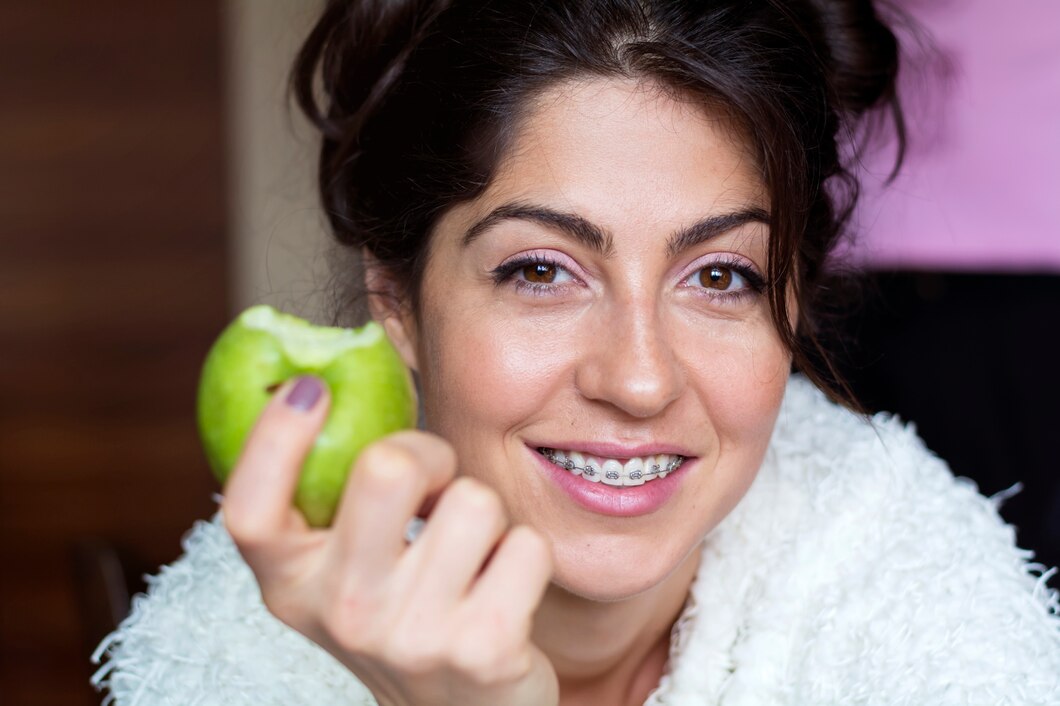
Foods Requiring Biting with Front Teeth: Whole apples, pears, raw carrots, corn on the cob, and firm stone fruits must never be bitten into directly; slice them into small wedges and chew with posterior molars.
Hard Breads and Crusts: Bagels, baguettes, firm pizza crusts, and pretzels.
Popcorn and Hard Chips: Popcorn kernels and corn chips can lodge beneath gingival margins, leading to acute gingival inflammation or painful abscesses.
Carbonated and Acidic Drinks: Colas, sparkling sodas, and energy drinks degrade adhesive resins and cause irreversible enamel decalcification (white spot lesions) around bracket borders.
How to Eat with Braces
Adapting to how to eat with braces involves practical technique adjustments:
Eliminate Anterior Tearing: Never bite directly into burritos, burgers, wraps, or thick sandwiches with your incisors. Cut food into bite-sized pieces and chew with posterior teeth.
Chew Slowly and Deliberately: Take smaller mouthfuls and chew evenly using both sides of your dental arch.
Use Cutlery Regularly: Cut fruits, slice meats, and remove firm outer crusts before eating.
Rinse Immediately After Meals: Swish vigorously with water after eating to dislodge trapped food particles before using your orthodontic toothbrush.
Comparison Matrix: Braces-Safe Foods vs. Prohibited Items
Food Category | Recommended (Safe to Eat) | Strictly Prohibited (Avoid Entirely) |
Fruits | Bananas, sliced soft peaches, applesauce | Whole apples, raw pears, unripe plums |
Vegetables | Steamed broccoli, mashed potatoes, squash | Raw carrots, celery sticks, hard pickles |
Snacks | Yogurt, pudding, soft sponge cake, smoothies | Chewing gum, popcorn, hard pretzels, chips |
Nuts & Seeds | Finely ground nuts blended in smoothies | Whole almonds, walnuts, roasted peanuts |
Breads & Grains | Soft sandwich bread, cooked pasta, pancakes | Hard bagels, crusty baguettes, pizza crusts |
Proteins | Scrambled eggs, tender meatballs, flaked fish | Beef jerky, tough steaks, bone-in ribs |
Frequently Asked Questions (FAQ)
Will I be restricted to liquid and soft foods for my entire braces treatment?
No. The strict soft-food diet is necessary primarily during the first week and for 24 to 48 hours following monthly adjustments. Once your teeth adapt and soreness subsides, you can enjoy a wide variety of foods. The ongoing rule is simply to avoid hard, sticky foods and to cut firmer items into bite-sized pieces rather than biting into them with your front teeth.
Why is chewing gum strictly prohibited while wearing braces?
Chewing gum adheres to bracket wings, wraps around delicate archwires, and stretches elastic ligatures. Repetitive chewing forces can bend wires out of shape or shear bracket pads off enamel surfaces. Furthermore, trapped sugary residues cannot be cleared with routine brushing, accelerating plaque buildup around brackets.
What should I do if a bracket comes loose or a wire pokes while eating?
If a bracket loosens or an archwire dislodges and irritates your cheek during a meal, stay calm. Dry the offending area with a tissue and press a small pea-sized piece of orthodontic relief wax over the sharp edge to protect your mucosa. Do not attempt to clip wires with household tools or glue brackets back on; contact your orthodontist to schedule an appointment for repair.