Contentsexpand_more
- What is a Deep Bite?
- What Causes a Deep Bite?
- Complications of an Untreated Deep Bite
- Deep Bite Treatment: Clinical Corrective Modalities
- 1. Clear Aligners for Deep Bite (Invisalign & Aligner Orthodontics)
- 2. Comprehensive Fixed Braces (Reverse Curve Archwires & Bite Turbos)
- 3. Skeletal Anchorage via Orthodontic Mini-Screws (TADs)
- 4. Orthognathic Surgery (Adult Skeletal Discrepancies)
- Deep Bite Before and After: Facial and Structural Transformations
- How Long Does Deep Bite Treatment Take?
- Factors Influencing Deep Bite Treatment Cost
- Comparison Matrix: Deep Bite vs. Open Bite vs. Crossbite
- Frequently Asked Questions (FAQ)
- Is deep bite correction purely cosmetic, or is it functionally necessary?
- Are clear aligners as effective as traditional metal braces for deep bites?
- What happens to teeth that were worn down by a deep bite once it is fixed?
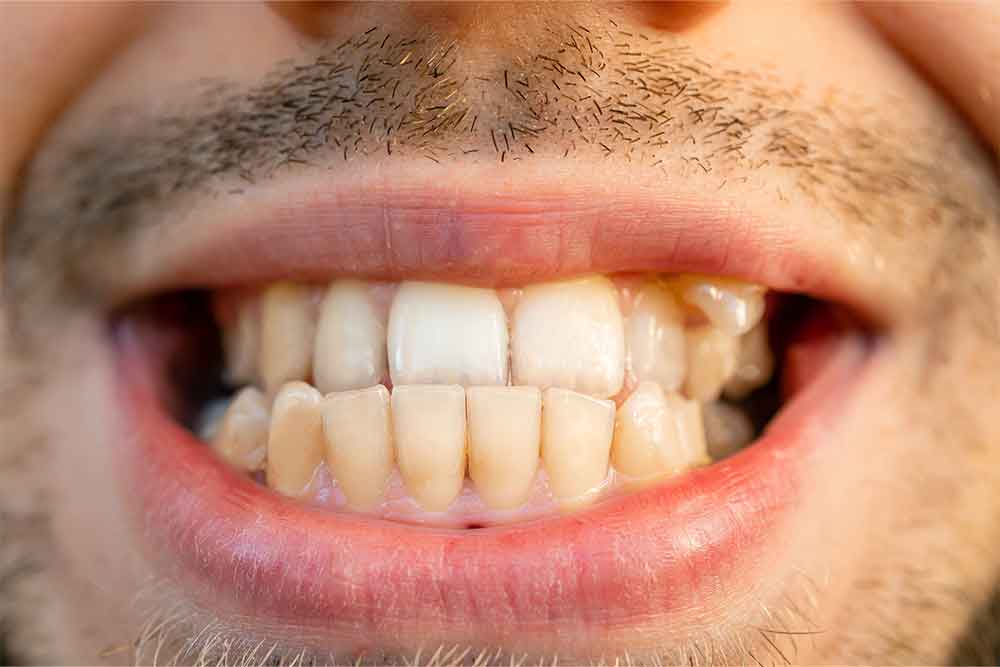
When closing your teeth together in front of a mirror and smiling, are your lower incisors clearly visible? Or do your upper front teeth completely drape over your lower dentition like a closed window shutter? If your lower teeth disappear from sight upon closing, or if their incisal edges dig directly into the palatal gum tissue behind your upper teeth, you are presenting with a vertical malocclusion clinically classified as a deep bite (also termed an excessive overbite). Many individuals overlook this presentation as a minor cosmetic attribute; however, an uncorrected deep bite forces the mandibular condyles backward into the temporomandibular joint (TMJ), wears down incisal enamel, and collapses lower facial height, causing premature facial aging.
In an ideal, physiological occlusion, maxillary incisors overlap mandibular incisors vertically by merely 2 to 3 millimeters (covering roughly one-third of the clinical crown height). When this vertical overlap exceeds 50%, or when lower incisors are concealed entirely, a pathological deep bite malocclusion is present.
What is a Deep Bite?
In clinical orthodontics, the medical definition of what is a deep bite is: A vertical malocclusion characterized by an excessive vertical overlap between the maxillary and mandibular anterior teeth exceeding the normal physiological range of 2 to 3 millimeters (or greater than 30% of mandibular incisor crown height), resulting in partial or total vertical concealment of the mandibular dentition.
Orthodontists differentiate deep bites across two primary structural presentations:
Dental Deep Bite: Craniofacial skeletal growth and basal bone relationships are normal; the discrepancy stems from localized over-eruption (extrusion) of anterior incisors or under-eruption (infraocclusion) of posterior molars.
Skeletal Deep Bite: Characterized by counter-clockwise mandibular rotational growth, hypodivergent skeletal patterns (short lower facial height), high bite forces, and hyperactive masticatory musculature.
What Causes a Deep Bite?
Diagnostic evaluations identify several primary factors underlying the development of a deep bite:
Genetic and Skeletal Craniofacial Heredity: Familial traits displaying retrognathic Class II mandibular patterns, horizontal growth tendencies, or short lower facial thirds.
Premature Loss of Posterior Molar Support: Early loss of primary or permanent molars eliminates posterior vertical occlusal stops, permitting the bite to collapse vertically.
Hyperactive Masticatory Muscles & Bruxism: Chronic clenching exerts immense intrusive forces on posterior molars, preventing full dental eruption while leaving anterior teeth to over-erupt.
Aberrant Perioral Muscular Forces: Hyperactive mentalis or orbicularis oris muscles drive lower incisors lingually, allowing upper teeth to tip downward unchecked.
Missing or Congenitally Absent Mandibular Teeth: Arch length discrepancies allow lower incisors to tip backward and over-erupt into the palatal vault.
Complications of an Untreated Deep Bite
Failing to correct an excessive vertical overlap introduces progressive biological consequences:
Aggressive Incisal Enamel Attrition: Lower incisors constantly grind against the palatal cingulum of upper incisors during speech and mastication, wearing away enamel and exposing sensitive yellow dentin.
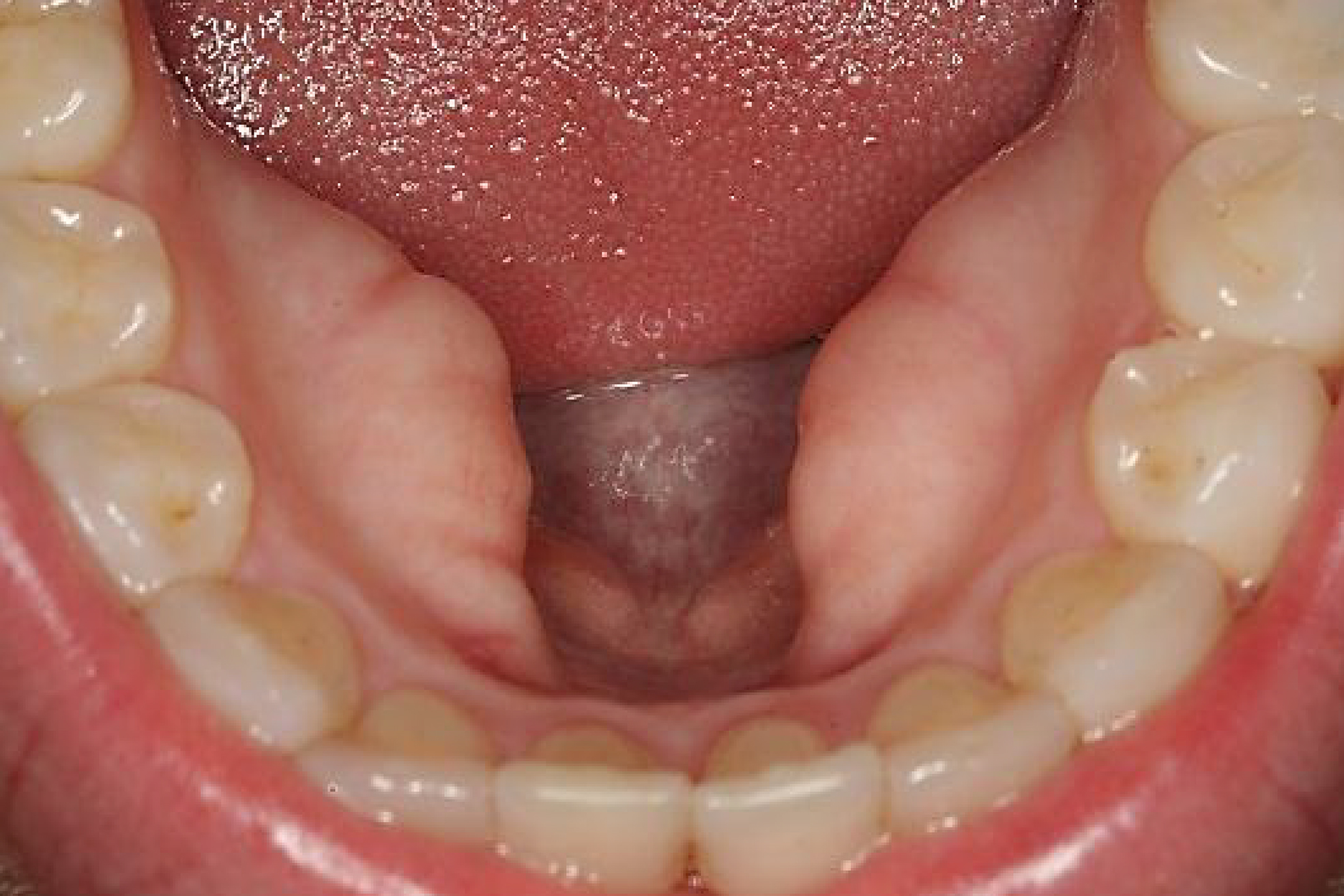
Traumatic Palatal Soft-Tissue Impingement: In severe "stripping" bites, lower incisal edges bite into palatal mucosal tissue, inducing chronic ulcerations, localized bleeding, and palatal bone loss.
Temporomandibular Joint (TMJ) Derangements: The distal entrapment of the mandible forces the condyle posterosuperiorly against the retrodiscal tissues, generating clicking sounds, articular disc displacement, and chronic headaches.
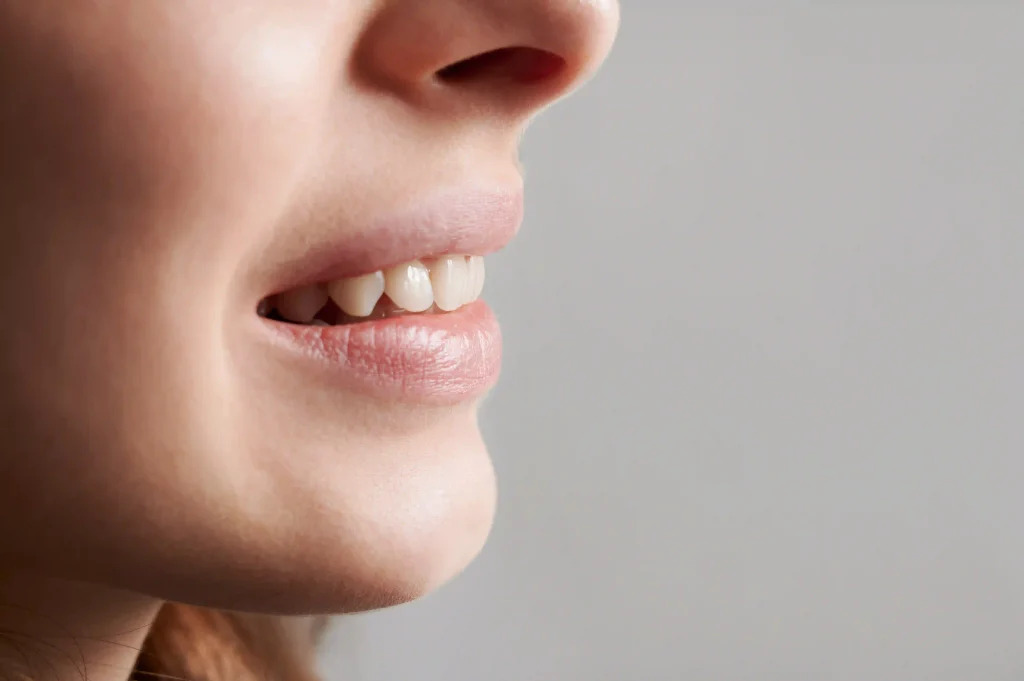
Premature Facial Aging & Lower Face Collapse: Reduced vertical dimension shortens the lower face, accentuates nasolabial folds, causes downturned lip corners, and produces an aged appearance.
Aesthetic Compromise: Smiling displays upper teeth while lower teeth remain hidden, with a receding lower lip posture.
Deep Bite Treatment: Clinical Corrective Modalities
At Livera Dental Clinic, deep bite treatment focuses on intruding over-erupted anterior teeth, extruding posterior molars, or modifying skeletal jaw architecture:
1. Clear Aligners for Deep Bite (Invisalign & Aligner Orthodontics)
Digital clear aligner therapy offers an aesthetic and comfortable approach for opening deep bites:
Precision-engineered "bite ramps" positioned on the lingual surfaces of upper aligners disocclude posterior teeth, removing interferences.
Aligners deliver predictable vertical intrusive vectors to lower and upper incisors while allowing leveling of the curve of Spee.
Removable for dining and oral hygiene, avoiding broken wires.
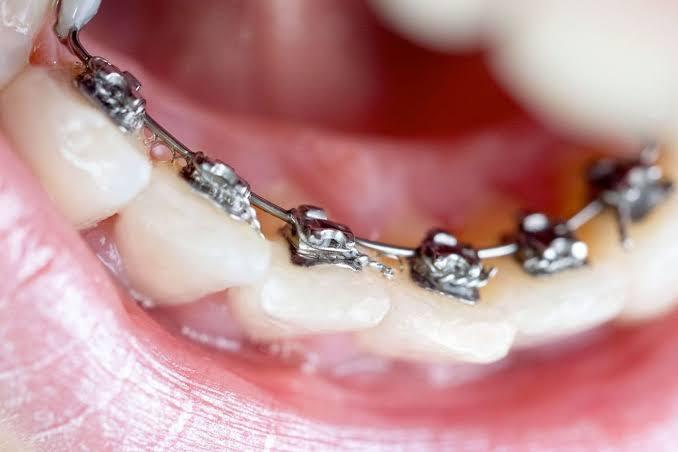
2. Comprehensive Fixed Braces (Reverse Curve Archwires & Bite Turbos)
Fixed bracket systems provide three-dimensional root control:
Continuous archwires with a "reverse curve of Spee" in the mandible and an exaggerated curve in the maxilla level the occlusal plane.
Temporary composite "bite turbos" placed on posterior or anterior teeth open the vertical dimension and prevent bracket shearing.
3. Skeletal Anchorage via Orthodontic Mini-Screws (TADs)
In severe adult cases, 1.5 mm temporary anchorage devices (TADs) placed between anterior roots provide direct skeletal anchor points for genuine vertical incisor intrusion.
4. Orthognathic Surgery (Adult Skeletal Discrepancies)
For mature adults with severe skeletal deficiencies, an oral and maxillofacial surgeon coordinates with the orthodontist to surgically advance or rotate the mandible, restoring vertical proportions.
Deep Bite Before and After: Facial and Structural Transformations
The changes observed during deep bite before and after treatment include:
Restoration of Lower Facial Height: The distance between the base of the nose and the chin increases, smoothing out facial folds and balancing facial proportions.
Enhanced Jawline Definition: Releasing the entrapped mandible allows it to position forward, improving the chin contour and profile.
Alleviation of TMJ Pain & Functional Strain: Removing posterior condylar compression relieves chronic jaw joint clicking, neck aches, and masticatory fatigue.
A Balanced Smile Line: Smiling reveals an aesthetic ratio of upper and lower incisors without gingival impingement.
How Long Does Deep Bite Treatment Take?
The timeline for how long deep bite treatment takes depends on anatomical complexity:
Mild-to-Moderate Dental Overbites: Managed with clear aligners or fixed braces within 12 to 18 months.
Severe Skeletal Overbites: Cases requiring skeletal mini-screws (TADs) or comprehensive curve leveling take 18 to 24 months.
Surgically Assisted Orthognathic Cases: Pre- and post-surgical orthodontics combined with jaw surgery typically spans 20 to 24 months.
Factors Influencing Deep Bite Treatment Cost
Health regulations restrict stating uniform treatment fees; deep bite treatment costs depend on case complexity. Primary determinants include:
Chosen Orthodontic Appliance System: Custom clear aligner packages, ceramic aesthetic brackets, or standard metal bracket appliances.
Dental vs. Skeletal Origin: Localized anterior intrusion versus comprehensive full-arch leveling requiring temporary skeletal anchorage devices (TADs) and bite turbos.
Post-Orthodontic Restorative Needs: Bonding or porcelain laminate veneers needed to reconstruct incisal edges worn down by years of friction.
Surgical Intervention Requirements: Hospital operating room, general anesthesia, and surgical fees associated with orthognathic corrective surgery in severe adult cases.
Comparison Matrix: Deep Bite vs. Open Bite vs. Crossbite
Clinical Criterion | Deep Bite (Overbite) | Open Bite | Crossbite |
Plane of Malocclusion | Excessive vertical overlap | Vertical gap / Lack of overlap | Transverse horizontal inversion |
Lower Incisor Visibility | Concealed behind upper teeth | Fully visible / Open vertical gap | Variable / Shifted midline |
Facial Impact | Short lower face, premature aging | Long lower face, open mouth posture | Facial asymmetry, chin deviation |
Incisal Trauma Risk | Severe enamel attrition & palatal ulceration | No incisal contact, molar wear | Gingival recession & enamel chipping |
Primary Corrective Vector | Incisor intrusion + Molar extrusion | Incisor extrusion + Molar intrusion | Transverse expansion + Cross-elastics |
Frequently Asked Questions (FAQ)
Is deep bite correction purely cosmetic, or is it functionally necessary?
Correcting a deep bite is a functional necessity. Left untreated, the continuous impact of lower teeth against the palatal surfaces of upper teeth wears away protective enamel, risks palatal soft-tissue ulceration, and places shear stresses on the temporomandibular joint, leading to chronic joint dysfunction. Correction protects the dentition and joint health.
Are clear aligners as effective as traditional metal braces for deep bites?
Yes. Modern clear aligners incorporate features such as integrated bite ramps and calibrated pressure zones that facilitate anterior intrusion and curve of Spee leveling. In many dental deep bite presentations, clear aligners offer efficient and comfortable correction without metal brackets.
What happens to teeth that were worn down by a deep bite once it is fixed?
Years of attrition often leave incisal margins chipped, thinned, and uneven. Once orthodontic therapy opens the bite and establishes clearance, restorative dentists use aesthetic composite bonding or porcelain laminate veneers to rebuild worn incisal edges, restoring anatomical length and aesthetics.