Contentsexpand_more
- What Is Root End Resection?
- When Is Root End Resection Needed?
- How Is Root End Resection Done?
- Is Root End Resection Painful?
- Recovery After Root End Resection
- Success Rate of Root End Resection
- Root End Resection or Extraction and Implant?
- Risks of Root End Resection
- Frequently Asked Questions
- Is the root canal redone after root end resection?
- When can I eat normally after root end resection?
- Will a tooth treated with root end resection last for life?
Have you had a root canal and still feel pain, swelling or see a small pimple on the gum that keeps coming back? In such cases the first idea is often to remove the tooth, yet in many situations the tooth can be saved. Root end resection is a small surgical procedure designed for exactly this moment, and its goal is to keep your natural tooth in place.
In this article we explain what root end resection is, when it becomes necessary, how it is performed and how healing usually progresses afterwards.
What Is Root End Resection?
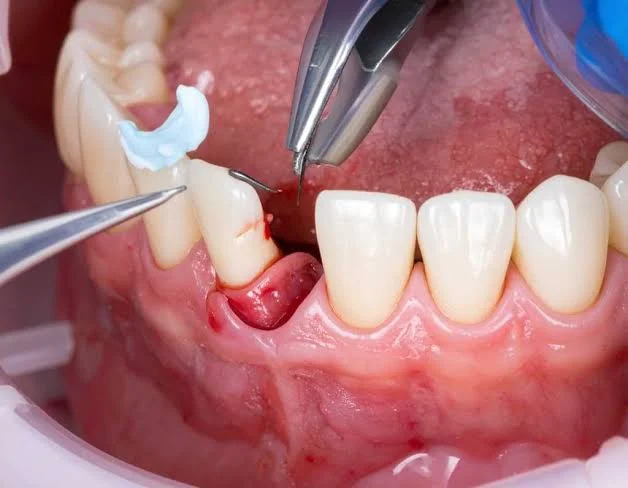
Root end resection is the surgical removal of the infected tissue at the tip of a tooth root together with the very end of the root itself. In dentistry it is also known as apical resection or apicoectomy. During the procedure the gum is opened through a small incision, the root tip is reached, the inflamed tissue is cleaned out and a few millimetres of the root end are cut away. The tip of the root canal is then sealed with a special filling material.
The aim is to remove the source of the infection directly. The tooth stays in the mouth, and its crown or filling is usually left as it is. For this reason the procedure is seen as a more conservative option than extracting the tooth and replacing it with an implant.
When Is Root End Resection Needed?
A root canal treatment solves the infection in most teeth. In some cases, however, the inflammation at the root tip does not heal or returns after some time. The cause is usually the complex shape of the root canal system. Very fine side canals, curved roots or a small gap at the end of the canal can be impossible to clean from the inside.
Dentists consider root end resection in situations such as these:
- A repeated root canal treatment has not reduced the cyst or inflammation at the root tip
- The tooth has a crown or post that would be damaged if it were removed to redo the canal
- The canal cannot be reached from above, for example because of a blocked section or a broken instrument fragment
- A fracture or crack at the root tip is suspected and needs to be seen directly
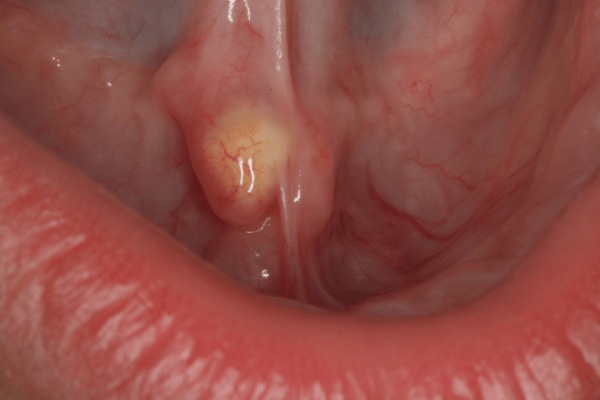
- Swelling, a gum boil or pain on pressure keeps returning after root canal treatment
How Is Root End Resection Done?
The procedure is usually carried out in the dental clinic under local anaesthesia. You stay awake, but the area is fully numb, so you do not feel pain. The duration depends on the position of the tooth and the number of roots, and in most cases it takes between 30 and 90 minutes.
The treatment generally follows these steps:
1. X rays and, when needed, a three dimensional scan are used to assess the lesion and the surrounding structures.
2. Local anaesthesia is given and the gum is lifted through a small incision.
3. A small window is made in the bone to reach the root tip.
4. The inflamed tissue is removed and about three millimetres of the root end are cut off.
5. The end of the root canal is prepared under a microscope or magnification and sealed with a special filling material.
6. The gum is repositioned and closed with small stitches.
The use of a surgical microscope has clearly improved the success of this treatment. With magnification the dentist can see fine side canals and cracks, keep the incision much smaller and place the filling more precisely.
Is Root End Resection Painful?
You should not feel pain during the procedure because of the local anaesthesia. You may notice only pressure and vibration. Once the anaesthetic wears off, mild to moderate pain and swelling for a few days are normal. Most people control these complaints easily with the pain relief recommended by the dentist.
A cold compress during the first two days helps reduce swelling. Light bruising of the cheek or lip can also occur. It disappears on its own and is a normal part of healing.
Recovery After Root End Resection
During the first days, take care of the surgical area and the stitches. Avoid touching the site with your tongue or fingers and stay away from hot drinks and hard foods on the day of surgery. The dentist usually recommends an antibacterial mouth rinse. The stitches are removed after two to seven days, depending on the type used.
The gum heals within a few weeks. The bone takes longer to fill the space around the root tip, and this usually completes within six to twelve months. Follow up X rays are used to watch the bone heal, which is why the success of the treatment is judged over time and not right after the procedure.
Success Rate of Root End Resection
With modern microsurgical technique, studies report success rates of about 85 to 95 percent. The main factors that influence the result are the health of the bone and gum around the tooth, how well the root canal was filled before, whether the tooth has a crack or fracture and the technique used by the dentist.
If the tooth has a vertical root fracture, the chance of success is very low. A careful assessment before treatment is therefore essential to decide which teeth can be saved.
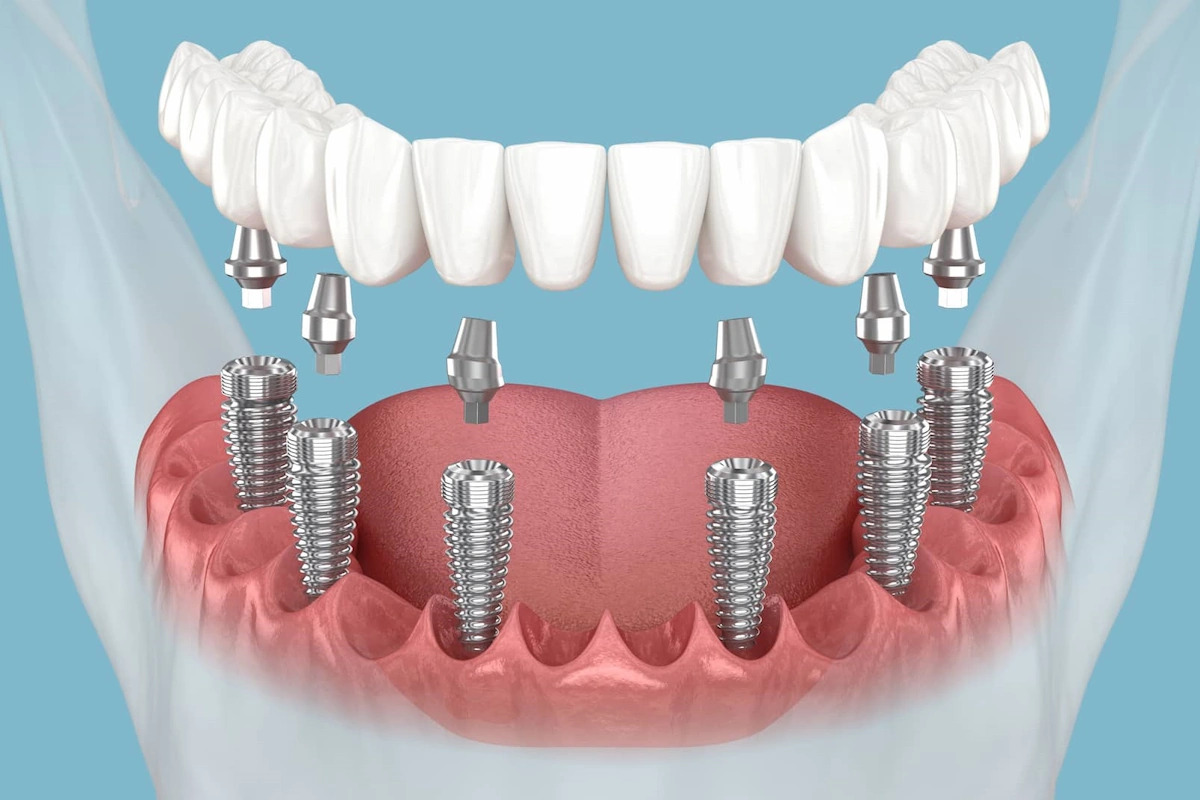
Root End Resection or Extraction and Implant?
The choice between these two options depends on the structure of the tooth and the patient's expectations. The table below summarises the main differences.
| Feature | Root end resection | Extraction and implant |
|---|---|---|
| Natural tooth kept | Yes | No |
| Treatment time | Short, usually one visit | Can take several months |
| Healing | A few days to a few weeks | Several months for bone integration |
| Suitable when | The tooth is sound and can be saved | The tooth is fractured, badly damaged or cannot be saved |
| Cost | Usually lower | Usually higher |
A natural tooth is often the best option. However, if there is a root fracture, advanced bone loss or a chronic infection that keeps returning, an implant may be a more predictable solution. The decision should be based on an examination by a specialist and on imaging findings.
Risks of Root End Resection
As with any surgery, root end resection carries some risks. These include infection, temporary numbness, gum recession and, rarely, a return of the infection. Lower teeth lie close to a nerve and upper back teeth lie close to the sinus, so your dentist pays special attention to these structures. Three dimensional imaging helps predict such risks in advance.
Contact your dentist without delay if you develop fever, increasing swelling, pain that keeps getting worse or a bad taste in the mouth after the procedure.
Frequently Asked Questions
Is the root canal redone after root end resection?
In most cases it is not, because root end resection seals the end of the canal surgically. If the existing canal filling is inadequate, however, the dentist may recommend repeating the root canal first and performing surgery afterwards if needed.
When can I eat normally after root end resection?
On the first day avoid hot and hard foods and choose soft, lukewarm food. Most people return to normal eating within a week. It is sensible to avoid chewing hard food on the treated side for a few more days.
Will a tooth treated with root end resection last for life?
After a successful procedure the tooth can stay in the mouth for many years, even for life. Regular oral hygiene, check ups and protection of the tooth from cracks or fractures are important. Follow up X rays are needed to confirm success.