Contentsexpand_more
- What Is All on 6?
- How Is All on 6 Done?
- Who Is All on 6 Suitable For?
- What Is the Difference Between All on 4 and All on 6?
- Advantages of All on 6 Implants
- Recovery and Aftercare
- What Are the Risks of All on 6?
- What Determines the Price of All on 6?
- Frequently Asked Questions
- Do All on 6 implants last a lifetime?
- Is All on 6 treatment painful?
- Can I get teeth on the same day with All on 6?
When you look in the mirror, do you see that most of your teeth are missing, or that the ones you have are too weak to last? Are you tired of a denture that slips, bothers you when you eat or makes you worry when you talk? For people who have lost or are about to lose a whole arch of teeth, All on 6 is a fixed solution that restores both chewing strength and the look of a smile.
In this article we explain what All on 6 is, how it is carried out step by step, who it suits, and what to expect during recovery.
What Is All on 6?
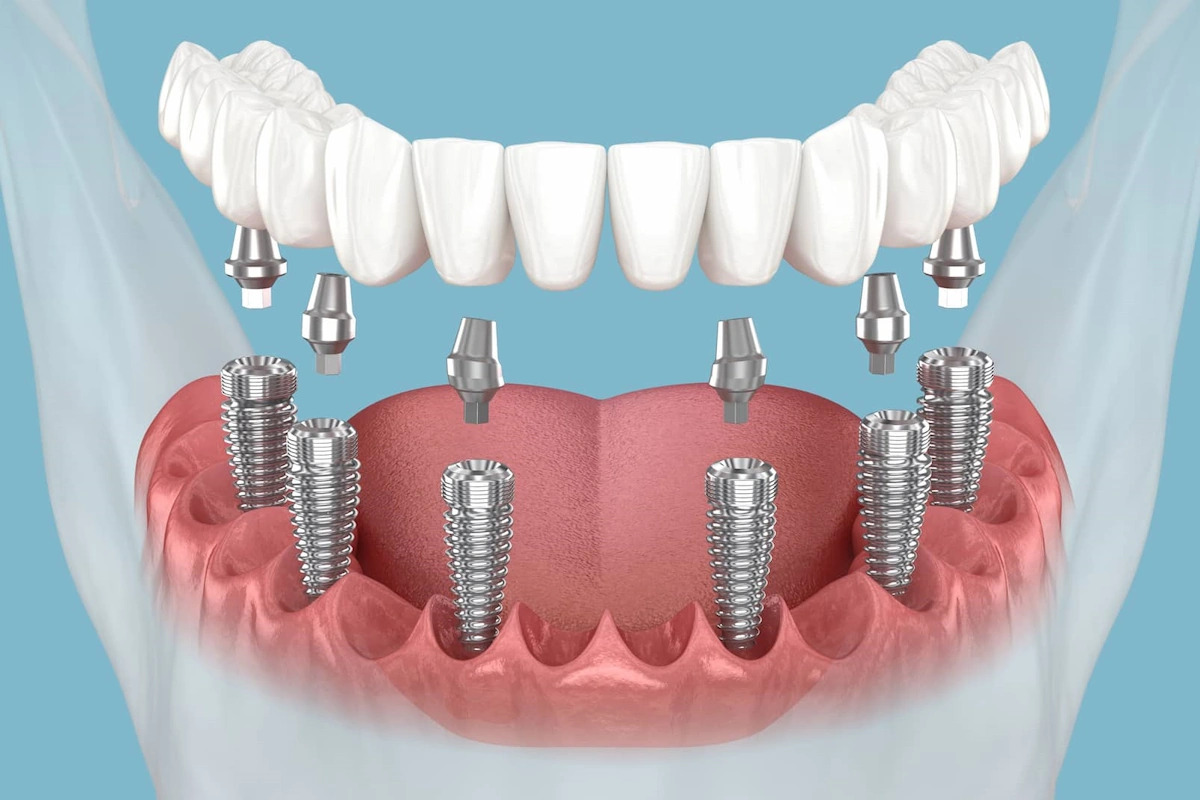
All on 6 is a treatment in which all the teeth of one jaw are replaced with a fixed bridge supported by only six implants. Instead of placing one implant for each tooth, six implants carry a full arch bridge, in one piece or in sections. This means fewer surgical steps and a complete set of fixed teeth.
The bridge is attached to the implants with screws and cannot be removed by the patient. It is brushed like natural teeth, does not move when you eat, and because it does not cover the palate it does not reduce your sense of taste. For this reason it is a popular choice for patients who are tired of the problems of removable dentures.
How Is All on 6 Done?
Treatment begins with a detailed examination and three dimensional imaging. The height and thickness of the jawbone and the position of nerves and sinuses are studied digitally, and the places for the implants are planned. This planning makes sure the implants go in at the right angle with enough bone support.
In the surgical stage, any unhealthy teeth still in the mouth are removed if necessary, and six implants are placed under local anaesthesia, with sedation if needed. If the bone is strong enough, a temporary fixed bridge can be fitted on the same day. This temporary bridge means the patient is never left without teeth while healing.
The implants take about three to six months to fuse with the bone. At the end of this period impressions are taken and the permanent bridge is made from durable materials such as zirconia or porcelain. After it is fitted, the bite, appearance and speech are checked, and fine adjustments are made if needed.
Who Is All on 6 Suitable For?
The method suits people who have lost most or all of the teeth in a jaw or are about to lose them. Patients who are unhappy with their dentures, whose dentures keep moving and who want fixed teeth are also good candidates. People who are losing teeth because of severe gum disease can be treated once the disease is under control.
There must be enough bone to hold the implants. If bone has been lost, supporting procedures such as bone grafting or a sinus lift may be needed. Uncontrolled diabetes, active gum disease, heavy smoking and some bone medicines can affect healing, so these are reviewed at the examination.
What Is the Difference Between All on 4 and All on 6?
The idea behind the two methods is the same, but the number of implants and the load carried by the bridge are different. The table below summarises the differences.
| Feature | All on 4 | All on 6 |
|---|---|---|
| Number of implants | Four | Six |
| Chewing load | Concentrated on fewer implants | Shared among six implants |
| Bone requirement | Can be reduced with angled implants | Needs more bone support |
| Bridge support | Short extension at the back | More balanced support |
| Suited to | Limited bone, quicker solution | Enough bone, balanced long term load |
The dentist decides which is suitable by looking at bone structure, jaw width and the patient's bite force. When bone is sufficient, six implants spread the load more widely and can offer an advantage in long term durability.
Advantages of All on 6 Implants
The clearest advantage of this method is that it is fixed. Because the teeth stay in place, patients eat, talk and smile with confidence. Having six implants share the load helps the bridge work in balance and keeps the bone stimulated by chewing forces.
Since a separate implant is not needed for every tooth, the surgery is shorter and the cost is easier to manage than placing an implant for each tooth. In suitable cases it is also possible to leave with temporary teeth on the same day. For patients this means finishing treatment without staying away from social life.
Recovery and Aftercare
In the first days swelling, mild pain and gum tenderness can occur. When the painkillers and antibiotics advised by the dentist are taken regularly, these usually ease clearly within a week. Eating soft food and avoiding hard and sticky food in the first weeks helps the implants fuse healthily.
Once the permanent bridge is fitted, oral hygiene is the most important topic. The area under the bridge should be cleaned daily with interdental brushes and a water flosser, and check ups should be kept every six months. If smoking continues, the risk of infection around the implants rises, so dentists advise patients to stay away from cigarettes.
What Are the Risks of All on 6?
As with any surgery there are risks such as infection, bleeding and the implant failing to fuse with the bone, but with correct planning these rates are low. If gum inflammation develops around an implant, it can usually be controlled with early treatment. Over time the bridge can wear or a screw can loosen, and these are corrected in a short check up visit.
For a good result an experienced team, digital planning and a quality implant brand matter. Before starting treatment, the risks, the alternatives and your expectations should be discussed openly with the dentist.
What Determines the Price of All on 6?
The price depends on the implant brand, the bridge material (acrylic, porcelain or zirconia), any extra bone procedures and the length of treatment. Zirconia bridges are stronger and more aesthetic, so they usually cost more. An exact price can only be given after the examination and imaging.
For patients who travel to another city or country for treatment, the travel plan matters too. Because several months lie between surgery, healing and the permanent bridge, planning the stages in advance makes it easier to manage both time and cost.
Frequently Asked Questions
Do All on 6 implants last a lifetime?
With correct care, implants can last many years and even a lifetime. The bridge can wear with chewing force over time and may need replacing. Regular check ups and good oral hygiene are the most important factors for lifespan.
Is All on 6 treatment painful?
Because the procedure is done under local anaesthesia or sedation, there is no pain during it. Mild pain and swelling can follow in the next days and are controlled with the medicines the dentist recommends.
Can I get teeth on the same day with All on 6?
If the bone is strong enough and the implants are firmly placed, a temporary bridge can be fitted on the same day. The permanent bridge is made after the implants have fused with the bone, usually three to six months later.