Contentsexpand_more
- What Is a Stitchless Implant?
- How Is a Stitchless Implant Done?
- What Are the Advantages of a Stitchless Implant?
- Stitchless Implant Compared With a Traditional Implant
- Who Is a Stitchless Implant Suitable For?
- Recovery After a Stitchless Implant
- Risks and Points to Watch With a Stitchless Implant
- What Does the Price of a Stitchless Implant Depend On?
- Care and Check Ups After a Stitchless Implant
- Frequently Asked Questions
- Are no stitches placed at all with a stitchless implant?
- Does a stitchless implant hurt?
- Can a stitchless implant be done for everyone?
Have you ever put off an implant because of words like surgery, stitches and swelling? For many people, the part of implant treatment that causes the most worry is the opening and closing of the gum and the discomfort that follows. A stitchless implant removes this step in suitable cases and can turn the treatment into a more comfortable and shorter process.
In this article we explain what a stitchless implant is, how it is done, who it can be used for and how it differs from the traditional method.
What Is a Stitchless Implant?
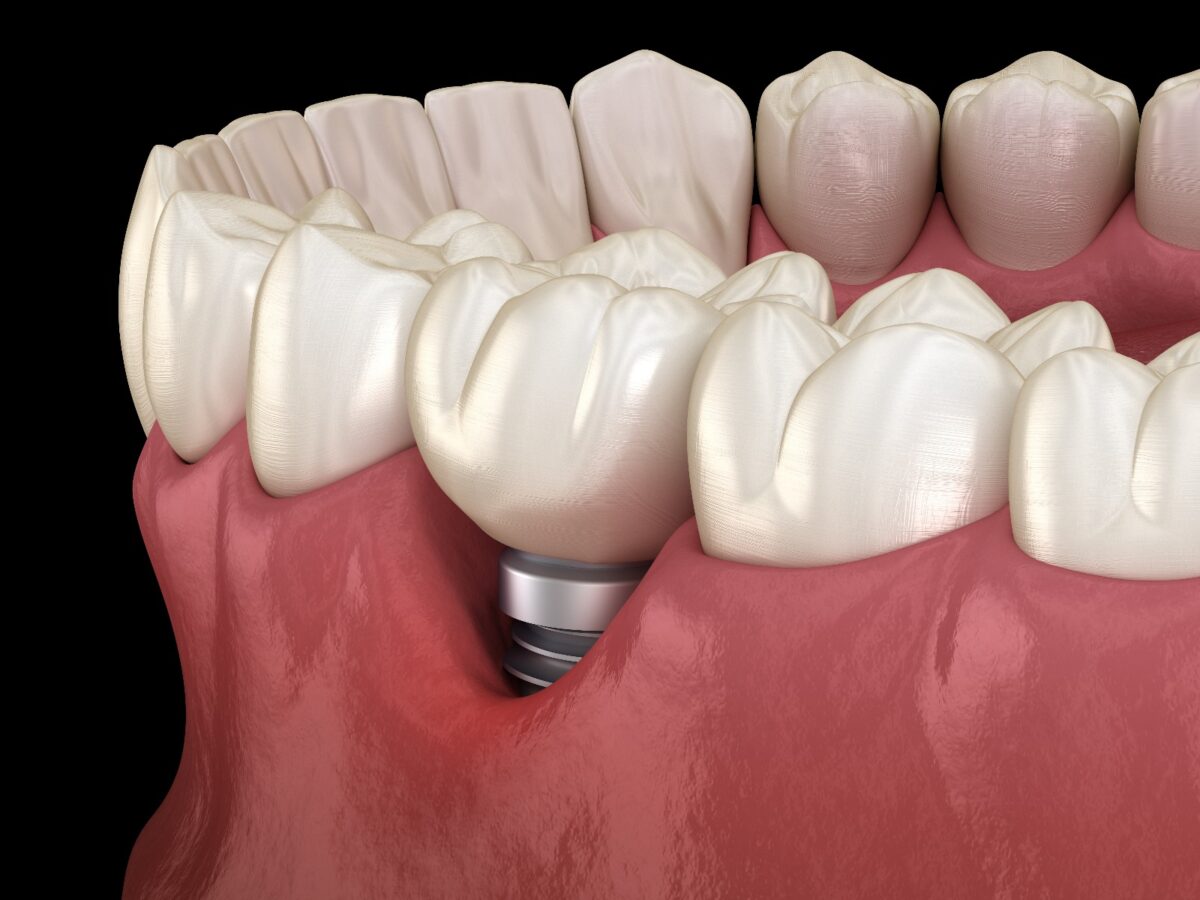
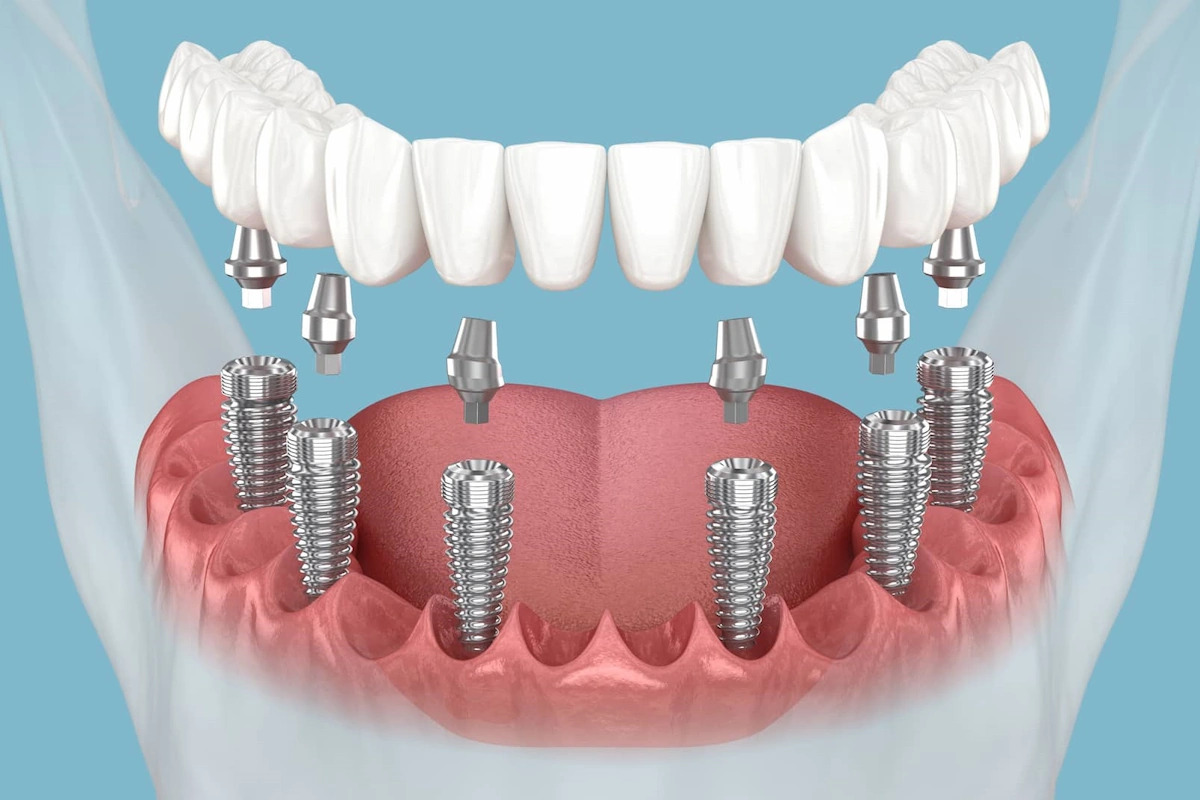
A stitchless implant is an implant placed through a small opening, without surgically opening the gum. In the literature it is also called flapless implant surgery or minimally invasive implant placement. In the traditional method the gum is cut and lifted, and after the implant is placed it is repositioned and closed with stitches. In the stitchless method only a round opening the size of the implant is made in the gum at the point where the implant will sit.
Because the gum is preserved in this way, bleeding is reduced, the blood supply to the tissues covering the bone is not disturbed and the surgical area stays small. After the implant is placed the gum usually adapts around it on its own, so stitches are not needed. The method takes its name from this feature.
How Is a Stitchless Implant Done?
Treatment starts with planning before the procedure. In the stitchless method the dentist cannot see the bone directly, so the position of the implant has to be worked out in detail beforehand. For this reason three dimensional tomography and digital planning are an essential part of the method.
The procedure usually follows this order:
1. An oral examination is done, and tomography is used to measure the width and height of the bone and its distance from structures such as nerves and sinuses.
2. The position and angle of the implant are planned digitally, and if needed a surgical guide is prepared from this plan.
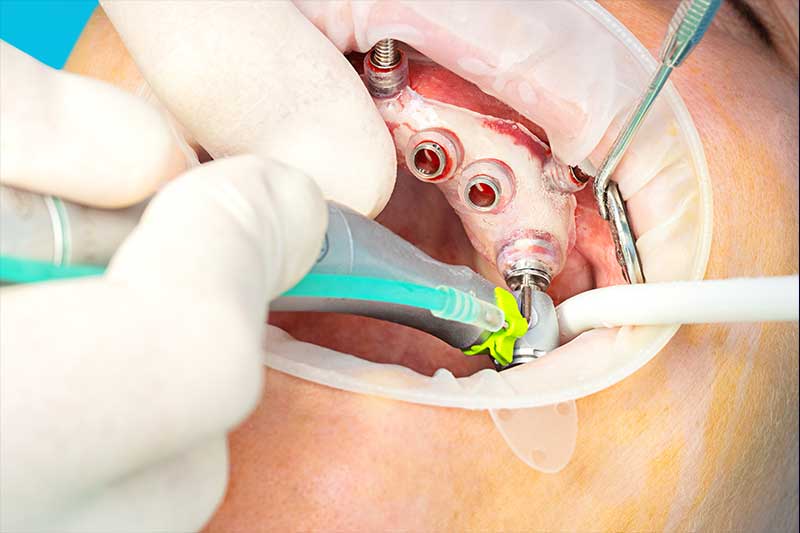
3. Local anaesthesia is given, and you feel no pain during the procedure.
4. A small circular opening is made in the gum, and the gum is not cut and lifted.
5. The implant bed is prepared in the bone and the implant is placed.
6. A cover screw or healing cap is attached on top of the implant, and no stitches are needed.
Placing a single implant often takes twenty to thirty minutes. A control X-ray confirms that the implant is in the correct position, and the dentist gives you written instructions for the healing period.
What Are the Advantages of a Stitchless Implant?
The clearest benefit of the method is that healing is usually more comfortable. Because the gum is not lifted, swelling, pain and bruising after the operation are milder in most patients. Bleeding is low, so the procedure can be shorter and returning to normal life in the first days is easier.
The second important benefit is the preservation of tissue. Because the blood supply to the gum and the bone covering is not disturbed, the surrounding tissues are better protected. Since no stitches are placed, there is also no appointment to remove them, and the gum line tends to stay more natural. These points make treatment more acceptable for patients who are afraid of the dentist or reluctant about surgery.
Stitchless Implant Compared With a Traditional Implant
The table below compares the two methods on the main points. Which one is suitable is decided after the examination.
| Feature | Stitchless implant | Traditional implant |
|---|---|---|
| Gum | Not opened, a small opening is made | Cut and lifted |
| Stitches | Usually not needed | Needed |
| Procedure time | Usually shorter | Can be longer |
| Swelling and pain | Often milder | Can be more noticeable |
| Planning | Tomography and digital plan essential | Tomography recommended |
| Suitable cases | Those with enough bone and gum | A wide range of cases |
The stitchless method is not an advantage for every patient. In cases where the bone has to be seen, a shape problem needs to be corrected or a bone graft will be done, the traditional method is safer.
Who Is a Stitchless Implant Suitable For?
The method is mostly preferred in patients who have enough bone width and height and healthy gum tissue of sufficient thickness. Results are generally good for a single missing tooth or in areas where the bone is well preserved. It is suitable when the tomography clearly shows the area where the implant will sit and there is a safe distance from the nearby nerve or sinus.
Some situations limit the method. If the bone volume is insufficient, if a bone graft or sinus lift is needed, if there is an active infection or if the gum tissue is very thin, the dentist may prefer to open the gum and work in the traditional way. Uncontrolled diabetes, heavy smoking and some systemic diseases also affect healing, so your general health is taken into account in the assessment.
Recovery After a Stitchless Implant
Mild tenderness and a little bleeding on the first day are normal. Swelling usually peaks on the first or second day and then goes down over the following days, and with the stitchless method it is mostly milder. Taking the painkillers and, if needed, the antibiotic recommended by your dentist regularly supports healing.
In the first days, choose cold and soft food, avoid hard food on the treated area and avoid smoking or at least do not smoke in the days after the procedure. Continue your oral care, but on the first day use the mouthwash your dentist gives you instead of brushing the area. The implant usually takes three to six months to fuse with the bone, and this period changes with the quality of the bone.
Risks and Points to Watch With a Stitchless Implant
As with every surgical procedure, a stitchless implant has risks. The most important point is that the bone is not seen directly. If the plan is wrong, the implant can come out of the bone, perforate a thin bone wall or approach neighbouring structures. For this reason the method should be used together with an experienced dentist and good tomography.
Infection, failure of the implant to fuse and gum recession can occur with this method as with the traditional one. Attending regular check ups, keeping up oral care and reporting complaints early reduces the risk. A procedure being stitchless does not mean that it is simple or free of risk.
What Does the Price of a Stitchless Implant Depend On?
The cost of a stitchless implant does not depend on one fixed figure. The number of implants, the brand and system chosen, the use of digital planning and a surgical guide, the material of the crown that will be placed on top and whether extra procedures are needed all determine the price. Even the same method may need a different plan from one patient to another.
For accurate information it is best to ask for a written treatment plan after the examination and tomography. This plan lets you see in advance which stages are included in the price and what extra procedures might be required.
Care and Check Ups After a Stitchless Implant
The long life of an implant depends on the care afterwards as much as on the surgery itself. Brushing twice a day, using floss or interdental brushes and attending check ups at regular intervals are the basic steps. Redness, bleeding or a bad smell around the gum are early warning signs and should be reported to the dentist without waiting.
Smoking, uncontrolled diabetes and teeth grinding are factors that put strain on the tissues around the implant. If you grind at night, your dentist may suggest a protective guard. At Livera Clinic we start implant treatment with an examination, tomography and digital planning, and we decide on the suitable method together with you.
Frequently Asked Questions
Are no stitches placed at all with a stitchless implant?
In suitable cases they usually are not, because the gum is not opened and the implant is placed through a small opening. If the dentist considers it necessary during the procedure, a small stitch can still be added.
Does a stitchless implant hurt?
The procedure is done under local anaesthesia, so you feel no pain. Mild tenderness may follow in the next days, and most patients describe it as milder than with the traditional method.
Can a stitchless implant be done for everyone?
No. Enough bone and healthy gum are needed, and the examination and tomography show this. When a bone graft or a gum correction is required, the traditional method is preferred.