Contentsexpand_more
- When Should a Toothbrush Be Replaced?
- How Often Should You Change Your Toothbrush?
- What Happens When Toothbrush Bristles Splay Outward?
- Replacing Toothbrush After Illness: Is It Mandatory?
- When Should an Electric Toothbrush Head Be Replaced?
- Hazards of Using a Worn-Out Toothbrush
- Best Practices for Toothbrush Storage and Care
- Comparison Matrix: Fresh Toothbrush vs. Expired Worn Toothbrush
- Frequently Asked Questions (FAQ)
- Can I disinfect my toothbrush in the microwave, dishwasher, or boiling water to keep using it?
- Why do my toothbrush bristles splay outward in less than a month?
- Can unopened toothbrushes expire if kept in a bathroom cabinet?
Standing before the mirror during your morning or evening hygiene ritual, when was the last time you critically inspected the brush in your hand? Are the bristles splayed outward like a broom, faded in color, or resting damply in a dark cup for months? Many individuals delay replacing a toothbrush until its filaments fall out or the handle fractures. In households worldwide, it is common to encounter brushes used continuously for six months to a year. Yet in clinical microbiology and preventive oral care, when should a toothbrush be replaced is not an aesthetic question; it is an infection-control protocol preventing chronic bacterial re-inoculation and mechanical soft-tissue trauma.
The human oral cavity hosts a complex microbiome. Every time you brush, millions of exfoliated epithelial cells, food particles, and plaque bacteria adhere between individual nylon filaments. In humid bathroom environments, these retained pathogens multiply. Simultaneously, cyclic flexural stress degrades the rounded plastic tips of synthetic bristles, transforming an efficient hygiene tool into an abrasive surface that lacerates delicate sulcular tissues.
When Should a Toothbrush Be Replaced?
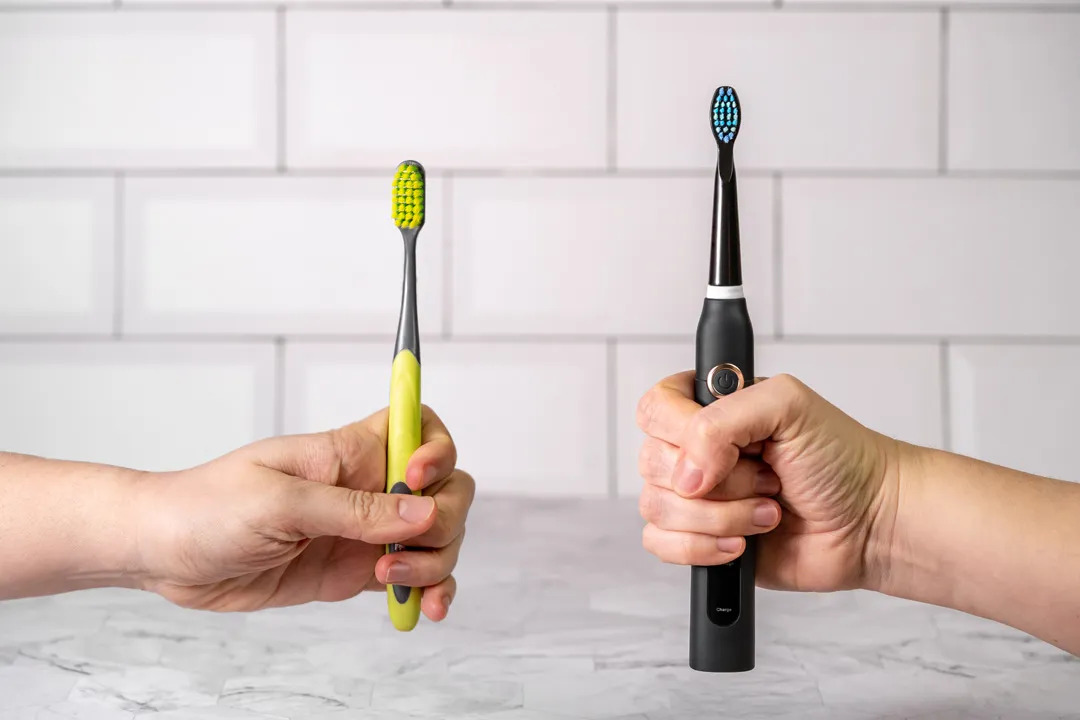
In clinical periodontology, the standard answer to when should a toothbrush be replaced is clear: guidelines from the American Dental Association (ADA) and FDI World Dental Federation mandate that manual toothbrushes and detachable electric heads must be replaced every 3 months (90 days) or sooner if visible bristle splay occurs.
The biological and material rationales for this 3-month window include:
Filament Elastic Fatigue: Toothbrush bristles undergo friction, moisture exposure, and paste abrasives twice daily. After roughly 180 to 200 brushing sessions, nylon filaments lose elasticity and cannot spring back into position.
Bacterial Biofilm Colonization: Despite rinsing, environmental moisture allows opportunistic pathogens, including Streptococcus mutans, Pseudomonas, and Candida, to build resistant biofilms around filament anchor plates.
Loss of End-Rounding Safety: During manufacturing, nylon bristle tips are rounded using optical lasers to protect soft tissue. Mechanical abrasion wears these ends into sharp, ragged edges.
How Often Should You Change Your Toothbrush?
Because individual oral environments and brushing forces vary, the timeline for how often should you change your toothbrush accelerates under several conditions:
Routine Healthy Adults: Even without obvious mechanical wear, the maximum duration is 3 months.
Heavy Scrubbers (4 to 6 Weeks): Individuals using excessive manual force splay bristles outward within weeks. Splayed filaments indicate loss of structural integrity; the brush must be replaced immediately.
Fixed Orthodontic Appliances (1 to 2 Months): Metal and ceramic brackets create abrasive resistance against bristles, accelerating mechanical wear.
Active Periodontal Disease (4 to 6 Weeks): Patients with bleeding periodontal pockets harbor high concentrations of anaerobic pathogens. Clinicians recommend monthly brush replacement during active periodontal treatment to minimize bacterial loads.
What Happens When Toothbrush Bristles Splay Outward?
Using a toothbrush with flared, deformed bristles introduces two distinct oral health risks:
Ineffective Plaque Debridement: Upright, parallel bristles are engineered to contact the enamel perpendicular to the tooth surface, flicking away sticky dental plaque. When bristles splay outward, their flat sides slide across the enamel instead of the tips. This compromises plaque removal, accelerating calculus deposition and cervical decay.
Mechanical Gingival Abrasion: Splayed bristles strike the marginal gingiva at irregular angles. Repeated scrubbing creates micro-lacerations along the epithelial attachment, contributing to gingival recession and exposed, sensitive root dentin.
Replacing Toothbrush After Illness: Is It Mandatory?
A critical question in home infection control: Yes, toothbrushes must be replaced immediately following recovery from contagious systemic infections.
The clinical rationale includes:
Microbial Reservoir on Wet Filaments: Pathogens responsible for influenza, streptococcal pharyngitis, acute tonsillitis, COVID-19, and oral herpes (HSV-1) adhere to bristle tufts in high concentrations.
Risk of Auto-Reinfection: Although your immune system produces antibodies during recovery, re-introducing high viral or bacterial loads from a contaminated brush can prolong symptoms or trigger secondary mucosal complications during post-illness fatigue.
Oral Candidiasis (Thrush) and Aphthous Outbreaks: If you experience active oral fungal infections or extensive aphthous stomatitis, discard the toothbrush the day medical therapy concludes.
When Should an Electric Toothbrush Head Be Replaced?
Follows the Same 3-Month Window: The mechanical motor handle lasts for years, but detachable brush heads must be replaced every 3 months.
Higher Mechanical Strain: Electric and sonic units produce thousands of high-velocity micro-oscillations per minute. As a result, individual filaments experience greater flexural strain than those in manual brushes.
Wear Indicator Bristles: Modern electric brush heads feature dye-treated indicator filaments (often blue or green). When the color fades halfway down the shaft, the mechanical cleaning capacity is spent, signaling that a replacement head is required.
Hazards of Using a Worn-Out Toothbrush
Retaining an expired toothbrush leads to several predictable clinical complications:
Interproximal Carious Lesions: Splayed filaments cannot flex into the narrow embrasure spaces between teeth, allowing acidogenic bacteria to demineralize contact points.
Chronic Gingival Inflammation: Incomplete plaque removal along the cervical margin allows subgingival calculus to form, driving persistent marginal gingivitis and bleeding.
Enamel Surface Scratches: Jagged, fractured bristle ends act like fine sandpaper, dulling natural enamel luster and creating microscopic retention grooves for dietary stains.
Persistent Oral Malodor (Halitosis): A contaminated brush head harbors putrefactive anaerobic bacteria that are reintroduced across the oral cavity during brushing.
Best Practices for Toothbrush Storage and Care
To maintain hygiene throughout your brush's 3-month lifespan, follow these evidence-based practices:
Rinse Thoroughly Under Running Water: After brushing, rinse the brush head under tap water while spreading the bristles with your thumb to dislodge trapped dentifrice and debris.
Store Upright in Open Air: Position the brush vertically in a holder, allowing moisture to drain and filaments to dry completely between uses. Desiccation inhibits bacterial proliferation.
Avoid Sealed Travel Caps at Home: Snap-on travel caps trap humidity, creating an incubator effect for fungal and bacterial growth. Use caps solely during transit and remove them at your destination.
Prevent Cross-Contact Between Brushes: Ensure brush heads stored in shared holders do not touch one another, preventing the cross-transmission of respiratory pathogens between family members.
Maintain Distance from the Toilet: Aerosol plumes generated by flushing toilets can settle on exposed surfaces up to six feet away. Keep toothbrushes away from the toilet basin, store them in a closed medicine cabinet, and keep the toilet lid down when flushing.
Comparison Matrix: Fresh Toothbrush vs. Expired Worn Toothbrush
Parameter | Fresh Toothbrush (0 to 3 Months) | Expired Toothbrush (3+ Months or Splayed) |
Filament Alignment | Upright, parallel, uniform tufts | Splayed, bent, irregular arrangement |
Tip Morphology | Laser-rounded, polished micro-ends | Fractured, jagged, sharp edges |
Plaque Disruption | Optimal removal across tooth surfaces | Compromised; up to 50% plaque left behind |
Sulcular Safety | Massages gingiva without laceration | Scratches sulcus, risks gum recession |
Pathogen Colonization | Minimal; easily dried between uses | Hosts dense microbial biofilms |
Enamel Preservation | Polishes enamel safely | Produces micro-scratches on enamel |
Frequently Asked Questions (FAQ)
Can I disinfect my toothbrush in the microwave, dishwasher, or boiling water to keep using it?
No. Toothbrush filaments are made of heat-sensitive synthetic polymers. Exposing your brush to boiling water, microwave radiation, or dishwasher heating cycles melts, warps, and embrittles the nylon fibers. While heat may reduce bacterial loads, it alters bristle geometry, turning the brush into an abrasive tool that can scratch enamel. Discard and replace an old brush rather than attempting thermal sterilization.
Why do my toothbrush bristles splay outward in less than a month?
Rapid bristle flaring indicates excessive brushing pressure. Brushing requires gentle, sweeping motions, not forceful scrubbing. Excessive force does not improve cleaning; it accelerates bristle breakdown, abrades enamel, and causes gingival recession. If your bristles splay within weeks, replace the brush immediately and reduce your brushing pressure.
Can unopened toothbrushes expire if kept in a bathroom cabinet?
Unopened manual toothbrushes stored in sealed packaging do not have an expiration date. As long as they are stored in a dry, cool space out of direct sunlight, the plastic polymers remain stable for years. However, once the package is opened and the brush is exposed to moisture, the 3-month replacement clock begins.