Contentsexpand_more
- What Is a Front Teeth Implant and Why Does It Require a Special Approach?
- How Is a Front Teeth Implant Placed? Step-by-Step Treatment Stages
- Will You Be Left Toothless During the Front Teeth Implant Process?
- Structure Material Selection for Aesthetic Success: Zirconia vs. Porcelain?
- What Factors Determine 2026 Front Teeth Implant Prices?
- FAQ: Frequently Asked Questions
- Will I be left toothless while getting a front teeth implant?
- How long does front teeth implant treatment take?
- Is pain felt while getting an implant in the front tooth?
- Does a front teeth implant look like a natural tooth?
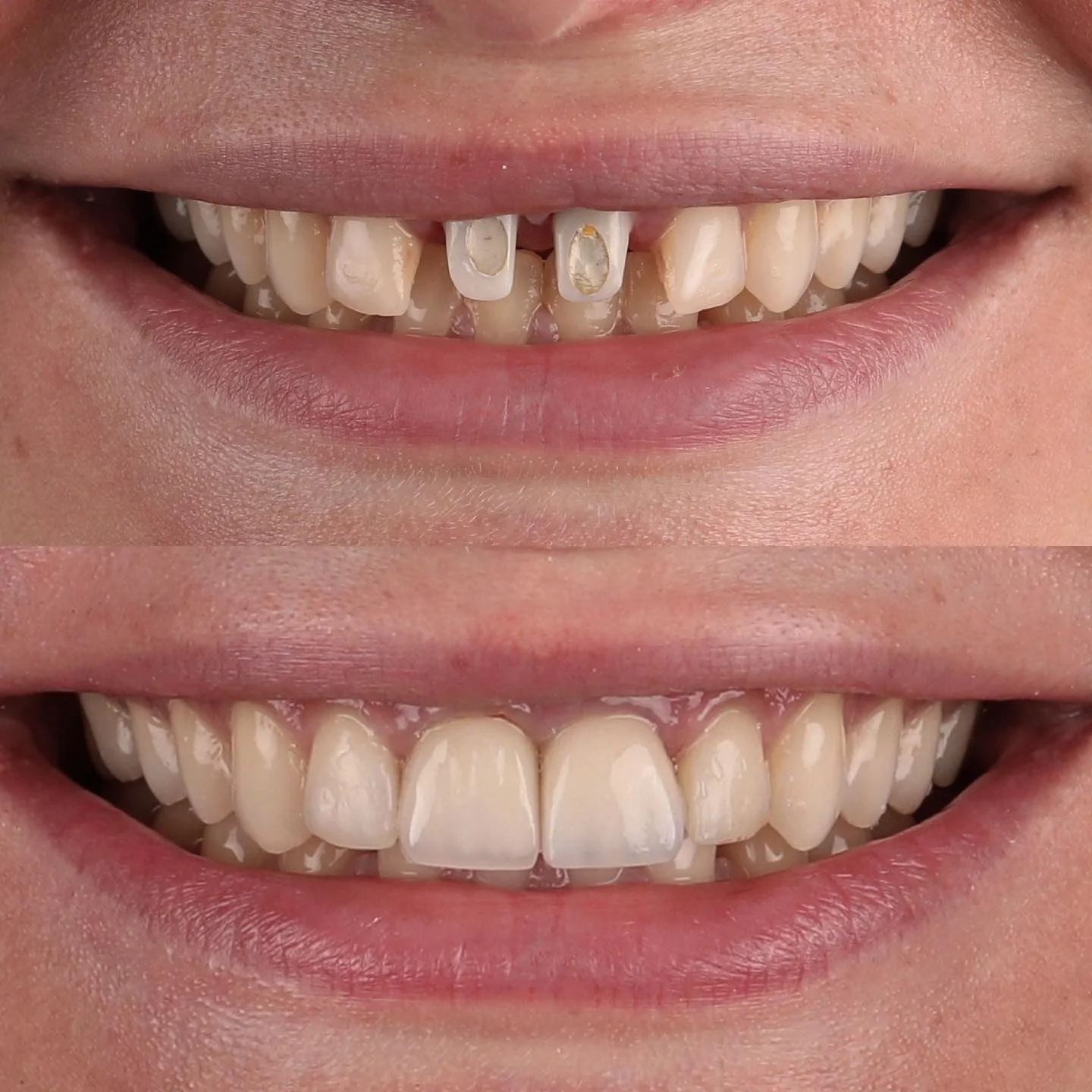
One of the most fundamental pillars of facial aesthetics and personal self-confidence is undoubtedly having a flawless and balanced smile. The front teeth, which are the direct focal point during speaking, laughing, or communicating, can unfortunately be lost due to trauma, deep cavities, or advanced gum diseases. Developed against such situations, a front teeth implant application can restore lost function while offering permanent visual solutions fully compatible with facial anatomy.
During this process, patients may carry social anxieties and the fear of "Am I going to carry an artificial-looking tooth?". Thanks to developing 3D intraoral scanners and bio-functional materials, the surgical process can be planned with millimetric accuracy. With a proper treatment protocol, it is entirely possible to protect the surrounding tissues and bone integrity to achieve results indistinguishable from your natural teeth.
What Is a Front Teeth Implant and Why Does It Require a Special Approach?
In a general definition, a front teeth implant is the process of placing artificial roots produced from titanium into the jawbone to replace missing teeth in the front zone. However, this region structurally features a much thinner and more sensitive anatomy compared to the posterior jawbone where the molars are located. Since the vertical bone support of the front teeth is narrow, the angle and position of the placed screw can directly affect lip support.
Many patients ask whether an implant can be placed in the front teeth or if this process is safe. Of course, a front teeth implant can be successfully applied; however, this area requires a high level of "pink aesthetics," meaning gum harmony. If one only focuses on the white part of the tooth and the gum is not shaped in its natural form, an artificial and asymmetrical appearance may emerge. Therefore, anterior region studies must be conducted with the dentist's aesthetic vision and millimetric bone analysis.
How Is a Front Teeth Implant Placed? Step-by-Step Treatment Stages
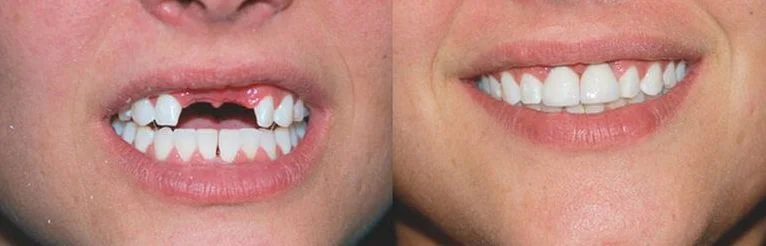
The stages of a front teeth implant progress according to a specific schedule. Each step of the process is controlled with digital systems.
First, the density and millimetric volume of the jawbone are examined with the help of three-dimensional computed tomography. If the bone thickness is insufficient, the foundation is strengthened by placing a bone graft (bone powder) into that area. In the surgical stage performed under local anesthesia, the titanium screw is anchored into the jawbone.
So, how long does the process take after the operation? For the screw to biologically integrate with the bone (osseointegration), an average waiting period of 3 to 4 months is required in the upper jaw. Following this waiting timeframe, rehearsals that will shape the permanent gum line begin, and the final aesthetic crown is fixed onto the screw, completing the entire front teeth implant production.
Another dimension of how a front teeth implant is done involves multiple tooth losses. If several teeth next to each other are lost, instead of placing a separate screw for each tooth, a 4-front teeth implant bridge can be planned, placing four teeth over two screws. With the same precise approach, front lower teeth implant surgery can also be safely applied with custom-sized micro-screws for narrow spaces in the lower jaw.
Will You Be Left Toothless During the Front Teeth Implant Process?
The biggest nightmare for patients with missing teeth in the front region is walking around toothless during the months-long osteointegration period and having to hide their mouth while speaking. However, modern dentistry approaches have completely eliminated this social problem.
So, when is the temporary tooth attached during a front teeth implant treatment? Generally, on the exact same day the implant is placed into the bone, a protective temporary tooth can be prepared and attached onto the screw. If the bone quality is exceptionally high, an immediate front teeth implant can be performed. In patients with sufficient bone volume and no acute infection in the extraction socket, the implant can be placed and the temporary crown can be fixed within the same session as soon as the tooth is extracted. This ensures that you never leave the clinic toothless at any stage.
Structure Material Selection for Aesthetic Success: Zirconia vs. Porcelain?
Surgically, the integration of the implant into the bone is the biological part of the job; however, the superstructure material is what determines the visual result you see when you look in the mirror. At this stage, the question of whether zirconium or porcelain crowns should be preferred for a front teeth implant holds critical importance.
Classic metal-supported porcelains do not transmit light due to the gray metal alloy inside them and can create a grayish, artificial shadow at the gum line in thin-tissue areas like the front teeth. Zirconia (zirconium), on the other hand, possesses a white-colored core base and transmits light semi-translucently, just like natural tooth enamel.
Due to these characteristics, zirconium abutments (connecting components) and zirconium superstructures should always be preferred in the anterior region. This way, when flashes go off or when you step out into the sunlight, it will never be apparent that your tooth is artificial.
| Feature / Material | Zirconium Superstructure | Metal-Supported Porcelain | Composite Bridge (Temporary) |
| Light Transmittance | Very High (Like natural enamel) | Low (Matte and opaque appearance) | Medium (Can dull over time) |
| Gum Harmony Quality | Excellent (Does not reflect gray) | Risky (Bruised appearance on gums) | Medium (Can retain bacterial plaque) |
| Mechanical Durability | High (Resistive to biting forces) | Very High (Metal internal core) | Low (High risk of fracture) |
| Biological Compatibility | 100% Biocompatible | May carry allergy risks | Standard |
What Factors Determine 2026 Front Teeth Implant Prices?
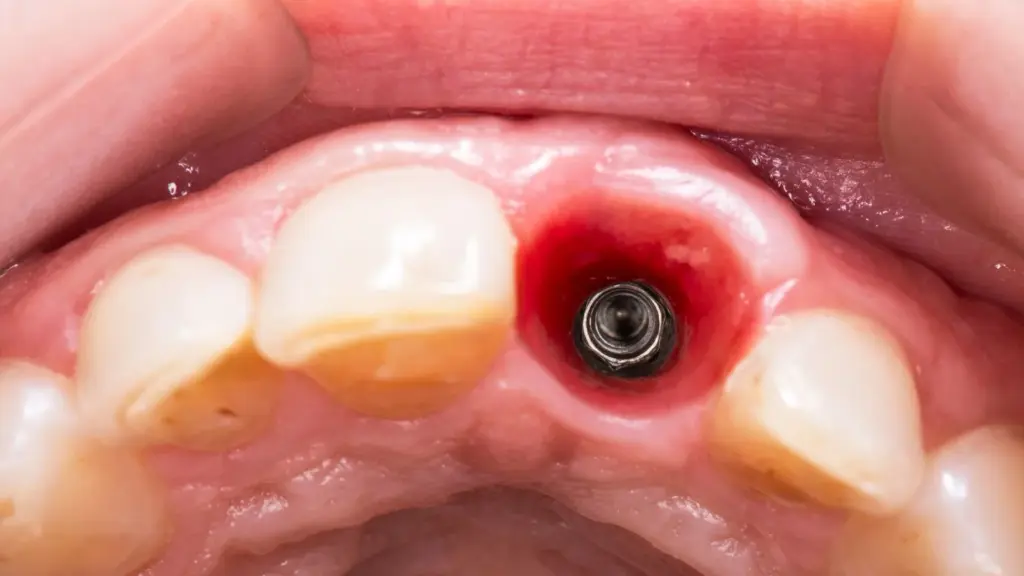
For patients who wish to plan their budget before starting the treatment process, front teeth implant prices are not tied to a fixed standard. Material quality and additional applications shape the total budget.
The brand and origin of the titanium screw to be used, along with the manufacturing technology of the zirconium superstructure preferred in the clinic, are directly influential on front teeth implant prices. In addition, if there is bone loss in the anterior region, the amount of bone powder to be applied or laser aesthetic touches to make the gum symmetrical can change the cost items.
Under the guidance of the base fee tariffs published annually by the Turkish Dental Association (TDB), a clear budget analysis can be extracted by choosing the most suitable and long-lasting implant brands according to your intraoral tomography data.
FAQ: Frequently Asked Questions
Will I be left toothless while getting a front teeth implant?
No, you will definitely not be left toothless. As soon as the implant is placed, temporary aesthetic teeth prepared in the laboratory that anchor to adjacent teeth or to the implant are applied to your mouth. This allows you to comfortably continue your social life during the waiting period.
How long does front teeth implant treatment take?
Surgically placing the screw into the jawbone is a short procedure taking about 20–30 minutes. However, a biological waiting period of 3–4 months is required for the screw to fully fuse with the bone. Following this period, your permanent zirconium tooth is prepared and attached within approximately 1 week.
Is pain felt while getting an implant in the front tooth?
No, the operation area is completely numbed using advanced local anesthesia methods. It is not possible for you to feel any pain or ache during the procedure. Minimal throbbing after the operation can be easily controlled with mild painkillers prescribed by your dentist.
Does a front teeth implant look like a natural tooth?
Yes. When a white-colored zirconium abutment is used in the framework instead of a gray metal one, and the gum lines are shaped according to pink aesthetic criteria, your implant tooth achieves a light transmittance and form symmetry indistinguishable from your own natural teeth.