Contentsexpand_more
- What is a Fiber Post?
- Indications for Root Canal Fiber Post Application
- How is a Fiber Post Placed?
- Glass Fiber Post vs. Traditional Cast Metal Post
- How Long Does a Fiber Post Tooth Last?
- Comparison Matrix: Post and Core Restorations
- Frequently Asked Questions (FAQ)
- Does receiving a dental fiber post hurt?
- Is a full-coverage crown mandatory after a fiber post?
- Can a damaged or failing fiber post be safely removed from the root canal?
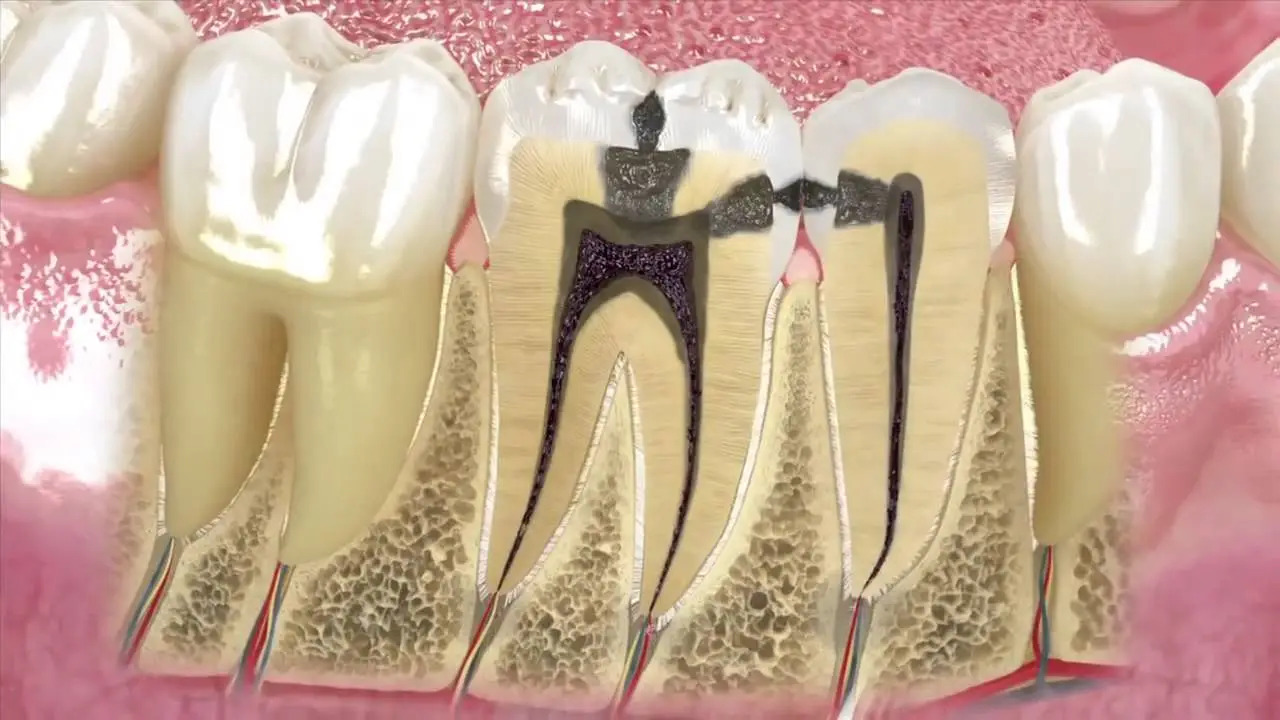
When a tooth undergoes extensive structural destruction due to subgingival caries, trauma, or the catastrophic failure of a large restoration, placing a conventional direct composite filling is biomechanically impossible. When only remaining roots and thin dentinal walls persist, historical dentistry frequently favored extraction followed by bridges or implant placement. However, contemporary conservative dentistry is rooted in preserving the natural tooth within the dental arch. The premier restorative solution designed to rescue endodontically treated roots and provide a structural foundation for full-coverage crowns is the fiber post system.
Historically utilized cast metal posts acted as rigid wedges within root canals, concentrating masticatory stress at the root apex and inducing catastrophic vertical root fractures. Modern glass-fiber reinforced composite posts eliminate this failure mechanism by exhibiting an elastic modulus identical to natural human dentin, absorbing occlusal stress.
What is a Fiber Post?
What is a fiber post, which is frequently used in endodontics and restorative dentistry:
A fiber post is a high-tensile, flexible intraradicular anchor fabricated from silanated glass-fiber filaments embedded within a polymer resin matrix, placed inside the root canal of an endodontically treated tooth presenting with over 50% loss of coronal structure.
The primary function of a tooth fiber post is to anchor into the radicular dentin, creating mechanical retention for the core build-up composite and the overlying prosthetic crown.
Indications for Root Canal Fiber Post Application
Executing a root canal fiber post application requires meeting specific clinical criteria:
Severe Loss of Coronal Hard Tissue: The tooth lacks sufficient clinical walls to retain a direct restoration.
Prior Endodontic Therapy: Because the post is luted inside the radicular canal, high-quality root canal therapy is mandatory. A fiber post cannot be placed in a vital tooth.
Adequate Root Length and Morphology: The intra-alveolar root length must provide sufficient anchorage to maintain an adequate post-to-crown ratio.
Ferrule Effect: A minimum of 1.5 to 2.0 mm of sound, supra-gingival dentin height must exist circumferentially to embrace the tooth like a barrel hoop, preventing horizontal fracture.
How is a Fiber Post Placed?
Answering how is a fiber post made and executing a fiber post application involves precise, pain-free steps:
Endodontic Verification: The quality of the obturation is confirmed via periapical digital radiography.
Canal Preparation: The coronal two-thirds of the gutta-percha root filling is removed using calibrated drills (Peeso/Gates-Glidden). A minimum 4 to 5 mm apical seal of gutta-percha is preserved to prevent micro-leakage.
Post Sizing and Trial Fitting: A glass-fiber post corresponding to the canal diameter is selected, tried in, and trimmed to height using a water-cooled diamond bur.
Substrate Conditioning (Etch & Bond): Radicular dentin is etched with 37% phosphoric acid, rinsed, blot-dried, and coated with a dual-cure adhesive bonding agent.
Adhesive Luting (Cementation): The fiber post is coated with dual-cure resin cement, inserted into the canal, and polymerized using a high-intensity LED light-curing unit.
Core Build-Up: High-strength composite core material is incrementally layered around the projecting post, re-establishing coronal anatomy.
Crown Preparation: The core build-up is contoured to receive an E-Max or zirconia crown.
Glass Fiber Post vs. Traditional Cast Metal Post
Comparing modern glass fiber post dental treatment against conventional cast metal designs reveals key advantages:
Modulus of Elasticity (Biocompatibility): Cast metal posts are rigid. Under heavy occlusal loads, they do not flex, transmitting shear forces directly to the root and causing vertical root fractures. Glass fiber posts exhibit an elastic modulus matching dentin, flexing harmoniously with the tooth.
Aesthetic Integration: Metal posts transmit dark shadows beneath all-ceramic or zirconia crowns. Fiber posts are translucent and white, matching natural dentin and preventing cervical graying.
Adhesive Bonding: Metal posts rely on mechanical friction, whereas fiber posts bond adhesively to radicular dentin and core composite, creating a unified monobloc.
How Long Does a Fiber Post Tooth Last?
When patients ask about the fiber post tooth lifespan, clinical longevity ranges from 10 to 15+ years with proper maintenance.
Key variables dictating the functional lifespan of a fiber post tooth:
The marginal adaptation and seal of the definitive crown.
Adherence to daily oral hygiene (brushing, flossing, oral irrigation).
Use of a protective night guard in patients with nocturnal bruxism.
Presence of a circumferential ferrule of sound natural dentin.
Comparison Matrix: Post and Core Restorations
Feature | Glass Fiber Post (Modern) | Cast Metal Post (Traditional) | Prefabricated Metal Screw |
Material Base | Glass Fibers + Resin Matrix | Noble / Base Metal Alloy | Stainless Steel / Titanium |
Elastic Modulus | Matches Natural Dentin | Extremely Rigid (Fracture risk) | Rigid (Creates stress points) |
Aesthetic Quality | Superior (White / Translucent) | Poor (Transmits dark shadows) | Poor (Dark metal reflection) |
Root Fracture Risk | Near Zero | High | High |
Clinical Timeline | Single Visit (30–40 Minutes) | 2 Visits (Laboratory required) | Single Visit |
Bonding Mechanism | Chemical Adhesive Monobloc | Mechanical Friction | Mechanical Threading |
Frequently Asked Questions (FAQ)
Does receiving a dental fiber post hurt?
No, the procedure is completely painless. Because the tooth has already undergone root canal therapy, the pulpal nerve tissue has been removed, leaving the internal tooth structure devoid of sensation. The procedure is executed within the insensate root canal space and coronal tooth structure, frequently requiring no local anesthesia.
Is a full-coverage crown mandatory after a fiber post?
Yes, in nearly all clinical scenarios. Teeth requiring fiber posts have suffered extensive loss of structural hard tissue (often 60–70% coronal destruction). While the post and core restore internal strength, encasing the tooth with a full-coverage zirconia, E-Max, or porcelain crown establishes a ferrule effect, preventing the remaining thin tooth walls from fracturing under lateral chewing loads.
Can a damaged or failing fiber post be safely removed from the root canal?
Yes. Unlike traditional cast metal posts that were locked into canals and carried high risks of root fracture during removal, glass fiber posts can be broken down and evacuated safely. Utilizing endodontic operating microscopes and specialized ultrasonic tips, the fiber matrix can be removed from within the canal without compromising root walls, allowing for revision of the root canal and placement of a fresh post.