Contentsexpand_more
- What is a Temporary Filling?
- Why Get a Temporary Filling?
- How Long Does a Temporary Filling Stay and How Long Does It Last?
- What Happens If a Temporary Filling Falls Out?
- Does a Temporary Filling Hurt?
- How to Remove a Temporary Filling
- Guidelines While Living with a Temporary Filling
- Factors Influencing Treatment Cost
- Comparison Matrix: Temporary Filling vs. Permanent Composite Restoration
- Frequently Asked Questions (FAQ)
- Is the clove-like taste and smell of my temporary filling harmful if swallowed?
- Should I continue brushing and flossing around a temporary filling?
- If my temporary filling falls out completely, is it an immediate dental emergency?
Upon completing the primary stage of an endodontic procedure or deep excavation of dental decay, you routinely hear your clinician state: "We have sealed an intracanal medicament inside your tooth with a temporary filling today; your definitive restoration will be placed during your next visit." Touching the tooth with your tongue afterward, you notice a chalky, slightly textured surface that occasionally emits a mild, clove-like medicinal flavor. Patients frequently wonder: "Why was the restoration not finished in a single appointment?", "Will this material dissolve while drinking fluids?", and "What happens if this temporary filling falls out during lunch?" In clinical restorative dentistry, a temporary filling functions as an indispensable biological shield protecting internal tooth structures from oral microflora between consecutive appointments.
While definitive composite or ceramic restorations are engineered to withstand decades of heavy occlusal forces, temporary restorative materials are intentionally formulated to be removed swiftly by the clinician at subsequent stages. This balance provides adequate interim sealing while requiring basic dietary precautions from the patient.
What is a Temporary Filling?
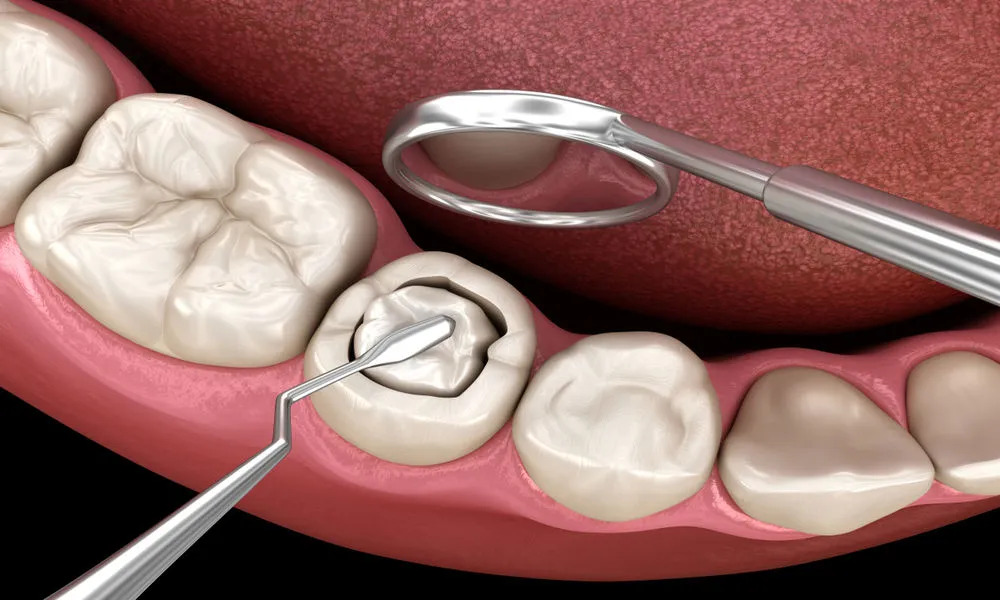
In restorative and endodontic dentistry, the clinical definition of what is a temporary filling is: A short-term, biocompatible restorative material engineered to provide an interim hermetic seal across coronal access cavities between multi-stage dental visits, preventing salivary ingress and protecting pulpal or periapical tissues.
Temporary filling formulations (such as Cavit, zinc oxide-eugenol cements, or resin-based temporaries) set upon exposure to ambient oral humidity. The minor hygroscopic expansion characteristic of these materials forces their margins tightly against surrounding dentin walls, producing an effective microbial barrier.
Why Get a Temporary Filling?
Clinicians opt for interim temporization rather than immediate definitive resin bonding for distinct physiological reasons:
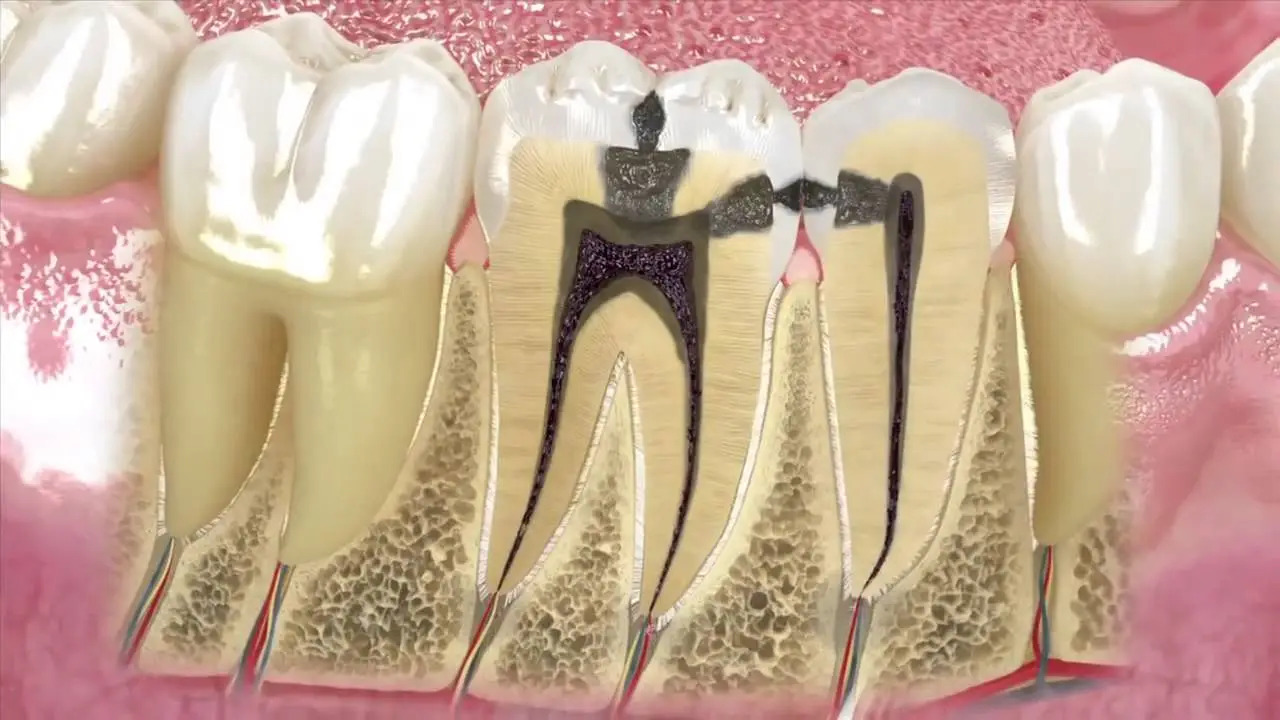
Intracanal Medicament Containment (Root Canal Temporary Filling): Retains therapeutic antimicrobial dressings (e.g., calcium hydroxide or formocresol) within root canals between mechanical debridement sessions.
Barring Bacterial and Salivary Ingress: The oral cavity contains billions of bacterial pathogens. An unsealed canal becomes re-infected within hours; temporary cements prevent coronal microleakage.
Pulpal Sedation and Vitality Monitoring (Indirect Pulp Capping): In deep carious lesions approximating pulp horns, sedative bases are sealed beneath temporary materials to monitor pulp response for 2 to 3 weeks before permanent restoration.
Interim Protection During Laboratory Fabrication: While custom laboratory inlays, onlays, or full crowns are being milled, temporary materials insulate prepared dentin from thermal stimuli and occlusal fracture.
Emergency Stabilization: Following late-night emergency pulpotomies or abscess incision, temporary materials seal cavities until the patient returns for planned comprehensive treatment.
How Long Does a Temporary Filling Stay and How Long Does It Last?
The functional lifespan of temporary materials depends directly on chemical composition:
Optimal Clinical Window (7 to 14 Days): For routine endodontic therapy, keeping a temporary material in place for 1 to 2 weeks allows medicaments to eliminate canal flora while maintaining seal integrity.
Maximum Structural Limit (3 to 4 Weeks): Most temporary formulations possess limited compressive strength. Beyond 30 days, cyclic masticatory loading causes micro-fractures, margin degradation, and microleakage.
Risk of Prolonged Neglect: Leaving a temporary restoration in place for several months permits bacterial penetration around deteriorated margins. This can cause secondary canal re-infection, periapical bone lesions, and eventual tooth loss.
What Happens If a Temporary Filling Falls Out?
A dislodged restoration during chewing requires clear protocols:
Immediate Microbial Contamination: Total loss of the temporary seal exposes instrumented root canals to saliva and dietary debris, contaminating the operative field.
Contact Your Dental Clinic Promptly: If a temporary filling falls out, contact your clinic to arrange a re-sealing visit within 24 hours.
Superficial Attrition is Normal: It is routine for a microscopic layer of chalky surface material to erode without compromising the deeper seal over canal orifices.
Palliative Measures Until Clinical Care: Avoid chewing on the affected side, rinse gently with lukewarm saline after dining, and avoid probing the cavity with toothpicks or metal instruments.
Does a Temporary Filling Hurt?
Clinical factors governing discomfort with a temporary restoration:
Mild Tenderness for 24 to 48 Hours is Common: Discomfort rarely stems from the temporary material itself; it is typically a normal response of periapical tissues following mechanical canal cleaning and chemical disinfection.
Severe Throbbing Pain Indicates Flare-Up: Severe, spontaneous pain or facial edema suggests periapical pressure accumulation from trapped microbial gases, requiring clinical relief.
Occlusal Interference (High Spot): If the temporary material is elevated above your natural bite plane, each masticatory contact bruises the periodontal ligament; your clinician can adjust this in a few moments.
How to Remove a Temporary Filling
Removing temporary materials at subsequent appointments is straightforward:
Painless and Frequently Anesthesia-Free: Because temporary materials do not integrate into the dentin matrix via micromechanical bonding, local anesthetic injections are rarely needed.
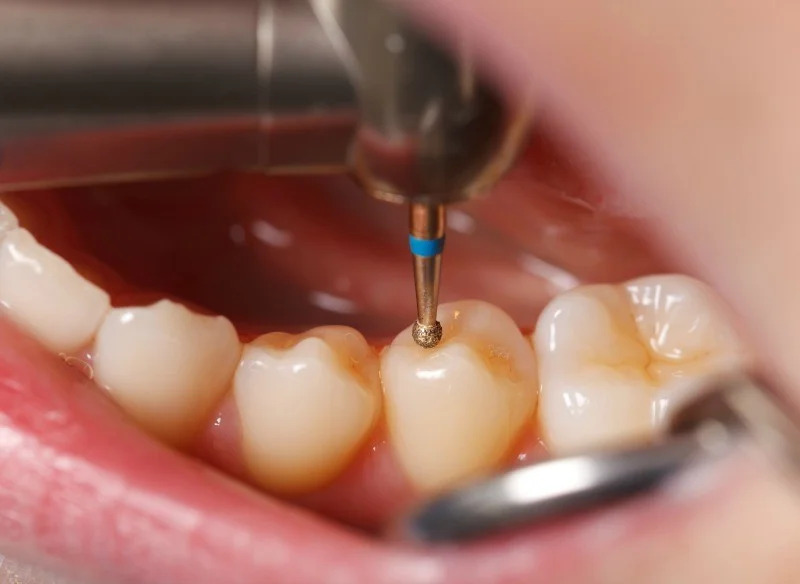
Ultrasonic Vibration or Low-Speed Finishing Burs: Clinicians use specialized ultrasonic scalers or hand instruments to fragment the brittle cement effortlessly.
Preservation of Sound Dentin: The chalky consistency and distinct color of temporary materials allow clinicians to excavate the seal cleanly without removing natural tooth structure.
Guidelines While Living with a Temporary Filling
To ensure the temporary seal remains intact until your permanent appointment:
Fast for the First 2 Hours: Allow the material to undergo moisture-initiated chemical polymerization without disruptive chewing loads.
Avoid Sticky and Hard Foods: Sticky confections (such as chewing gum, caramel, or toffee) dislodge temporary materials, while hard nuts and dense crusts can fracture brittle cavity walls.
Modify Oral Hygiene Techniques: Continue brushing gently with soft bristles. When interdental flossing, feed the floss through the contact point and slide it out horizontally rather than pulling upward against the temporary margin.
Factors Influencing Treatment Cost
Temporary filling costs are influenced by the broader clinical treatment plan:
Component of Comprehensive Care: Temporary fillings are rarely billed as isolated procedures; they typically represent an integrated staging step within endodontic therapy or indirect ceramic restoration fees.
Material Technology: Conventional calcium sulfate formulations (e.g., Cavit) versus light-cured, flexible elastomeric temporary composite resins.
Endodontic Complexity and Session Frequency: Multi-visit treatments for persistent periapical abscesses requiring multiple medicament changes.
Emergency Service Protocols: Out-of-hours emergency access, palliative pulpotomy, and urgent temporization performed at 24/7 dental clinics.
Comparison Matrix: Temporary Filling vs. Permanent Composite Restoration
Feature | Temporary Filling | Definitive Composite Restoration |
Primary Clinical Goal | Short-term seal and medicament containment | Restoration of form, aesthetics, and chewing |
Clinical Lifespan | 1 to 4 Weeks (Temporary) | 10 to 15+ Years (Long-term stability) |
Material Hardness | Friable, chalky, lower compressive strength | Enamel-like density, high wear resistance |
Ease of Removal | Removed cleanly within minutes | Requires selective diamond bur excavation |
Sealing Mechanism | Short-term hygroscopic expansion | Chemical adhesive resin bonding |
Masticatory Loading | Susceptible to heavy occlusal forces | Withstands normal masticatory stress |
Frequently Asked Questions (FAQ)
Is the clove-like taste and smell of my temporary filling harmful if swallowed?
No. Many temporary restorative materials (specifically zinc oxide-eugenol) contain purified eugenol, an essential oil derivative of cloves with natural analgesic and antimicrobial properties. Trace amounts of eugenol leaching into your saliva are non-toxic and help calm irritated pulpal tissue. Swallowing these trace amounts with saliva presents no gastrointestinal risk.
Should I continue brushing and flossing around a temporary filling?
Yes, thorough oral hygiene is essential to prevent plaque accumulation around the tooth margin. You may brush the area normally using a soft toothbrush without applying heavy scrub force. When flossing, avoid snapping the floss vertically upward through the contact point, as this can dislodge the temporary material. Instead, slide the floss horizontally out along the gumline.
If my temporary filling falls out completely, is it an immediate dental emergency?
If the tooth is actively undergoing root canal therapy and the internal canals are exposed, yes, you should contact your clinician for re-temporization within 24 hours. Leaving canals open permits saliva, food debris, and oral bacteria to compromise the root canal system, requiring re-disinfection. If the temporary filling was placed over a sealed, non-sensitive preparation, you should still schedule a visit within a few days to preserve the site.