Contentsexpand_more
- Is Dental Treatment Safe During Pregnancy?
- Is Dental Treatment Safe and Does it Introduce Harm to the Fetus?
- Can Local Anesthesia Be Safely Administered During Pregnancy?
- What Dental Treatments Can Be Done During Pregnancy?
- Clinical Timelines: When to Get Dental Treatment During Pregnancy?
- Managing Pregnancy Gingivitis and Gestational Gingival Bleeding
- Preventing Enamel Damage Induced by Gestational Morning Sickness
- Frequently Asked Questions (FAQ)
- Can a pregnant patient safely take antibiotics or pain medications prescribed by a dentist?
- What is a pregnancy tumor, and will it disappear following delivery?
- Which month is the safest for dental treatment during pregnancy?
The gestational period represents a magnificent biological milestone wherein a woman undergoes profound hormonal, biochemical, and physiological alterations to support new life. Throughout this sensitive timeframe, systemic levels of progesterone and estrogen escalate to lifetime peaks. This radical hormonal shift compromises the gingival soft tissues, significantly lowering their threshold of resistance against bacterial plaque accumulation and rapidly initiating an inflammatory condition recognized as pregnancy gingivitis.
Simultaneously, the morning sickness and frequent emesis (vomiting) characteristic of the initial months disrupt the intraoral pH balance, driving it into a highly acidic baseline that accelerates enamel demineralization and advances superficial decay into deep vital layers. The age-old cultural proverb claiming "every pregnancy costs the mother a tooth" is a scientifically invalid myth; however, neglecting professional hygiene care during these crucial months can foster severe, complex toothaches. This specialized clinical manual addresses precise structural guidelines and dynamic surgical strategies regarding permitted procedures during gestation.
Is Dental Treatment Safe During Pregnancy?
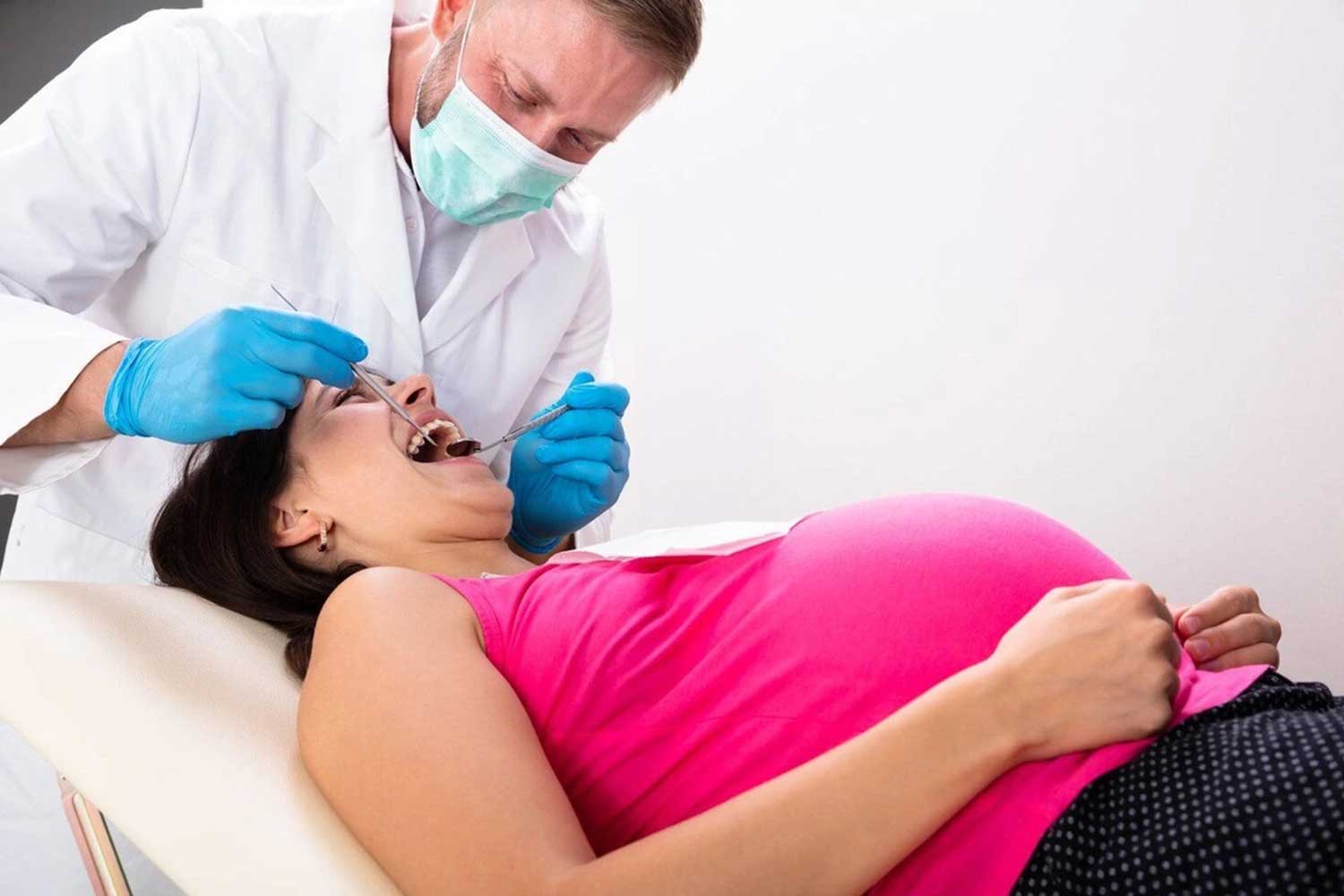
A primary dilemma frequently evaluated during maternal triage is can you get dental work done while pregnant without introducing systemic danger. The explicit clinical and evidence-based answer is a definitive yes. In fact, hosting an active, untreated endodontic infection, deep carious decay, or a localized periodontal abscess during pregnancy introduces significantly higher biological risks than undergoing controlled dental intervention.
Untreated intraoral pathogens can translocate through the maternal bloodstream into the placental barrier, directly escalating the statistical risks of preterm birth and low birth weight. Consequently, addressing oral pathologies promptly via coordinated protocols remains paramount.
Is Dental Treatment Safe and Does it Introduce Harm to the Fetus?
The core structural safety evaluation centered across maternal screening is whether hamilelikte diş tedavisi bebeğe zarar verir mi or if specific sequences introduce structural risk to the fetus. Contemporary dental interventions, executed during correct gestational windows and coordinated with the patient's supervising obstetrician, present absolute zero harm to the developing child. The biomaterials deployed chairside act strictly within a localized framework, demonstrating zero systemic toxicity or placental crossover capacity.
Furthermore, prospective mothers routinely express fear regarding diagnostic digital dental radiography. Modern digital panoramic and periapical imaging configurations emit fractional, negligible radiation dosages targeted strictly to the maxillofacial architecture. To secure absolute peace of mind, the patient is layered with a lead apron and a dedicated thyroid collar protection shield, completely blocking scatter radiation to the pelvic zone.
Can Local Anesthesia Be Safely Administered During Pregnancy?
Securing a completely pain-free, zero-stress working field is foundational to minimizing maternal cortisol (stress) spikes. So, Can a tooth injection be given during pregnancy?
Yes, administering local anesthetic injections for dental work while pregnant is a fully validated and safe clinical protocol. However, a strict pharmacological parameter must be enforced: the treating dentist must utilize specialized, non-epinephrine (adrenaline-free) local anesthetic configurations such as prilocaine or mepivacaine-based agents. These specific compounds achieve exceptional localized nerve blocks without altering maternal blood pressure or cross-filtering through the placental barrier, ensuring the mother remains entirely relaxed and comfortable throughout the procedure.
What Dental Treatments Can Be Done During Pregnancy?
Maternal patients consistently require clarity regarding which operational protocols can be safely completed during gestation. Evaluating what dental treatments can be done during pregnancy highlights several highly approved clinical selections:
Dental Scaling (Teeth Cleaning) & Root Planing: Essential to neutralize the hyper-inflammatory responses of the gingiva to bacterial plaque. This can be safely executed across all trimesters to prevent structural bone damage.
Composite Dental Fillings: Indicated to completely excise active decay before it breaches the pulpal chamber, preserving tooth structure under zero risk of systemic bleeding.
Root Canal Therapy (Endodontics): Fully approved to eliminate agonizing pain caused by irreversible pulpal necrosis or acute localized abscesses, rendering the intraoral environment free of traveling pathogens.
Emergency Tooth Extractions: When structural tooth salvage is mathematically impossible, un-reconstructable roots creating severe bone pressure can be safely extracted utilizing advanced atraumatic oral surgery methods.
Conversely, elective procedures such as comprehensive orthodontics (braces), extensive bone-grafting jaw surgeries, dental implant placement, and cosmetic teeth whitening (bleaching) must be postponed until the post-partum phase.
Clinical Timelines: When to Get Dental Treatment During Pregnancy?
Gestation is chronologically mapped across three distinct 3-month phases known as trimesters. To maximize fetal protection and maternal comfort, the execution of when should dental treatment be done during pregnancy must track this specific trimesteral calendar:
The First Trimester (Months 1-3): This phase marks the critical window of fetal organogenesis, during which the embryo is highly vulnerable to external systemic disruptions. Consequently, routine elective treatments are strictly postponed. Evaluating if a tooth can be extracted during the absolute first month reveals that unless an acute, life-threatening abscess presents, extraction is delayed. If an urgent crisis emerges, palliative dressings are layered to control pain.
The Second Trimester (Months 4-6 - The Optimal Window): When identifying the safest months for dental work, the second trimester represents the gold standard window. Fetal organ development is structurally complete, and maternal ergonomics are highly stable. The 4th, 5th, and 6th months serve as the safest window to execute comprehensive dental fillings, non-surgical extractions, root canal therapies, and deep scaling prophylaxis.
The Third Trimester (Months 7-9): During late-stage gestation, the fetus reaches significant physical volume, making it ergonomically challenging for the mother to remain supine in a dental chair for extended durations. Protracted supine positioning can cause the heavy uterus to compress the inferior vena cava, inducing a rapid drop in maternal blood pressure a clinical condition known as supine hypotensive syndrome. Therefore, this phase is strictly reserved for brief acute emergency management.
Managing Pregnancy Gingivitis and Gestational Gingival Bleeding
The massive surge of systemic progesterone increases the permeability of the micro-vascular networks within the gingival tissues. This biological change sparks an over-exaggerated response to even microscopic plaque deposits, creating bright red, swollen gingiva that bleed profusely under routine mechanical brushing; this is clinically indexed as pregnancy gingivitis.
If a patient ceases brushing due to fear of bleeding, plaque accumulation worsens, accelerating the breakdown of underlying alveolar bone. The solution involves professional ultrasonic scaling followed by meticulous, uninterrupted home hygiene utilization using ultra-soft surgical toothbrushes.
Preventing Enamel Damage Induced by Gestational Morning Sickness
The frequent morning sickness and acute emesis characteristic of early gestation introduce gastric fluids (containing concentrated hydrochloric acid) directly into the oral environment. Gastric acid acts as a powerful chemical agent that aggressively dissolves the mineralized enamel matrix, creating severe dental erosion.
The most prominent home-care error is executing immediate toothbrushing right after vomiting. Brushing teeth while the enamel is chemically soft and demineralized strips away layers of tooth structure. The correct medical protocol involves rinsing the mouth instantly with copious volumes of plain water or water mixed with sodium bicarbonate (baking soda) to neutralize the acid baseline, delaying active mechanical brushing for at least 30 minutes.
Frequently Asked Questions (FAQ)
Can a pregnant patient safely take antibiotics or pain medications prescribed by a dentist?
A dentist must never prescribe medications to a pregnant patient without direct communication with her obstetrician. Under direct medical coordination, pharmaceuticals classified under FDA "Category B" safety parameters can be safely prescribed and utilized to treat active infections without harming the fetus.
What is a pregnancy tumor, and will it disappear following delivery?
A pregnancy tumor (clinically classified as a pyogenic granuloma) is a benign, hyperplastic vascular growth that appears on the gingival margins due to extreme local responses to plaque triggered by hormonal shifts. Despite its concerning nomenclature, it is entirely non-malignant. It routinely regresses spontaneously following delivery as systemic hormones balance out. If it persists or bleeds excessively, it can be easily removed utilizing advanced dental lasers post-delivery.
Which month is the safest for dental treatment during pregnancy?
The safest period for dental treatment during pregnancy is the second trimester, covering months 4 through 6. During these months, the baby's organ development is complete, and the expectant mother can sit most comfortably in the clinic chair; fillings, root canals, and tooth extractions can be performed safely.