Contentsexpand_more
- What is Tooth Wear?
- Causes of Tooth Wear
- Why is Anterior Tooth Wear Critical?
- Tooth Wear Symptoms
- How to Stop Tooth Wear and How to Treat It?
- 1. Preventive and Interceptive Protocols (Halting Progression)
- 2. Restorative and Reconstruction Protocols (Rebuilding Structure)
- Comparison Matrix: Mechanisms of Tooth Wear
- Frequently Asked Questions (FAQ)
- Can worn tooth enamel regenerate itself over time?
- Will composite fillings placed on worn teeth easily pop off?
- Is it safe to brush teeth immediately after consuming acidic food or drinks?
Have you noticed that the edges of your front teeth are becoming thin, translucent, or shortened? Or do you experience sudden, sharp sensitivity when sipping cold water or drinking hot tea? Clinically categorized as non-carious cervical or occlusal lesions, tooth wear is a progressive, multi-factorial condition affecting individuals across all demographics due to modern stress, dietary acids, and improper oral hygiene habits.
The progressive loss of protective enamel and underlying dentin compromises facial aesthetics and leads to a collapsed vertical dimension of occlusion (VDO), temporomandibular joint (TMJ) dysfunction, and chronic craniomandibular pain. Many patients dismiss these structural changes as a normal consequence of biological aging, delaying professional intervention. However, early-diagnosed tooth wear can be treated conservatively using biomimetic protocols that preserve natural tooth structure without invasive crown reductions. In this manual compiled by Livera Dental Clinic specialists, we analyze what is tooth wear, causes of tooth wear, management of anterior tooth wear, tooth wear symptoms, and how to treat tooth wear.
What is Tooth Wear?
For patients seeking clarity on what is tooth wear, the clinical definition is: The non-carious, irreversible, progressive loss of dental hard tissues (enamel and dentin) caused by mechanical, chemical, or biomechanical forces independent of bacterial decay.
Tooth wear is clinically categorized into 4 distinct physical mechanisms:
Attrition (Frictional Wear): Mechanical wear resulting from direct tooth-to-tooth contact. The primary driver is nocturnal bruxism and daytime clenching.
Abrasion (External Mechanical Wear): Frictional wear caused by external objects rubbing against enamel. Hard-bristled toothbrushes, aggressive horizontal scrubbing, or biting nails are primary causes.
Erosion (Chemical Dissolution): Non-bacterial chemical loss of enamel matrix caused by intrinsic or extrinsic acids. Carbonated beverages, acidic foods, gastric reflux (GERD), or frequent vomiting are leading factors.
Abfraction (Biomechanical Micro-Fracture): Flexure of the tooth under heavy eccentric occlusal loads, causing micro-fractures of enamel crystals along the cervical margin near the gumline.
Causes of Tooth Wear
Understanding causes of tooth wear requires evaluating a combination of lifestyle, mechanical, and systemic factors:
Nocturnal Bruxism and Clenching: Involuntary hyper-function of masticatory muscles during sleep exerts excessive forces that flatten occlusal surfaces over time.
Dietary Acid Exposure: Frequent consumption of carbonated sodas, citrus fruits, energy drinks, wine, and acidic dressings lowers intraoral pH, softening the enamel surface.
Aggressive Toothbrushing Habits: Using highly abrasive toothpastes (high RDA values) combined with hard horizontal scrubbing carves deep grooves into exposed dentin.
Gastroesophageal Reflux Disease (GERD) and Bulimia: Involuntary regurgitation of gastric hydrochloric acid (pH 1.2–2.0) rapidly dissolves the palatal surfaces of maxillary teeth.
Hyposalivation and Dry Mouth: Saliva acts as a natural buffer, neutralizing acids and remineralizing enamel. Reduced salivary flow accelerates chemical and mechanical wear.
Occupational and Environmental Factors: Industrial exposure to airborne acidic vapors or dust particles accelerates mechanical and chemical wear.
Why is Anterior Tooth Wear Critical?
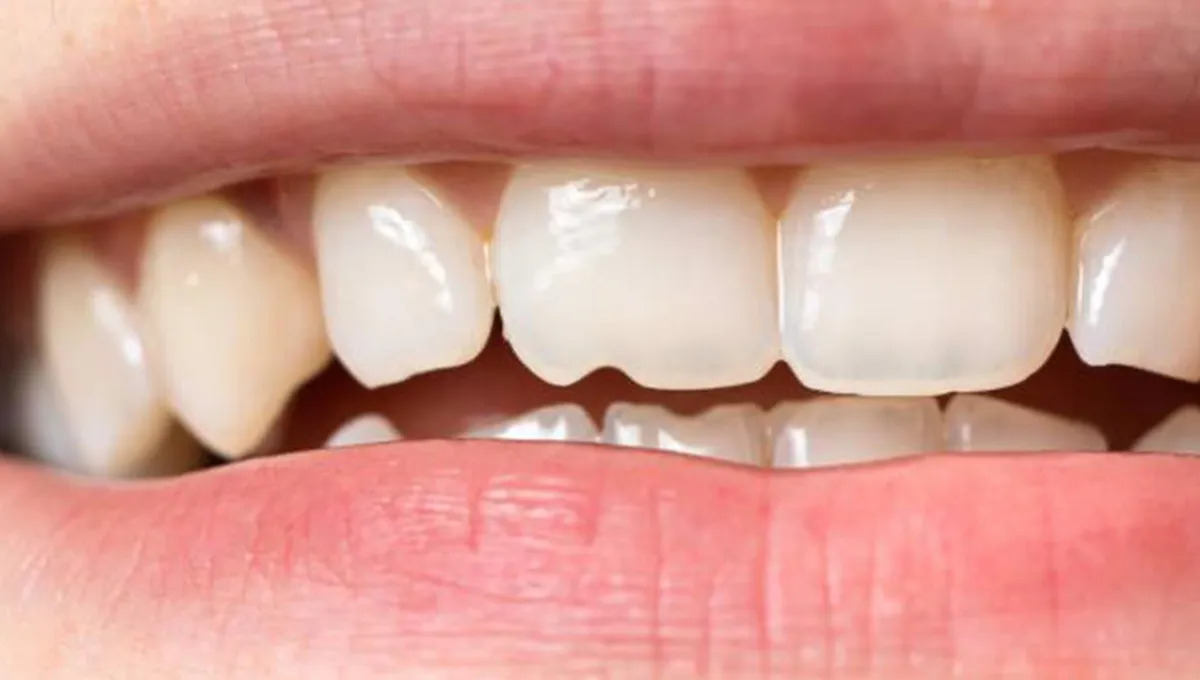
Patients frequently present with aesthetic concerns regarding anterior tooth wear. When incisal edges abrade, several functional and aesthetic complications arise:
Shortened Clinical Crowns and Facial Collapse: Loss of incisal length reduces lip support and collapses lower facial height, imparting a prematurely aged facial appearance.
Enamel Translucency and Halo Effects: As the incisal enamel thins, the edges become semi-transparent, taking on a foggy, grey, or blue-ish appearance.
Chipped, Sharp Incisal Margins: Worn incisal edges become sharp, prone to micro-chipping under normal masticatory forces (e.g., biting into fruit or sandwiches).
Tooth Wear Symptoms
Recognizing tooth wear symptoms early allows for conservative intervention:
Acute Thermal and Chemical Hypersensitivity: Thinning enamel exposes dentinal tubules, triggering sharp, localized discomfort when exposed to cold, hot, or sweet stimuli.
Chromatic Discoloration (Yellowing): As white outer enamel wears away, the naturally yellow dentin core shows through, making teeth appear discolored despite brushing.
Flattening and Occlusal Cupping: Loss of anatomical cusps on molars, replaced by smooth, crater-like dentinal depressions (cupping).
Cervical V-Shaped Notches: Deep, wedge-shaped grooves near the gumline that catch fingernails or toothbrush bristles.
Margins of Existing Restorations Appearing Elevated: As natural enamel wears away around fillings, composite or amalgam margins appear raised or rough to the tongue.
How to Stop Tooth Wear and How to Treat It?
Answering how to stop tooth wear and how to treat tooth wear involves a dual approach: halting active progression and restoring lost hard tissues using biomimetic principles. Lost enamel matrix cannot regenerate naturally; however, progression can be halted and lost structure reconstructed.
1. Preventive and Interceptive Protocols (Halting Progression)
The initial phase of tooth wear treatment targets the underlying cause:
For bruxism patients, custom Night Guards (Occlusal Splints) and Masseter Botulinum Toxin therapy are prescribed.
Patients with GERD are referred for medical evaluation.
Patients practicing aggressive brushing are transitioned to soft-bristled brushes and trained in the Modified Bass Technique.
2. Restorative and Reconstruction Protocols (Rebuilding Structure)
Depending on the severity of tissue loss, the following tooth wear treatment options are utilized:
Biomimetic Composite Bonding (Anterior/Posterior): For mild to moderate wear, nano-hybrid composite resin is incrementally layered onto worn surfaces without removing natural tooth structure.
Porcelain Inlays / Onlays: For extensive occlusal cupping on posterior molars, custom CAD/CAM ceramic restorations replace missing cusps with micron precision.
Porcelain Veneers or Zirconium Crowns: For severe wear involving collapsed vertical dimensions and significant incisal loss, full-arch aesthetic restorations restore smile aesthetics and correct the vertical dimension of occlusion.
Comparison Matrix: Mechanisms of Tooth Wear
Wear Classification | Primary Etiology | Typical Clinical Location | Primary Clinical Approach |
Attrition | Bruxism, clenching, direct friction | Occlusal and incisal surfaces | Night Guard + Masseter Botox + Composite Bonding. |
Erosion | Gastric acid, acidic food/beverages | Palatal surfaces and smooth enamel | Diet/Medical Control + Biomimetic Restorations. |
Abrasion | Hard brushing, abrasive pastes | Cervical margins (V-shaped grooves) | Soft Brush Instruction + Cervical Composite Filling. |
Abfraction | Heavy eccentric occlusal loads | Cervical region near the gumline | Occlusal Adjustment + Flexible Composite Resin. |
Frequently Asked Questions (FAQ)
Can worn tooth enamel regenerate itself over time?
No, mature tooth enamel does not contain living cells and cannot biologically regenerate once lost. Enamel is a acellular, highly mineralized crystalline structure. While early, microscopic surface demineralization can be remineralized using fluoride or calcium phosphate agents (CPP-ACP) to harden existing matrix, physical tissue volume lost to wear must be restored using restorative dental materials.
Will composite fillings placed on worn teeth easily pop off?
No, modern adhesive systems and nano-hybrid composite resins form strong chemical and mechanical bonds with prepared enamel and dentin surfaces. However, long-term retention requires eliminating the primary cause of wear (e.g., nocturnal bruxism). If a patient grinds their teeth and does not wear a prescribed night guard, heavy occlusal loads can fracture or debond restorations over time.
Is it safe to brush teeth immediately after consuming acidic food or drinks?
No, brushing immediately after consuming acidic items (citrus, sodas, wine) or after vomiting is harmful to enamel. Acid temporarily softens the surface enamel layer through demineralization. Brushing during this vulnerable window mechanically scrubs away the softened enamel. Always rinse thoroughly with plain water or a bicarbonate solution after acid exposure and wait at least 30 minutes for saliva to remineralize the surface before brushing with a soft brush.