Contentsexpand_more
- What is Laser Root Canal Treatment?
- How is Laser Root Canal Treatment Done? Step-by-Step Clinical Sequence
- 1. Three-Dimensional Diagnostics & Digital Local Anesthesia
- 2. Access Cavity Curation & Mechanical Pulp Extirpation
- 3. Laser Light Activation & Advanced Root Canal Disinfection
- 4. Hermetic Obturation & Final Adhesive Restoration
- Primary Clinical Benefits of Laser-Assisted Endodontics
- Capital Investment Blueprint: Laser Root Canal Treatment Price Matrix in 2026
- Frequently Asked Questions (FAQ)
- Will I experience pain or discomfort during laser root canal treatment?
- Can laser root canal therapy save a tooth presenting with a large radicular cyst?
- Can the intense laser light energy damage the natural tooth structure or the jawbone?
Within traditional restorative dentistry, root canal therapy has long been recognized among patients as a dreaded procedure, frequently correlated with protracted multi-visit appointments, significant post-operative pain risks, and the classic phobia of "instruments breaking inside the roots." Classical endodontic methods rely heavily on mechanical hand files (rotary files) and toxic chemical irrigants (such as sodium hypochlorite) to debride the root canals. However, the internal micro-anatomy of human teeth is immensely sophisticated; flanking the primary canals are thousands of microscopic lateral branches, apical deltas, and accessory tubules fully hidden from naked vision or standard two-dimensional radiographs. Traditional liquid flushes cannot physically breach these microscopic hideouts, often leading to localized reinfection and persistent bone abscesses (failed root canal treatment) months or years following closure.
The laser root canal treatment (laser-assisted endodontics) performed at Livera Dental Clinic completely eliminates these deep-seated problems. Specialized dental laser systems delivering precise, fine-tuned wavelengths permeate the deep architectural frameworks of the root dentin, securing a 99.9% bacterial eradication rate and extending the structural life expectancy of natural teeth within the oral cavity. This definitive master manual evaluates the biophysical mechanisms, step-by-step clinical protocols, and price breakdowns associated with laser-assisted endodontics.
What is Laser Root Canal Treatment?
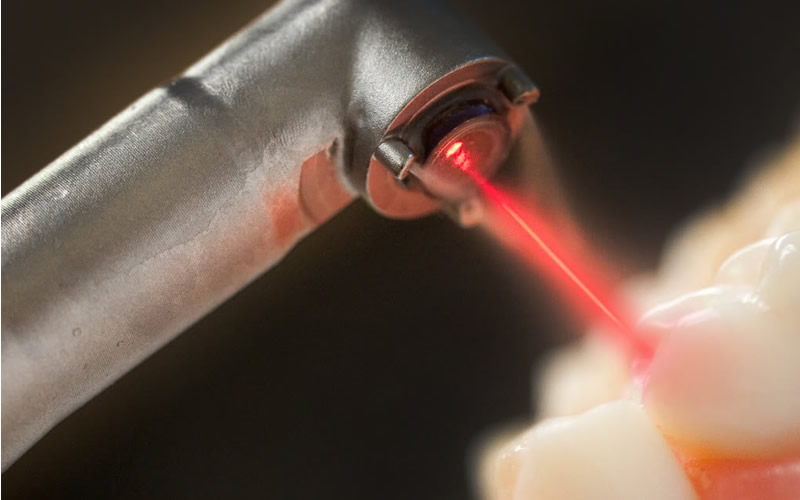
The foundational query frequently explored by our corporate and international patients regarding this high-tech modality is what is laser root canal treatment. This clinical technique represents an advanced endodontic framework where, following traditional mechanical instrumentation, specialized thin fiber-optic tips deliver targeted dental laser energy (primarily utilizing advanced Er:YAG, Nd:YAG, or high-power Diode laser systems) directly into the root canal housing.
The primary mechanism triggers rapid hydrodynamic activation, causing the internal liquids within the canal to vibrate thousands of times per second. This acoustic streaming disintegrates infected pulp tissue remnants, multi-species biofilm matrices, and bacterial endotoxins at a cellular level. This digital system successfully sterilizes not just the primary channel, but all lateral micro-tubules that are physically non-debridable via conventional stainless steel or nickel-titanium files.
How is Laser Root Canal Treatment Done? Step-by-Step Clinical Sequence
The advanced digital workflow executed by our expert endodontists during how is laser root canal treatment done flows through several strict clinical checkpoints:
1. Three-Dimensional Diagnostics & Digital Local Anesthesia
At the initial assessment, high-resolution Cone-Beam Computed Tomography (CBCT) maps the root morphology and the volumetric density of the bone lesion with milimetric precision. Next, premium, non-epinephrine local anesthetics are administered to secure a completely pain-free, comfortable session.
2. Access Cavity Curation & Mechanical Pulp Extirpation
Superficial carious structures are excised to safely expose the vital pulp chamber. The heavily infected nerve and vascular bundle remnants inside the primary canals are mechanically extirpated utilizing premium, high-flexibility rotary Ni-Ti files, followed by primary liquid lubrication.
3. Laser Light Activation & Advanced Root Canal Disinfection
This represents the absolute pinnacle step of the clinical technology. A single-use, micron-thin fiber-optic laser tip is integrated deep into the moistened root channel. Upon activation, the laser light energy initiates intense photothermal and photomechanical disruption, driving the disinfecting medium up to 1000 microns deep into the microscopic dentinal tubules. The light energy effectively detonates the cell walls of highly resistant anaerobic pathogens, completing an immaculate sterilization sequence.
4. Hermetic Obturation & Final Adhesive Restoration
Following complete laser-driven drying and bio-sanitization, the pristine root canal pathways are sealed monolithically using biocompatible thermoplastic materials (gutta-percha) to prevent micro-leakage. The coronal access site is then structurally restored using custom composite bondings, porcelain onlays, or premium zirconium crowns, successfully completing the entire multi-stage protocol in a single clinical hour.
Primary Clinical Benefits of Laser-Assisted Endodontics
Contrasted against conventional manual irrigation sequences, laser-activated endodontic options deliver unmatched long-term tooth survival rates:
99.9% Bacterial Eradication: Destroys deep-seated pathogen colonies within complex deltas where standard bleach cannot flow, drastically accelerating the osseous healing of large periapical bone lesions.
Elite Success in Failed Root Canal Retreatments: When standard root canals fail and develop chronic root cysts, unsealing the tooth and processing the canals with laser technology serves as the ultimate salvage defense before resorting to extraction.
Negligible Post-Operative Sensitivity: The precise laser energy triggers advanced biostimulation across the apical periodontal ligament fibers, minimizing localized inflammation. Consequently, post-treatment biting discomfort is completely mitigated.
Consolidated Single-Visit Treatment: Due to the dynamic sterilization velocity of dental lasers, even severely infected teeth can be safely treated and sealed within a single 45-to-60-minute appointment, removing the need for weeks of provisional dressings.
Capital Investment Blueprint: Laser Root Canal Treatment Price Matrix in 2026
Analyzing the structural financial framework is essential for informed treatment planning. The precise laser root canal treatment price is dictated by the anatomical configuration of the targeted tooth (whether it represents a single-canal anterior tooth or a highly complex 3-to-4-channel posterior molar), the chronicity of the underlying bone pathology, and the specialized consumption metrics of single-use fiber-optic tips.
Per the current 2026 advanced clinical parameters, the investment framework incorporates the standard endodontic base rate coupled with the dental laser activation and biostimulation technology fees. Because the specialized laser tips are single-use, sterile disposable medical components engineered for zero cross-contamination, they influence the baseline operational cost. However, when contrasted against the alternative long-term financial expenses of losing a natural tooth and financing a surgical dental implant, saving your native tooth via advanced laser endodontics represents a highly economical and biologically superior selection. Your definitive financial schedule is formulated following a digital panoramic and CBCT assessment at our department.
Frequently Asked Questions (FAQ)
Will I experience pain or discomfort during laser root canal treatment?
No, absolutely not. Utilizing contemporary, highly effective local anesthetics ensures that the target tooth and its surrounding periodontal tissues are fully desensitized prior to initiating access. Throughout the procedure, the only sensation you will register is a minor clicking sound stemming from the hydrodynamic water activation of the laser; it represents an entirely painless, comfortable chairside experience.
Can laser root canal therapy save a tooth presenting with a large radicular cyst?
Yes, definitely. This scenario represents one of the premier indications for advanced laser-assisted endodontics. Massive chronic cysts and persistent bone lesions frequently resist healing when treated purely with standard manual fluids. The high-energy sterilization and tissue-stimulating biostimulation of dental lasers dry up the cystic focus non-surgically, aggressively triggering active bone regeneration.
Can the intense laser light energy damage the natural tooth structure or the jawbone?
No. Dental laser units are meticulously calibrated to function exclusively at specific, target-tissue wavelengths under the absolute millisecond-level control of our trained endodontists. The energy parameters target exclusively water molecules, infected debris, and bacterial cell structures. It introduces absolute zero biological damage to the healthy surrounding hard enamel, root cementum, or adjacent alveolar jawbone.