Contentsexpand_more
- How Many Sessions Does a Root Canal Take?
- Can a Root Canal Be Done in One Session?
- Factors That Affect the Number of Sessions
- The Stages of a Root Canal
- Why Some Teeth Need More Sessions
- How Long Is Each Session?
- What You May Feel During and After Treatment
- Aftercare Tips
- When to See a Dentist
- Frequently Asked Questions
- Can a root canal be finished in one session?
- How long is the wait between root canal sessions?
- Is a root canal painful?
When a root canal is recommended, the first question most people ask is how many times they will have to come back. The short answer is that many teeth are treated in one or two visits, while some need more. The tooth itself, the state of any infection and the method your dentist chooses all play a part.
This guide explains why a root canal sometimes takes one session and sometimes several, which factors affect the number of visits and what you can expect during treatment. The information is general, and your dentist will assess your own tooth after an examination.
How Many Sessions Does a Root Canal Take?
A root canal is usually completed in one to three sessions. In many cases the treatment can be finished in a single visit, in others two visits are needed. With more complex teeth or a marked infection, the number can rise.
Giving an exact figure would not be right, because every tooth is different. After an examination and an X ray, your dentist will offer an estimated plan. If what is found during treatment differs from the plan, the number of visits can change too.
Can a Root Canal Be Done in One Session?
Yes, in suitable cases. When the infection is limited, the canals are easy to reach and the general state of the tooth is good, the dentist can complete the whole procedure in one appointment. This saves time and removes the risk of a temporary filling coming loose between visits.
Not every tooth is suitable, though. With active and widespread inflammation, very curved canals or a patient who finds it hard to keep the mouth open for long, treatment may be split into two sessions. This is not a problem but part of safe planning.
Factors That Affect the Number of Sessions
The number of visits depends on several things. The table below summarises these factors and their likely effect. It is only a general guide, and your dentist makes the final judgement.
| Factor | May need fewer sessions | May need more sessions |
|---|---|---|
| Tooth position | Front teeth, single canal teeth | Molars, teeth with several canals |
| Infection | Limited inflammation | Widespread infection, abscess |
| Canal shape | Straight, wide canals | Curved, narrow or blocked canals |
| Earlier treatment | A tooth treated for the first time | A tooth that already had a root canal |
| Patient situation | Comfortable cooperation | Pain, anxiety or difficulty opening wide |
The Stages of a Root Canal
Whatever the number of sessions, treatment follows similar steps. The general flow is as follows:
1. The area is numbed with local anaesthetic.
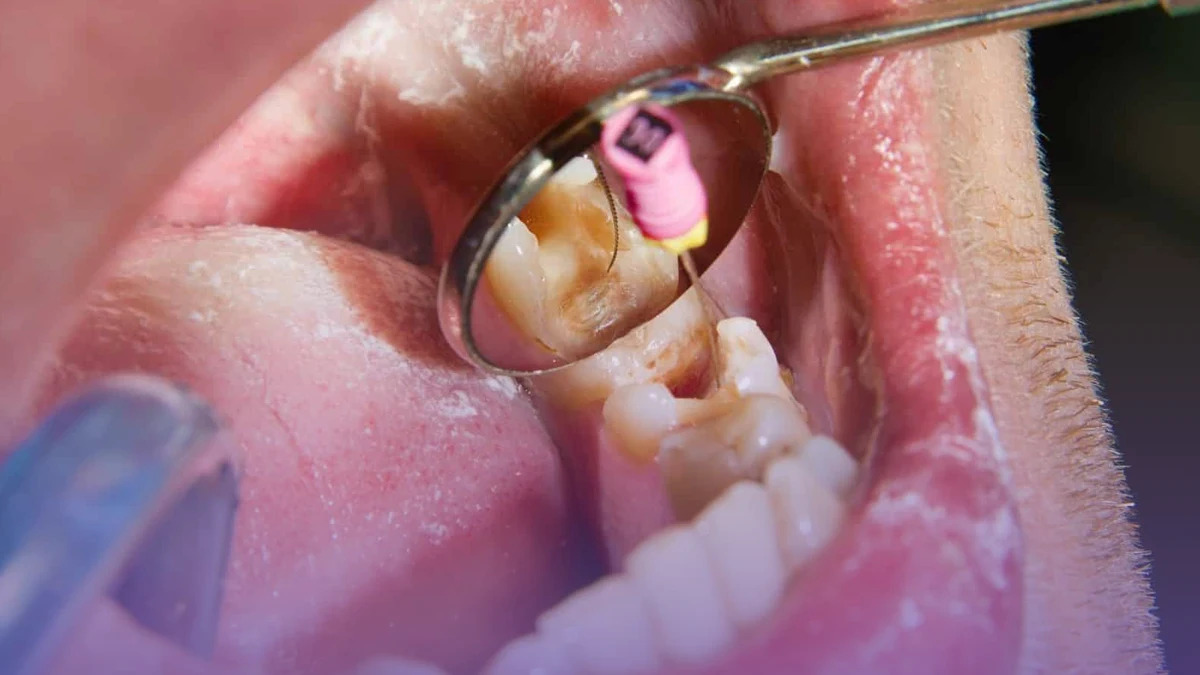
2. An opening is made in the top of the tooth to reach the canals.
3. Infected or inflamed tissue is removed and the canals are shaped.
4. The canals are rinsed with antibacterial solutions.
5. The canals are filled with a special material and the tooth is sealed, temporarily or permanently.
In the first session the pain is usually relieved and most of the cleaning is done. If more than one session is planned, the medicine placed between visits helps the canals to be cleaned more thoroughly.
Why Some Teeth Need More Sessions
Molars often contain three or four canals, and these can be thin and curved. Cleaning each one takes time, which is why treatment of a molar usually takes longer than that of a front tooth.
If there is an infection, the dentist may want to leave medicine inside the canals for a while to let the inflammation settle. This creates a better environment for healing when the final filling is placed. In teeth that have had a root canal before, removing the old filling material adds further time.
How Long Is Each Session?
A single session usually lasts between one hour and an hour and a half. When treatment is completed in one visit, the appointment can be longer. The length is set according to the structure of the tooth and the dentist's plan.
The wait between sessions is usually from a few days to one or two weeks. Your dentist will tell you the right interval. Keeping your appointments matters, because a temporary filling left for too long can let the infection return.
What You May Feel During and After Treatment
Thanks to local anaesthetic, no pain is expected during the procedure, only pressure and vibration. Mild tenderness for a few days after the anaesthetic wears off is common, and it usually fades within days.
If you have severe pain, swelling that keeps growing, fever or sharp pain when biting, contact your dentist without waiting. Covering the treated tooth with a crown or a strong filling is often advised, especially for molars, to lower the risk of fracture.
Aftercare Tips
In the first days, avoid chewing hard food on the treated tooth. If your dentist has advised a painkiller, take it as instructed. If there is a temporary filling, staying away from sticky and hard food helps it stay in place.
Regular brushing and flossing support healing. Attending follow up appointments is needed so that the success of the treatment can be monitored. As with any treatment, results vary from person to person and no guarantee can be given.
When to See a Dentist
See a dentist if toothache is bad enough to wake you at night, if sensitivity to hot or cold lingers, or if you notice swelling or a small bump on the gum. These signs may point to inflammation in the nerve of the tooth.
Whether a root canal is needed can only be decided after an examination and an X ray. Going early often allows a simpler and shorter treatment plan.
Frequently Asked Questions
Can a root canal be finished in one session?
In suitable cases, yes. When the infection is limited and the canals are easy to clean, treatment can be completed in one appointment. Complex teeth may need two or more sessions.
How long is the wait between root canal sessions?
It usually ranges from a few days to two weeks. Your dentist decides the right interval for your tooth, and it is important to protect the temporary filling during this time.
Is a root canal painful?
Thanks to local anaesthetic, there is usually no pain during the procedure. Mild tenderness for a few days afterwards can occur, and severe pain should be reported to your dentist.