Contentsexpand_more
- What Is Oral Thrush?
- Symptoms of Oral Thrush
- Types of Oral Thrush
- What Causes Oral Thrush?
- Risk Factors
- How Is Oral Thrush Diagnosed?
- How Is Oral Thrush Treated?
- What to Do at Home
- Oral Thrush in Babies and Children
- How to Lower the Risk of Oral Thrush
- When to See a Doctor
- Frequently Asked Questions
- Does oral thrush go away on its own?
- Is oral thrush contagious?
- How long does oral thrush take to clear?
Oral thrush, known medically as oral candidiasis, is a fungal infection of the mouth that many people hear about at some point in life. Seeing white patches on the tongue, the palate or the inside of the cheeks can be worrying, but the condition is usually controlled with the right treatment. Not every white patch is thrush, so a dentist or doctor should examine the mouth to confirm the diagnosis.
This guide explains what oral thrush is, which symptoms it causes, what raises the risk and how it is treated, in plain language. The information is general and does not replace a personal examination.
What Is Oral Thrush?
Oral thrush develops when a fungus called Candida grows too much in the mouth. A small amount of Candida lives in the mouths of many healthy people and normally causes no trouble. When the body's defences or the natural balance in the mouth are disturbed, the fungus can multiply and begin to cause symptoms.
The infection can appear at any age, but it is more common in babies, older adults and people with a weakened immune system. People often ask whether it is contagious. Spread between healthy adults is uncommon, although the infection can pass between a breastfeeding mother and her baby in either direction.
Symptoms of Oral Thrush
Symptoms vary from person to person and are sometimes very mild. The most common ones are:
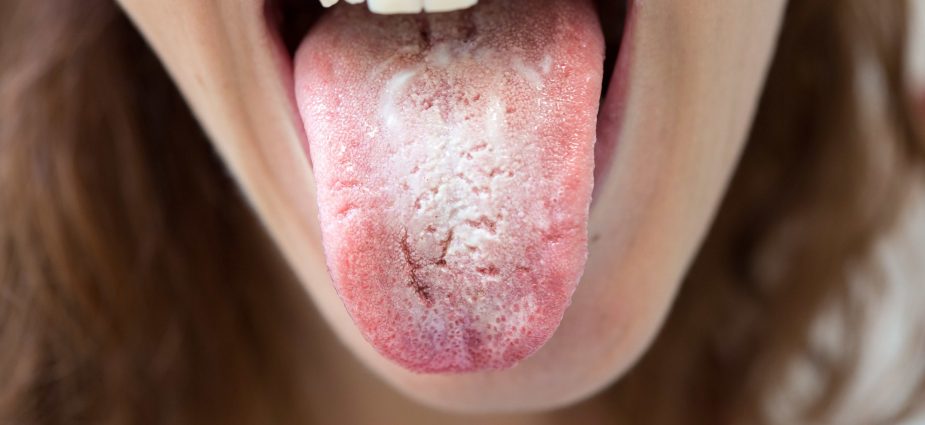
- Creamy white patches on the tongue, palate, inner cheeks or gums.
- A red area that may bleed slightly when the patches are wiped away.
- Burning, soreness or sensitivity in the mouth.
- A reduced sense of taste or a cottony feeling in the mouth.
- Cracks and redness at the corners of the mouth.
- Discomfort when swallowing or a feeling that food catches in the throat.
If symptoms do not improve within a few days, or if swallowing becomes difficult, it is sensible to seek medical advice without delay.
Types of Oral Thrush
Oral thrush does not always look like the classic white patches. The table below summarises the forms that are most often seen.
| Type | What it looks like | Often seen with |
|---|---|---|
| Pseudomembranous | Creamy white plaques that can be wiped off | Babies, inhaler users, a weak immune system |
| Erythematous | Red, burn like areas | Antibiotic use, dry mouth |
| Denture stomatitis | Redness under a denture | Dentures worn overnight or cleaned poorly |
| Angular cheilitis | Cracks and redness at the mouth corners | Denture use, poor nutrition |
What Causes Oral Thrush?
There is rarely a single cause, and several factors often work together. Antibiotics can reduce the helpful bacteria in the mouth and give the fungus room to grow. People who use inhalers or sprays that contain corticosteroids may be at higher risk if they do not rinse the mouth afterwards.
Dry mouth is another important factor, because saliva helps keep the mouth in balance. Smoking, poor oral hygiene and dentures that fit badly or are not cleaned well can also set the stage. Diabetes, some blood disorders, chemotherapy and treatments that suppress the immune system are other major causes.
Risk Factors
Not everyone has the same level of risk. Oral thrush is seen more often in the following groups:
- Babies and young children.
- Older adults who wear dentures.
- People with poorly controlled diabetes.
- People with a condition or treatment that affects the immune system.
- People taking long term antibiotics or corticosteroids.
- Smokers and people with a dry mouth.
This list is a general guide and not a prediction. Many people with risk factors never develop thrush, and it can also appear in people with none.
How Is Oral Thrush Diagnosed?
In most cases the diagnosis is made by examining the inside of the mouth. The clinician looks at how the patches appear, where they are and how they behave when wiped. If needed, a small sample can be taken and examined under a microscope or cultured.
If symptoms continue despite treatment or keep coming back, blood tests may be requested to look for an underlying cause. Because white patches are not always caused by a fungus, a patch that does not go away should always be examined.
How Is Oral Thrush Treated?
Treatment usually relies on antifungal medicines. The type is chosen by the clinician according to how widespread the infection is and the person's general health. In mild cases a gel, a liquid or lozenges used in the mouth may be enough. More widespread or stubborn infections may need medicine taken by mouth.
It is important to continue treatment for as long as the clinician advises. Stopping early, even when symptoms improve, can allow the infection to return. Avoid choosing medicines on your own, since wrong use can delay recovery and cause unnecessary side effects.
What to Do at Home
While treatment is under way, good oral care supports healing. These steps are commonly recommended:
1. Brush your teeth twice a day with a soft brush and fluoride toothpaste.
2. Clean the surface of the tongue gently.
3. Remove dentures every night, clean them and do not wear them while sleeping.
4. Rinse your mouth with water after using a corticosteroid inhaler.
5. Replace your toothbrush once the infection has cleared.
6. Seek support to stop or reduce smoking.
Sugary foods may support the environment in which the fungus feeds, so cutting back during treatment can help. Dietary changes do not replace medical treatment, however.
Oral Thrush in Babies and Children
Oral thrush is quite common in babies. White patches on the tongue and cheeks that look like milk residue but do not wipe away are a typical sign. The baby may refuse to feed, become fussy or seem uncomfortable while feeding.
Because the infection can pass between a baby and a breastfeeding mother, the treatment recommended by the paediatrician is often given to both. Keeping dummies, bottle teats and toys clean is also important. If you notice these signs in your baby, do not apply medicine on your own and speak to the paediatrician.
How to Lower the Risk of Oral Thrush
The risk cannot be removed completely, but a few habits can make it less likely. Regular and correct tooth brushing, daily cleaning between the teeth and proper care of dentures come first. Regular dental check ups help catch a problem in the mouth early.
If you have diabetes, keeping your blood sugar at the level your doctor recommends also helps reduce the risk. If you are taking antibiotics and have had thrush before, it is a good idea to tell your doctor.
When to See a Doctor
See a doctor if the white patches do not clear within two weeks, if pain or burning increases or if you have trouble swallowing. If you also have a fever, feel very tired or have a condition that affects your immunity, it is better to be assessed without waiting. A patch in the mouth that does not go away should always be examined.
Frequently Asked Questions
Does oral thrush go away on its own?
Very mild cases may sometimes settle without treatment, but relying on this is not wise. If symptoms do not ease within a few days, it is safer to be examined and to start treatment if it is needed.
Is oral thrush contagious?
Spread between healthy adults is uncommon. However, the infection can pass between a baby and a breastfeeding mother, and between people with a weakened immune system.
How long does oral thrush take to clear?
It depends on how widespread the infection is and on the treatment used. In most cases symptoms improve within a few days to a few weeks, but there is no fixed time that can be promised, and following your clinician's plan is important.