Contentsexpand_more
- What Is a Dislocated Jaw?
- Main Causes of a Dislocated Jaw
- What Are the Symptoms of a Dislocated Jaw?
- What to Do First if Your Jaw Dislocates
- Diagnosis and Treatment Options
- Recurrent Dislocated Jaw
- Simple Steps to Help Protect the Jaw
- When to Seek Help Straight Away
- Frequently Asked Questions
- Can a dislocated jaw go back by itself?
- Is a dislocated jaw dangerous?
- What should I eat after a dislocated jaw?
Imagine yawning widely or biting into something large, and your jaw suddenly locks so that you cannot close your mouth. This is what a dislocated jaw feels like. It can be frightening and painful, and it makes speaking and swallowing difficult. The good news is that, with the right approach, it can usually be put back into place by a professional.
This guide explains what a dislocated jaw is, why it happens, what to do in the first moments and which treatment options may be considered. The information is general. Your dentist or doctor can give the most accurate assessment for your situation.
What Is a Dislocated Jaw?
A dislocated jaw happens when the rounded end of the lower jaw, called the condyle, slips out of its normal position in the jaw joint and cannot return. This joint sits just in front of the ear and lets the jaw move when you speak, chew and swallow. In medical terms, it is called a temporomandibular joint dislocation.
It can affect one side or both sides. When both sides are affected, the jaw usually shifts forward and the mouth stays open. When only one side is affected, the jaw may look shifted to one side. A dislocation can be confused with other jaw problems, such as jaw pain or a clicking joint, which is why an examination matters.
Main Causes of a Dislocated Jaw
It often follows a sudden, strong movement. The most common causes are:
- Wide yawning, loud laughing or shouting.
- Biting into a large piece of food with the mouth opened very wide.
- A blow to the jaw, a fall, an accident or a sports injury.
- Keeping the mouth open for a long time during dental treatment.
- Naturally loose joints or connective tissue conditions.
- Having had a dislocated jaw before.
More than one factor can be present. If the ligaments that hold the joint are loose, even a small movement can cause a dislocation. This is why repeated episodes should be looked into for an underlying cause.
What Are the Symptoms of a Dislocated Jaw?
A dislocated jaw is usually obvious. You should seek medical help if you notice:
- The mouth stays open and cannot be closed.
- Pain in the jaw joint and around the ear.
- Difficulty speaking or swallowing, with drooling.
- The jaw looks pushed forward or to one side.
- The teeth do not meet properly.
These signs can also resemble a broken jaw. If it followed a blow, or if there is bleeding, swelling or numbness, get assessed without delay.
What to Do First if Your Jaw Dislocates
Try to stay calm and avoid forcing the jaw. Trying to push it back yourself, or asking someone else to do so, can damage the joint, ligaments and nerves and make the problem worse. The safest step is to see a dentist, a jaw surgeon or an emergency department.
On the way, you can support the jaw gently with your hand or a soft bandage. Avoid talking, eating and trying to open the mouth. Ask the healthcare professional about pain medicine, because not every medicine suits everyone.
Diagnosis and Treatment Options
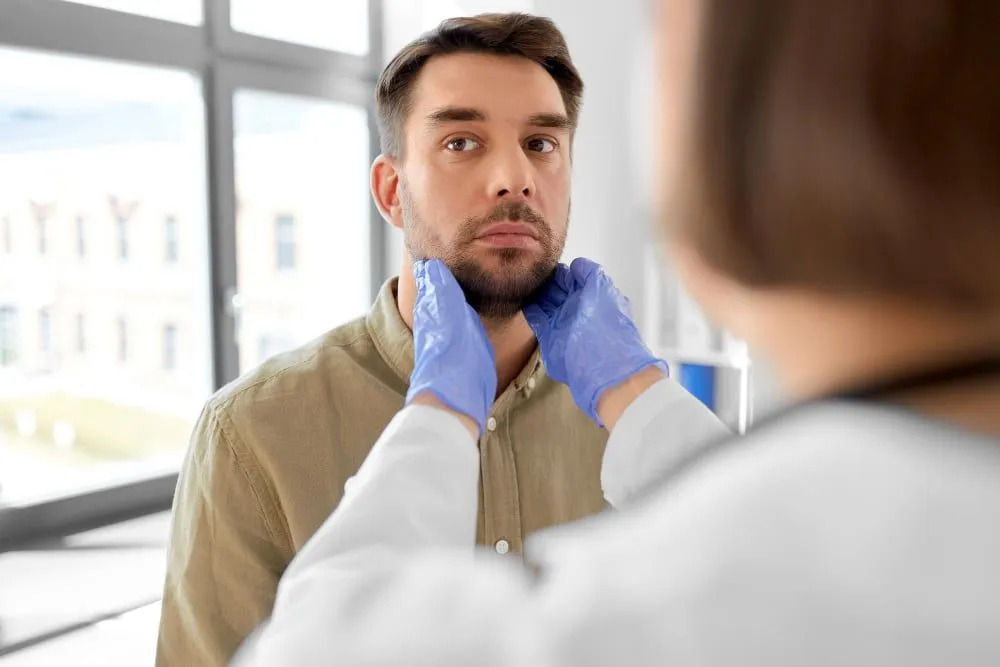
The doctor will first examine your jaw and ask how the problem happened. If needed, imaging such as an X ray or a scan may be requested to check for a fracture or to see the state of the joint. Telling the doctor about earlier dislocations and the medicines you take helps the assessment.
In most cases, the jaw is guided back into place by the doctor using a suitable technique. A muscle relaxant or a mild sedative is sometimes used first. Afterwards, it is usually advised to rest the jaw for a few days, eat soft foods and avoid opening very wide. The method and the time needed vary from person to person.
Recurrent Dislocated Jaw
In some people, dislocations happen again and again. This is often because the ligaments around the joint are loose or the joint has a different structure. For repeated cases, the doctor may suggest a bandage that limits movement, jaw exercises or a mouth appliance.
When these measures are not enough, surgical options may be considered for some people. The decision is made by a specialist after examination and imaging. Results differ from person to person, and no complete cure can be promised.
Simple Steps to Help Protect the Jaw
Protecting the jaw joint can help, especially if you have had a dislocation before. You can try the following steps:
1. Try not to open your mouth too wide when yawning and support your jaw with your hand if needed.
2. Avoid hard, sticky or very large bites, and cut food into smaller pieces.
3. Ask your dentist for breaks during long treatments.
4. If you clench or grind your teeth, ask your dentist about a mouth appliance.
5. Get checked when clicking or pain in the jaw joint begins.
These steps do not guarantee that a dislocation will never happen, but they can reduce the strain on the joint.
When to Seek Help Straight Away
Go to a healthcare facility without delay if your mouth is stuck open, you suspect a broken jaw, you have trouble breathing or swallowing, or there is bleeding or numbness after a blow. Waiting can increase the pain and make it harder to put the joint back.
Keep your follow up appointment after the jaw has been put back. If swelling, pain or difficulty opening the mouth continues, tell your doctor. Regular follow up helps problems to be noticed early.
Frequently Asked Questions
Can a dislocated jaw go back by itself?
Sometimes a mild slip corrects itself, but if the mouth is stuck open, a professional usually needs to help. It is safer to seek care than to force it yourself.
Is a dislocated jaw dangerous?
When it is put back properly, there is often no lasting problem, but repeated or untreated dislocations can damage the joint. This is why it is important not to delay if you have symptoms.
What should I eat after a dislocated jaw?
For a few days, soft foods such as soup, mashed food and yogurt are usually preferred. Avoid hard and sticky foods and bites that need a wide opening. Follow your doctor's advice about how long.