Contentsexpand_more
- What Does a Tongue Cleaner Do?
- Structural Pathology: What Happens If You Don't Clean Your Tongue?
- Structural Variations of Scrapers: Material Engineering
- 1. Copper Tongue Cleaner
- 2. Stainless Steel Tongue Cleaner
- 3. Thermoplastic (Plastic) Cleaners
- How to Use a Tongue Cleaner? Step-by-Step Clinical Technique
- Can you use a tongue scraper every day?
- Frequently Asked Questions (FAQ)
- Does brushing your tongue with a traditional toothbrush deliver the same results?
- Is it normal to experience soft-tissue bleeding while utilizing a tongue cleaner?
- How can I effectively suppress the pharyngeal gag reflex during scraping?
- What is the safest protocol to clean a tarnished copper tongue scraper?
When evaluating comprehensive oral hygiene, the vast majority of individuals restrict their daily routine strictly to brushing enamel surfaces and occasionally utilizing interdental floss. However, the oral cavity operates as a highly complex biological ecosystem, and the single largest soft-tissue surface area within this ecosystem belongs strictly to the tongue. The dorsal surface of the tongue is not smooth; rather, it is anatomically covered by thousands of micro-projections known as papillae. Due to its velvety, irregular architecture, this structure acts as an insidious microscopic sanctuary that continuously retains anaerobic bacteria, desquamated dead cells, systemic toxins, and microscopic food particles.
No matter how flawlessly you brush your teeth, if you omit regular cleaning of the dorsal tongue surface, you fail to establish complete oral sanitization. Within contemporary preventative dentistry, the primary tool engineered to prevent volatile halitosis (bad breath) and disrupt recurrent caries tracking is a professional tongue cleaner, clinically referred to as a tongue scraper. This comprehensive guide evaluates the anatomical importance of tongue hygiene, structural material variations, and correct clinical manipulation techniques.
What Does a Tongue Cleaner Do?
During routine diagnostic screenings at our department, we frequently observe a thick, white, or yellowish coating covering the tongue dorsum of our patients. This coating is not a simple food residue; it is an organized, dense biofilm containing billions of anaerobic (oxygen-depleted) bacteria that thrive in the deep crypts between the papillae.
So, what does a tongue cleaner do exactly? This specialized appliance is engineered to mechanically detach, capture, and fully eliminate this viscous, highly adherent bacterial biofilm without traumatizing the underlying soft-tissue anatomy. Traditional toothbrush bristles are structurally unsuited for the soft tongue dorsum; they merely compress the debris and force the pathogens deeper into the inter-papillary spaces. A dedicated scraper, with its flat, ergonomically curved architecture, sweeps the bio-burden clean in a single fluid stroke.
Accordingly, the primary tongue cleaner benefits validated by clinical parameters include:
Reduces Halitosis (Bad Breath) by Up to 85%: Over 90% of chronic bad breath originates directly intraorally, driven heavily by anaerobic bacteria breaking down proteins on the back of the tongue. This process releases highly offensive Volatile Sulfur Compounds (VSC). Scraping attacks the absolute root cause of the odor.
Enhances Gustatory Sensitivity (Taste Perception): When the papillae are insulated beneath a dense sheet of bacterial plaque, chemical food molecules are physically blocked from reaching the microscopic taste buds. Clearing this biofilm exposes the gustatory receptors, significantly sharpening and elevating your sense of taste.
Mitigates Dental Caries and Periodontal Inflammation: The tongue acts as a permanent bacterial reservoir. Pathogens multiplying on the tongue are continuously transported via saliva over the surfaces of your teeth and gingival margins. Utilizing a scraper minimizes the overall intraoral bacterial load, indirectly preventing tartar formation and chronic gingivitis.
Supports Systemic Digestive Wellness: Digestion initiates directly within the oral cavity. Maintaining a clean tongue dorsum optimizes healthy salivary enzyme secretion and prevents the continuous systemic ingestion of pathogenic oral toxins during swallowing.
Structural Pathology: What Happens If You Don't Clean Your Tongue?
Viewing tongue maintenance as an optional cosmetic luxury is a significant oral care error. When biological debris is left to accumulate continuously on the dorsal surface, a destructive cascade of intraoral pathologies initiates. Evaluating what happens if you don't clean your tongue reveals several primary clinical conditions:
Chronic Pathological Halitosis: Even in a mouth completely clear of active tooth decay, the continuous putrefaction of protein substrates at the posterior terminal of the tongue releases severe hydrogen sulfide gases, manifesting as permanent, socially debilitating bad breath.
Hypertrophic Appearance (Black Hairy Tongue): If desquamated dead keratin cells are not mechanically exfoliated, the filiform papillae fail to shed, elongating significantly. This transforms the tongue surface into a rough, elongated matrix that stains heavily, resulting in a dark, hairy, or multi-colored appearance.
Oral Candidiasis (Fungal Proliferation): Chronic disruption of the oral microbiome allows opportunistic fungi, specifically Candida albicans, to rapidly colonize the structural crypts of the tongue, giving rise to painful thrush infections and white patches.
Structural Variations of Scrapers: Material Engineering
Tongue cleaning appliances are manufactured from various materials. The structural composition heavily dictates the baseline antimicrobial efficacy, structural lifespan, and overall safety of the device.
1. Copper Tongue Cleaner
Dating from traditional Ayurvedic medicine to advanced contemporary biomimetic dentistry, copper remains a premium material choice. A high-grade copper tongue cleaner possesses an inherent, scientifically validated oligodynamic effect. This means the copper surface naturally exerts a potent antimicrobial force that destroys bacteria, viruses, and fungal spores within seconds of contact. It exhibits elite toxin-binding capabilities and offers an indefinite operational lifespan. While it naturally oxidizes and darkens over time when exposed to air, its pristine condition can be easily restored utilizing a natural citric acid wash.
2. Stainless Steel Tongue Cleaner
Manufactured from premium, medical-grade surgical steel, a stainless steel tongue cleaner represents the gold standard for clinical sterilization and structural durability. Its completely non-porous surface structure ensures that bacteria cannot find micro-refuges to multiply on the tool itself. It resists all forms of bending, structural distortion, or corrosion. This high-performance metal tongue cleaner provides an exceptionally safe, hypo-allergenic user experience.
3. Thermoplastic (Plastic) Cleaners
While highly economical and functional for short-term travel requirements, plastic scrapers possess a limited clinical lifespan. Thermoplastic materials are microscopically porous, meaning that over extended use, the surface accumulates deep bacterial colonization that cannot be rinsed away, requiring complete replacement every few months.
How to Use a Tongue Cleaner? Step-by-Step Clinical Technique
Scraping the tongue surface randomly or with excessive horizontal force will not yield therapeutic results and can cause micro-abrasions to the delicate papillary layout. The precise protocol on how to use a tongue cleaner involves several key technical steps:
Optimal Timing: Tongue decontamination must be executed first thing in the morning on an empty stomach, prior to consuming fluids or food, ensuring that the heavy layer of nocturnal metabolic toxins is structurally captured before it can be swallowed.
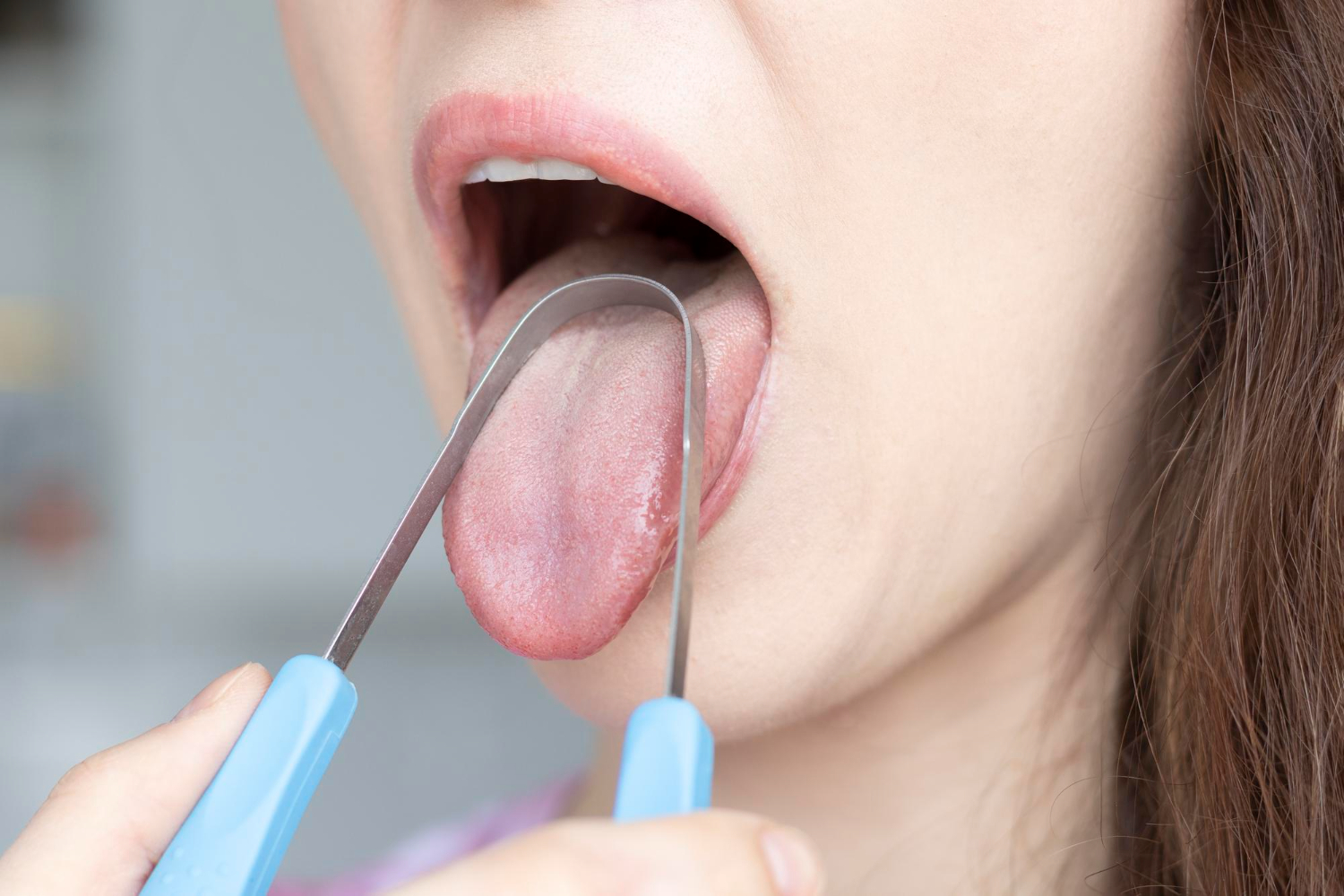
Anatomical Positioning: Stand before a well-lit mirror, open wide, and fully extend your tongue forward. Place the smooth, curved working edge of the scraper at the absolute furthest posterior zone of the tongue dorsum that you can comfortably access. (Avoid pressing too hard initially to minimize triggering the protective pharyngeal gag reflex).
The Scraping Stroke: Applying a firm, smooth, downward vertical pressure, sweep the appliance forward from the back of the tongue toward the anterior tip in a single, unidirectional motion. Never rub the scraper back and forth like a saw; strictly maintain the posterior-to-anterior sweep direction.
Rinsing and Iteration: Following each single stroke, examine the viscous white mucus captured on the blade and rinse it thoroughly under warm running water. Repeat this identical forward sweeping sequence 4 to 6 times, ensuring you cover the central groove, the right lateral quadrant, and the left lateral quadrant of the tongue surface.
Sanitization and Storage: Once the tongue surface feels fully refreshed, rinse your oral cavity thoroughly with warm water. Wash the metal scraper with antibacterial soap, dry it completely, and store it in a dry environment.
Can you use a tongue scraper every day?
Yes, absolutely. A tongue scraper is designed for continuous, daily integration into your personal oral sanitization regimen, precisely like your toothbrush. Utilizing it at least once per day is essential to permanently regulate intraoral bacterial colonization.
Frequently Asked Questions (FAQ)
Does brushing your tongue with a traditional toothbrush deliver the same results?
No, it does not. Toothbrush bristles are structurally engineered to clean the hard, mineralized structures of enamel. When applied to the soft, irregular landscape of the tongue, the bristles fail to lift the sticky biofilm; instead, they plow the pathogens deeper into the papillary crypts while excessively aggravating the gag reflex.
Is it normal to experience soft-tissue bleeding while utilizing a tongue cleaner?
No, bleeding is a clinical abnormality. If bleeding occurs, you are either applying excessive, traumatic physical pressure with the metal blade, or your tongue is suffering from advanced fungal or structural inflammation. Diminish your pressure immediately, and if bleeding persists, schedule a evaluation at our department.
How can I effectively suppress the pharyngeal gag reflex during scraping?
To down-regulate a hypersensitive gag reflex, avoid placing the appliance at the absolute terminal back of the tongue during your first week. Initiate your sweeps from the mid-dorsum of the tongue, gradually moving the starting position backward by a few millimeters each consecutive day to desensitize the nerves. Exhaling steadily through your mouth during the stroke also physically suppresses the reflex.
What is the safest protocol to clean a tarnished copper tongue scraper?
Because copper is a highly reactive metal, it naturally develops a dark patina when exposed to intraoral moisture and oxygen. To instantly restore its bright, sterile luster, simply rub the surface gently with a mixture of lemon juice and natural salt, or soak it briefly in organic vinegar, then rinse thoroughly.