Contentsexpand_more
- What is a Fracture of a Porcelain Veneer and What Are the Types?
- What Causes the Fracture of a Porcelain Veneer?
- Emergency First Aid: What to Do When a Veneer Fractures
- How is a Broken Porcelain Veneer Repaired?
- 1. Re-Contouring and Polishing (Minor Chipping)
- 2. Intraoral Direct Composite Resin Bonding (Moderate Corner Fractures)
- 3. Complete Replacement of the Veneer (Extensive Bulk Fractures)
- Can a Dislodged Porcelain Veneer Be Rebonded Intact?
- How to Prevent Future Porcelain Veneer Fractures
- Factors Influencing Porcelain Veneer Repair Cost
- Comparison Matrix: Composite Chairside Repair vs. Full Veneer Replacement
- Frequently Asked Questions (FAQ)
- Will the natural tooth underneath decay if a veneer fractures?
- Will my underlying natural tooth be damaged when removing a broken veneer?
- Will I have to walk around with a broken tooth while waiting for a new veneer?
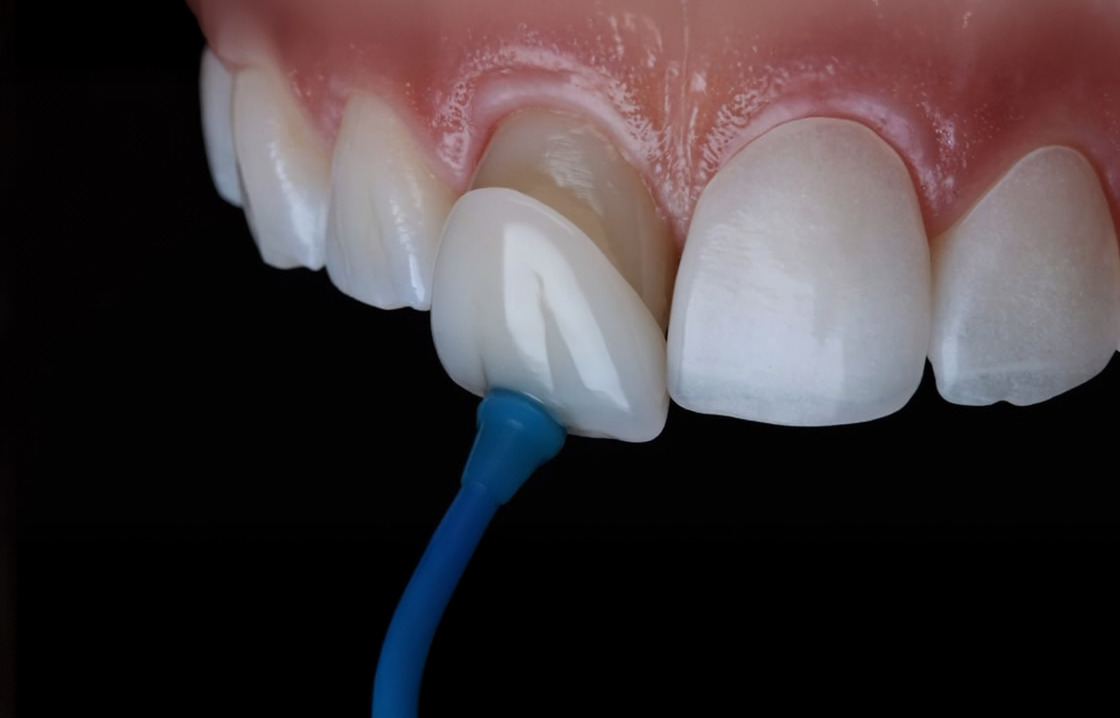
Recall the satisfaction of completing your aesthetic smile makeover, the lifelike translucency, polychromatic vitality, and symmetry of your porcelain laminate veneers restoring complete facial confidence. Experiencing an unexpected mechanical crunch during a meal, inadvertently knocking an eating utensil against an incisor, or awakening to a jagged incisal margin creates understandable distress. Feeling a sharp edge with your tongue or noticing a hairline fracture running across the facial ceramic shell warrants prompt clinical attention. In aesthetic restorative dentistry, the fracture of a porcelain veneer is an acute complication requiring precise biomimetic management.
Porcelain laminate veneers, particularly lithium disilicate (IPS e.max) formulations, exhibit exceptional monolithic compressive strength once chemically integrated with enamel via resin bonding. However, by anatomical design, veneers feature minimal thicknesses between 0.3 and 0.7 millimeters. Uncalibrated occlusal forces, micro-structural flexure, or hard object impacts can exceed the tensile threshold of the ceramic lattice.
What is a Fracture of a Porcelain Veneer and What Are the Types?
In clinical prosthodontics, the physiological definition of a fracture of a porcelain veneer is: The structural failure or cohesive breakage of a bonded glass-ceramic laminate, resulting from shear or tensile forces that exceed the bond strength of the resin interface or the fracture toughness of the ceramic matrix.
Ceramic failures are categorized across three clinical stages:
Superficial Craze Lines (Hairline Cracks): Optical cracks within the ceramic glaze without volumetric material loss; light refraction reveals vertical or horizontal stress lines.
Incisal Chipping (Cohesive Micro-Fracture): Loss of a localized ceramic fragment along the incisal edge or proximal corner, creating a sharp contour.
Catastrophic Bulk Fracture & Debonding: Complete structural cleavage splitting the veneer body, dislodgement of significant ceramic sections, or detachment of the entire shell.
What Causes the Fracture of a Porcelain Veneer?
Clinical investigations identify several primary triggers behind a fracture of a porcelain veneer:
Undiagnosed Nocturnal Bruxism and Clenching: The primary global etiology. Involuntary grinding subjects anterior restorations to heavy lateral shear forces; without an occlusal nightguard, ceramic fatigue induces stress fractures.
Mechanical Foreign Object Impact: Habits such as cracking nutshells, chewing ice cubes, biting hard seeds, tearing open packaging, or biting pens apply high point loads to delicate incisal margins.
Occlusal Interference and Premature Contacts: Sub-millimeter occlusal high spots during mandibular excursions subject the restoration to repetitive lever forces during routine mastication.
Adhesive Cementation Disruption: Inadequate moisture isolation, contaminated etching protocols, or incomplete light-polymerization of the resin cement compromises the supporting foundation, allowing the unsupported ceramic to flex and fracture.
Bonding to Dentin vs. Enamel: Laminates bond most predictably to intact enamel prisms. When heavy reduction exposes deep, flexible dentin, mismatched moduli of elasticity permit structural micro-movement that fractures rigid ceramic.
Direct Facial Trauma: Contact sports collisions, domestic falls, or direct strikes from metallic dining utensils.
Emergency First Aid: What to Do When a Veneer Fractures
If your porcelain veneer cracks or chips, follow these steps before your emergency appointment:
Retrieve and Preserve Any Fragments: If a piece dislodges cleanly, place it in a sterile container and bring it to your clinic.
Never Use Household Superglue: Industrial cyanoacrylate glues are cytotoxic, burn soft periodontal tissues, and contaminate the ceramic bonding surface, complicating professional restoration.
Shield the Tongue and Lips: If the remaining margin is sharp, apply a small piece of orthodontic wax or sugar-free gum over the edge to prevent soft-tissue lacerations.
Avoid Thermal Extremes: If underlying dentin is exposed, avoid hot and cold beverages to minimize thermal sensitivity.
Schedule an Emergency Evaluation: Seek prompt clinical attention to prevent marginal staining, food impaction, and further propagation of the fracture line.
How is a Broken Porcelain Veneer Repaired?
At Livera Dental Clinic, repairing a fracture of a porcelain veneer is approached through three evidence-based protocols:
1. Re-Contouring and Polishing (Minor Chipping)
When chipping is microscopic and localized strictly to the incisal edge without altering aesthetics, the sharp zone is smoothed using fine diamond burs, flexible polishing discs, and diamond pastes in a single 15-minute visit.
2. Intraoral Direct Composite Resin Bonding (Moderate Corner Fractures)
For localized fractures where remaking the restoration is deferred:
The exposed ceramic fracture margin is etched intraorally using buffered 9% hydrofluoric acid or sandblasted with aluminum oxide.
A silane coupling agent is applied to establish a chemical bridge between the ceramic matrix and resin.
Shade-matched nano-hybrid restorative composite is layered, light-cured, and polished to restore anatomical form in a single appointment.
3. Complete Replacement of the Veneer (Extensive Bulk Fractures)
When the veneer body is fractured across its middle third or splits into multiple segments, remaking the restoration delivers the most durable result:
The damaged veneer is debonded safely using specialized Er:YAG dental lasers or micro-diamond burs without altering sound underlying enamel.
Optical impressions are recorded using 3D high-definition intraoral scanners.
A new monolithic CAD/CAM lithium disilicate (IPS e.max) veneer is milled, characterized, and bonded within 2 to 3 days.
Can a Dislodged Porcelain Veneer Be Rebonded Intact?
When a veneer detaches completely without shattering:
Intact Debonding (Whole Veneer Preserved): Yes. If the ceramic shell remains intact without internal fractures, the old resin cement is cleared, the intaglio surface is re-etched and silanated, and the veneer is bonded back onto the tooth.
Shattered or Segmented Debonding: Attempting to glue fragmented porcelain segments back together creates unsealed margins prone to microleakage and rapid re-fracture. Fabricating a replacement veneer is indicated.
How to Prevent Future Porcelain Veneer Fractures
To maximize the longevity of your porcelain restorations:
Wear a Custom Nightguard: If you clench or grind your teeth, wear a custom hard-acrylic occlusal splint nightly to shield restorations from lateral forces.
Avoid Biting Hard Foods with Anterior Teeth: Cut apples, crusty breads, and dense meats into smaller portions and chew using posterior molars.
Never Use Teeth as Tools: Avoid biting fingernails, tearing tape, or opening caps with your teeth.
Use a Protective Sports Mouthguard: Wear a custom athletic mouthguard during contact sports and physical activities.
Factors Influencing Porcelain Veneer Repair Cost
Health regulations restrict advertising static treatment fees; costs vary based on procedural complexity. Primary variables include:
Nature of the Intervention: Minor enamel-ceramic re-polishing versus chairside silane-bonded composite repair versus complete laboratory CAD/CAM veneer fabrication.
Tier of Ceramic and Bonding Substrates: Premium lithium disilicate blocks (IPS e.max), dual-cure resin cements, and specialized silane coupling chemistries.
Condition of Underlying Tooth Architecture: Whether natural tooth structure sustained damage requiring core reconstruction, desensitization, or periodontal recontouring.
Adjunctive Preventive Appliances: Fabricating a new 3D digital occlusal splint (nightguard) to safeguard restorations from ongoing bruxism.
Comparison Matrix: Composite Chairside Repair vs. Full Veneer Replacement
Clinical Metric | Direct Composite Chairside Repair | Complete Porcelain Veneer Replacement |
Chairside Duration | Single Visit (20 to 30 mins) | 2 Visits (2 to 4 days) |
Aesthetic Integration | Very Good (Slight margin visible under scrutiny) | Flawless (Homogeneous color & translucency) |
Expected Durability | 2 to 4 Years (Requires maintenance) | 10 to 15+ Years |
Cost Profile | Accessible, fraction of new veneer | Full single-unit restoration fee |
Tooth Enamel Impact | Zero (Preserves existing prep) | Debrides old resin cement |
Primary Indication | Minor-to-moderate incisal chipping | Bulk fractures, structural splits |
Frequently Asked Questions (FAQ)
Will the natural tooth underneath decay if a veneer fractures?
If an open fracture or margin detachment is left unaddressed, oral fluids, plaque, and bacteria infiltrate the adhesive interface. Over time, microleakage allows recurrent decay to develop beneath the ceramic. Prompt evaluation and restoration seal the margins and protect underlying enamel and dentin.
Will my underlying natural tooth be damaged when removing a broken veneer?
No. Experienced clinicians remove fractured veneers using Er:YAG hydrokinetic dental lasers or high-magnification diamond burs. Laser energy targets and degrades the resin cement without generating heat, releasing the ceramic cleanly while preserving sound underlying enamel.
Will I have to walk around with a broken tooth while waiting for a new veneer?
No. If complete replacement is required, your dentist places an aesthetic, shade-matched temporary veneer immediately after digital scanning. This protects the tooth from thermal sensitivity and preserves your smile while your permanent ceramic veneer is crafted.