Contentsexpand_more
- What is a Dental Crown and What is a Dental Implant?
- Which is Better: A Dental Crown or an Implant?
- When is a Dental Crown the Optimal Choice?
- When is a Dental Implant the Optimal Choice?
- Zirconia Crown or Implant: Understanding the Terminology
- Porcelain Crown or Implant: Clinical Indications
- Treatment Timeline: Dental Crown vs. Implant
- Factors Influencing Treatment Cost
- Comparison Matrix: Dental Crown vs. Dental Implant
- Frequently Asked Questions (FAQ)
- Is it better to extract a troublesome tooth and get an implant right away?
- Can my natural tooth still decay underneath a dental crown?
- Can a mobile or loose tooth be crowned, or is an implant required?
When facing a severely compromised tooth that has suffered massive coronal fractures, extensive deep caries, or structural fragility following historic endodontic therapy, you inevitably confront a pivotal clinical decision: "Should I extract this compromised tooth and place a titanium dental implant, or can I preserve the tooth by placing a protective dental crown?" Many patients assume implants represent a permanent, impervious replacement and sacrifice salvageable natural teeth prematurely. Conversely, attempting to place a crown over a fractured, non-restorable root wastes clinical time and financial resources. In restorative and surgical dentistry, determining whether to place a dental crown or implant is resolved through clear biomechanical and biological parameters.
Natural dental roots connect to the surrounding alveolar bone via the periodontal ligament, a microscopic suspensory network of collagen fibers and neurovascular endings that cushions masticatory load vectors and transmits tactile sensory feedback to the brain. In contrast, a dental implant is an endosseous titanium fixture that fuses directly to bone through direct structural ankylosis (osseointegration). While dental implants represent the gold standard for replacing missing teeth, no artificial biomedical device fully replicates the proprioception and defense mechanisms of a healthy natural root.
What is a Dental Crown and What is a Dental Implant?
Differentiating the structural foundation of these two restorative modalities is critical:
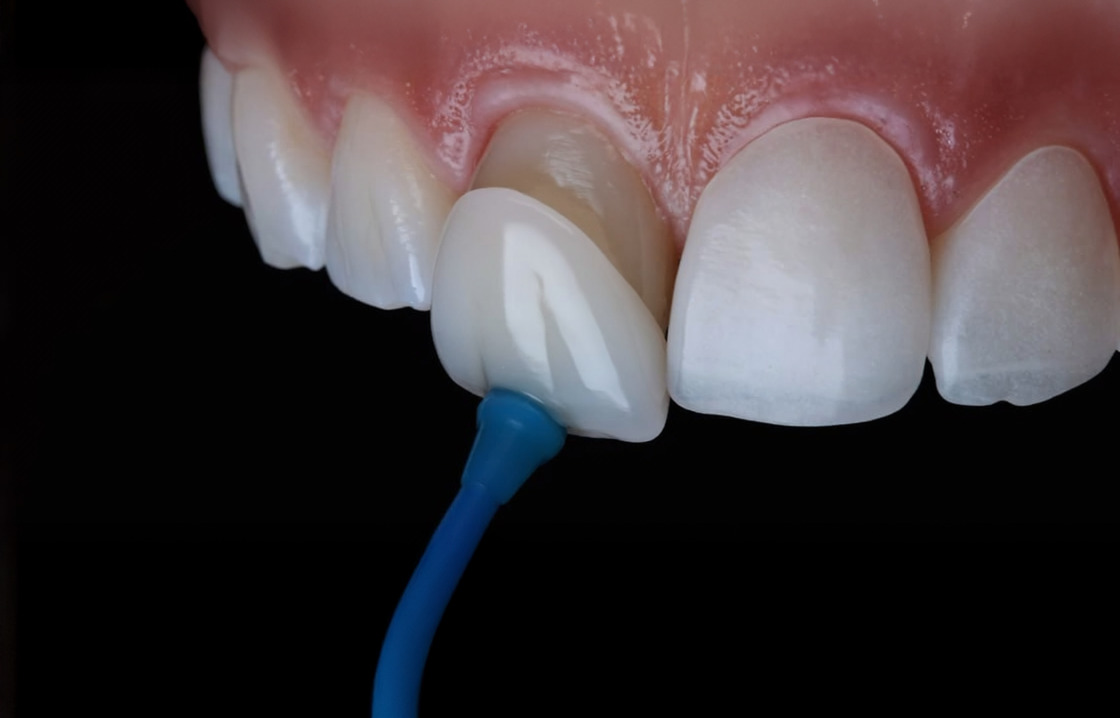
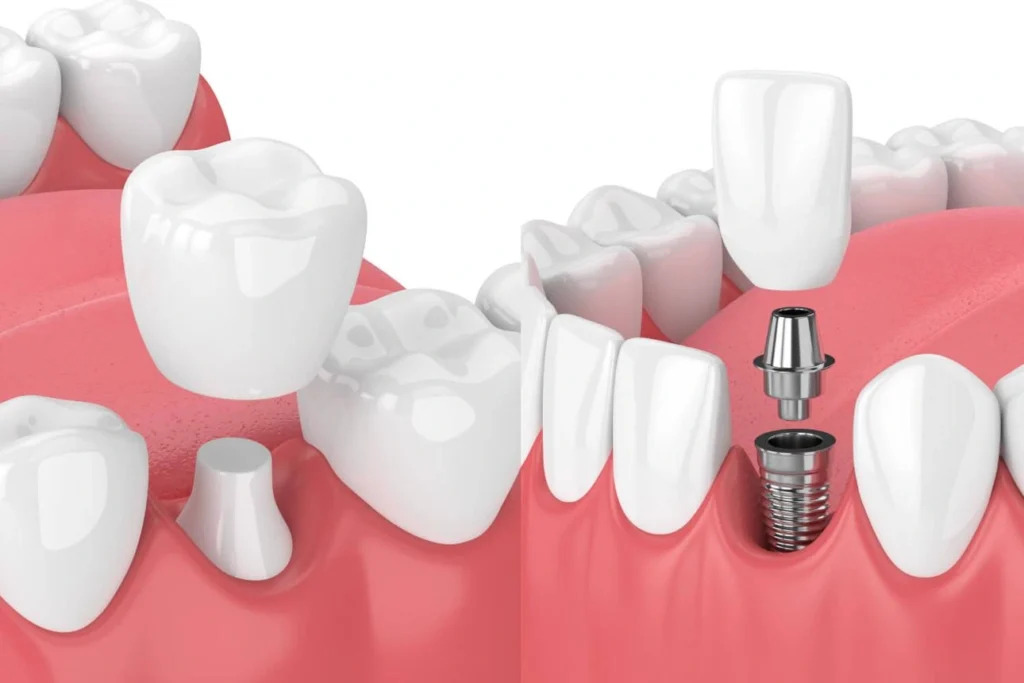
Dental Crown (Single-Tooth Cap): Indicated when the natural tooth root remains structurally intact, properly anchored within alveolar bone, and free of vertical root fractures. The compromised coronal hard tissues are conservatively prepared, and a custom-milled zirconia, lithium disilicate (E-Max), or porcelain-fused-to-metal (PFM) crown is cemented over the remaining core to protect the underlying natural root.
Dental Implant (Endosseous Replacement): Indicated when the natural tooth has suffered vertical root fracture, severe subcrestal caries, or terminal periodontal bone loss. The non-salvageable root is atraumatically extracted, a titanium or ceramic fixture is placed into the alveolar bone bed, and a prosthetic abutment and crown are secured following osseointegration.
Which is Better: A Dental Crown or an Implant?
Evaluating whether a dental crown or implant is better depends entirely on the biological restorable potential of the host tooth root:
A Crown is Superior When the Natural Root is Structurally Sound: If the root exhibits adequate length, sound periapical architecture, and at least 1.5 to 2 millimeters of healthy supragingival dentin (the "ferrule effect"), keeping the natural root is paramount. Artificial fixtures lack the periodontal ligament, which provides natural shock absorption and proprioception.
An Implant is Superior When the Natural Root is Unrestorable: When a root exhibits vertical root fracture, decay deep beneath the alveolar crest, or severe grade III mobility, attempting to place a crown is contraindicated. A compromised root will fail within months. Under these circumstances, extracting the root and placing a dental implant provides a predictable, long-term functional solution.
When is a Dental Crown the Optimal Choice?
Preserving the natural tooth with a dental crown is indicated in the following presentations:
Extensively Restored and Structurally Undermined Teeth: Teeth where more than 50% of the coronal enamel and dentin has been lost to caries or old restorations, but the root remains firmly rooted.
Post-Endodontic Brittleness: Endodontically treated teeth lose internal moisture and become brittle over time. Encasing the tooth with a full-coverage crown prevents catastrophic vertical split fractures.
Adequate Bone Architecture and Intact Periodontal Attachment: Teeth demonstrating normal crestal bone height on intraoral radiographs should be preserved to maintain natural alveolar volume.
Aesthetic and Functional Recontouring: Correcting anatomical anomalies, discoloration, or minor malocclusion when the underlying root is structurally stable.
When is a Dental Implant the Optimal Choice?
Sacrificing a compromised tooth in favor of a dental implant is the appropriate choice in the following clinical scenarios:
Vertical Root Fractures (VRF): A longitudinal crack running down the root axis cannot heal or seal; immediate extraction and implant placement prevent progressive bone loss.
Subosseous Caries and Loss of Ferrule Effect: Decay that has extended deep beneath the alveolar bone crest leaves inadequate solid tooth structure to bond a crown.
Terminal Periodontitis and Severe Tooth Mobility: Advanced loss of supporting bone where the tooth exhibits circumferential mobility (hopeless periodontal prognosis).
Pre-Existing Edentulous Gaps: Restoring an empty ridge without grinding down adjacent sound teeth for a traditional dental bridge.
Zirconia Crown or Implant: Understanding the Terminology
Patients often encounter confusion regarding zirconia crown or implant options:
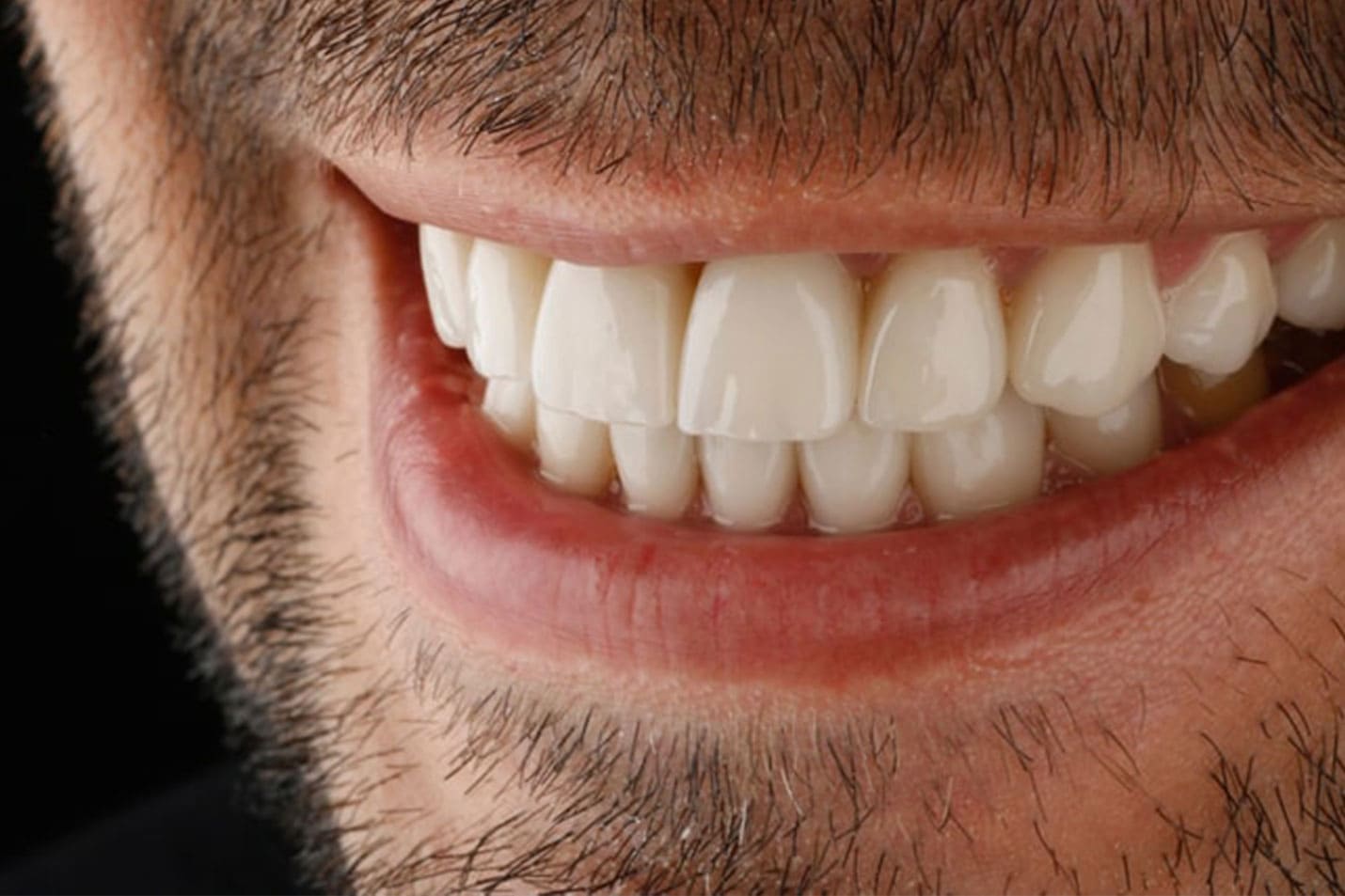
Zirconia Crown: A restorative material constructed from biocompatible, high-translucency zirconium dioxide ceramic. It serves as the aesthetic crown that caps either a prepared natural tooth or a dental implant abutment.
Dental Implant: The surgical screw beneath the gum tissue that acts as the missing root.
Integrated Application: Rather than competing alternatives, zirconia is often the material of choice used on top of an implant. Whether saving your natural tooth or receiving an implant, a zirconia crown can serve as the final aesthetic restoration.
Porcelain Crown or Implant: Clinical Indications
Evaluating a porcelain crown or implant centers on case presentation:
Porcelain-Fused-to-Metal (PFM) Crown: A traditional restoration featuring a ceramic exterior fused over a metal framework. Placed over natural teeth, it offers durability at a lower cost, though it may produce a dark gumline margin over time.
Implant Supported Porcelain Crown: A PFM or all-ceramic crown secured onto an implant abutment within an edentulous space.
Clinical Decision: If your natural root is solid, an all-ceramic or PFM crown preserves it; if the root must be extracted, an implant with a porcelain-layered restoration rebuilds the site.
Treatment Timeline: Dental Crown vs. Implant
The timeline differs considerably between these two treatments:
Dental Crown Duration: Preparing and seating a crown over a natural tooth requires 3 to 5 business days across 2 or 3 appointments. The tooth is shaped, scanned with digital intraoral cameras, and the final crown is bonded into place.
Dental Implant Duration: Surgically placing the implant requires a 15- to 30-minute procedure. However, achieving osseointegration requires a healing interval of 2 to 3 months in the mandible and 3 to 4 months in the maxilla. If simultaneous bone grafting or sinus lifting is required, healing can extend to 6 months before the final crown is delivered.
Factors Influencing Treatment Cost
Health regulations restrict advertising static surgical and restorative fees; comparative costs depend on whether care is non-surgical or surgical. Primary variables include:
Nature of the Intervention: Restoring an existing natural tooth with a single zirconia or E-Max crown versus surgical implant fixture placement, custom titanium/zirconia abutment, and implant-supported crown.
Implant Brand and Ceramic Quality: Certified dental implant systems (e.g., Swiss, German, Swedish, or domestic) and high-translucency multilayered zirconia blocks.
Adjunctive Bone Regeneration Procedures: The necessity of particulate bone grafting, collagen barrier membranes, or lateral sinus floor elevations to establish sufficient implant bone housing.
Endodontic and Pre-Restorative Foundation: The need for microscopic root canal retreatment, fiber-reinforced post placement, or surgical crown lengthening before placing a crown on a natural tooth.
Comparison Matrix: Dental Crown vs. Dental Implant
Clinical Metric | Dental Crown (Single Cap) | Dental Implant |
Primary Biological Objective | Preserve the natural tooth root | Replace a missing or extracted tooth |
Natural Root Required | Mandatory (Root must be salvageable) | None; artificial titanium fixture placed |
Surgical Procedure | Non-surgical (Prepared under local anesthesia) | Minor outpatient surgical procedure |
Treatment Timeline | Rapid (3 to 5 Days) | 2 to 4 Months (Osseointegration healing) |
Masticatory Proprioception | Natural tactile sensation (Periodontal fibers) | Excellent stability, reduced proprioception |
Longevity Expectancy | 10 to 15+ Years with good oral hygiene | 25+ Years to a Lifetime with good hygiene |
Cost Profile | Lower initial clinical fee | Higher initial investment |
Frequently Asked Questions (FAQ)
Is it better to extract a troublesome tooth and get an implant right away?
No. Extracting a salvageable natural tooth simply to place an implant is biologically counterproductive. Natural tooth roots feature the periodontal ligament, a specialized suspensory ligament that provides natural shock absorption, tactile sensitivity, and bone maintenance that no implant can match. If your natural root has sufficient structural integrity and sound periapical health, treating and crowning it should remain the primary treatment objective.
Can my natural tooth still decay underneath a dental crown?
Yes. While the artificial crown material (zirconia, porcelain, or metal) cannot decay, the natural tooth margin where the crown meets the gumline remains susceptible to plaque accumulation. If oral hygiene is neglected and bacterial plaque penetrates the margin, recurrent secondary caries can develop beneath the crown. Practicing daily brushing, interdental flossing, and attending regular 6-month clinical cleanings prevents recurrent decay.
Can a mobile or loose tooth be crowned, or is an implant required?
It depends on the underlying etiology of the mobility. If the mobility stems from primary occlusal trauma (bruxism or a premature bite contact), balancing the bite and placing a crown can stabilize the tooth. However, if mobility is driven by advanced periodontitis and severe bone loss, placing a crown will fail. In that scenario, atraumatic extraction followed by bone reconstruction and implant placement provides the predictable path forward.