Contentsexpand_more
- What is the Treatment for Alveolitis?
- What Structural Elements Cause Alveolitis?
- Clinical Signs and Symptoms of Active Alveolitis
- Clinical Management: How to Treat Dry Socket?
- Does the Treatment for Alveolitis Hurt?
- Pharmacological Evaluation: Are Antibiotics Prescribed for Alveolitis?
- Longevity Mapping: How Long Does Alveolitis Treatment Take?
- Frequently Asked Questions (FAQ)
- What happens if a dry socket is left completely untreated by a professional?
- What post-operative instructions are paramount to prevent developing a dry socket?
- Can alveolitis redevelop within the same extraction socket after the initial treatment is successfully finalized?
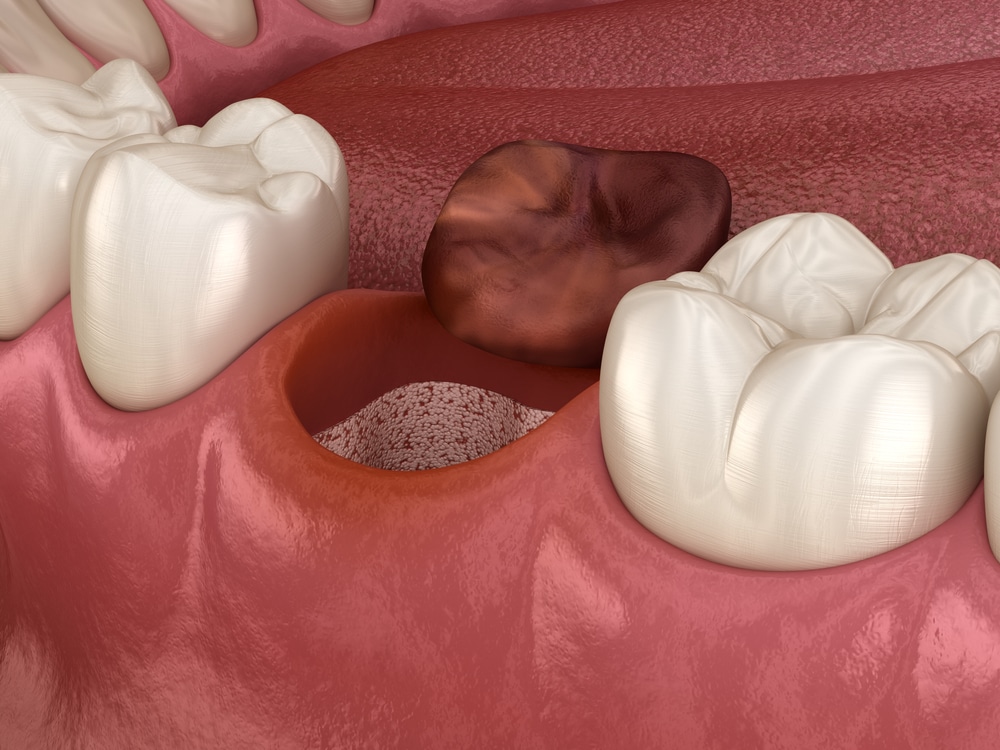
The surgical or routine removal of a tooth from its alveolar housing represents a standard tissue rehabilitation intervention in modern dentistry. Under physiological baselines, immediately following extraction, the empty bone cavity (alveolar socket) fills with blood, organizing a rich, dark blood clot within seconds. This clot serves as the host’s own biological dressing; it seals off the underlying raw bone walls and highly sensitive peripheral nerve endings from the harsh intraoral environment, providing protection against bacterial infiltration, acidic salivary shifts, and stagnant food remnants. Over time, this fibrin network guides the migration of specialized cells that remodel the space into fresh bone and mucosal structures.
However, in specific clinical scenarios (predominantly spanning the initial 24 to 72 hours post-surgery) this crucial blood clot either completely fails to mature or faces structural disintegration and dislodgement due to post-operative mechanical errors. With the absolute loss of this protective cover, the intraoral jawbone architecture becomes "dry" and exposed to chemical and microbial insults; this acute complication is clinically cataloged as alveolar osteitis or commonly referenced as a dry socket. The defining clinical hallmark is an escalating, intense throbbing pain starting 2-4 days post-extraction that typically radiates across the entire side of the face up to the ear and temples.
What is the Treatment for Alveolitis?
When patients present to our urgent triage wing navigating severe, relentless post-extraction pain that compromises sleep parameters, their baseline query addresses what is treatment for alveolitis. The clinical treatment for alveolitis is an emergency, localized micro-surgical intervention designed to eliminate acute intraosseous inflammation, shield exposed and sensitive bone walls from salivary contact, and instantly neutralize the intense neuropathic pain that compromises the patient's quality of life.
What Structural Elements Cause Alveolitis?
Before analyzing the step-by-step phases of a specialized treatment for alveolitis steps, mapping the exact clinical risk factors is vital to prevent long-term recurrence:
Intraoral Negative Pressure Generation (Suction Forces): Engaging in drinking through a straw, vaping, or violent, full-mouth spitting within the initial days creates acute negative pressures that mechanically dislodge the fragile blood clot like a cork.
Heavy Nicotine and Tobacco Consumption: Tobacco smoke introduces systemic nicotine that causes severe constriction of the alveolar capillaries, depriving the socket of essential blood cells. Furthermore, the physical suction of smoking damages the clot interface.
Vigorous Hydrodynamic Rinsing: Aggressively swishing water or commercial mouthwashes on the day of surgery physically strips the delicate fibrin bands from the bone margins.
Traumatic and Complex Oral Surgery: Complex, bone-cutting extractions induces localized tissue trauma, triggering an over-release of chemical enzymes (fibrinolytic agents) that dissolve the clot prematurely.
Clinical Signs and Symptoms of Active Alveolitis
While mild soreness is expected for 48 hours post-extraction, the presence of the following diagnostic indicators signifies that an immediate treatment for alveolitis steps intervention is mandatory:
Direct visual inspection of the socket reveals a total absence of a dark blood clot, presenting a hollow, exposed grey-white bony architecture instead.
An escalation rather than a decline in pain severity on days 3 to 4, manifesting as a severe, unmitigated throbbing that spreads directly to the ipsilateral eye, ear, and temporal fields.
A profound, foul odor (halitosis) emanating from the open wound, paired with a highly unpleasant, necrotic taste in the oral cavity.
Clinical Management: How to Treat Dry Socket?
A primary technical query analyzed by clinicians and patients is how to treat dry socket effectively. According to current evidence-based international dental consensus guidelines (NCBI / StatPearls), the correct modern protocol strictly avoids mechanical scraping (curettage) of the socket walls; scraping raw, inflamed bone merely exacerbates tissue trauma and delays physiological healing. The correct non-invasive sequence follows several precise checkpoints:
· [Local Anesthesia] ➔ [Sterile Saline Lavage/Irrigation] ➔ [Medicated Alveogyl Dressing Seating] ➔ [Home Protective Aftercare]
Profound Local Desensitization: Because the raw bone walls present severe tactile hypersensitivity, long-acting local anesthesia is gently administered to establish a completely comfortable working field.
Sterile Hydro-Irrigation (Lavage): The open socket is thoroughly but gently flushed utilizing sterile saline or warm antimicrobial rinses via specialized curved-tip syringes. This lavage mechanically displaces entrapped food debris, bacterial multi-species biofilms, and necrotic cellular slough from the bone base.
Placement of a Sedative Obtundent Dressing (Alveogyl): Following precise drying, a specialized, self-resorbing, fiber-filled medicated paste containing iodoform and natural eugenol (clove derivative oil), such as Alveogyl, is adapted directly into the empty bone chamber. The eugenol acts directly on the exposed osseous nerve ends, blocking nociceptive paths and completely eradicating the intense pain parameters within minutes. Because this structure dissolves naturally over a week, it requires zero surgical removal.
Does the Treatment for Alveolitis Hurt?
A major clinical anxiety among patients entering emergency triage is does treatment for alveolitis hurt. The answer is a reassuring no; the procedure is entirely pain-free. Prior to launching any mechanical flush or dressing placement, our oral surgeons secure complete neural blocks using advanced local anesthetics. The patient feels absolute zero sharp pain or burning during the sequence. On the contrary, patients who arrive under agonizing stress experience an immediate, therapeutic wave of relief the moment the sedative dressing isolates the raw bone matrix.
Pharmacological Evaluation: Are Antibiotics Prescribed for Alveolitis?
A widespread clinical misconception among dental professionals and patients is treating a dry socket as a classic purulent bone infection. However, alveolitis represents a localized, non-purulent tissue inflammation stemming from a lack of physical clot protection rather than an active bacterial invasion of the marrow. Consequently, current clinical guidelines firmly discourage the routine prescription of oral antibiotics for alveolitis. Administering systemic antibiotics does not accelerate bone healing. Your specialist will strictly limit antibiotics to immunocompromised individuals (e.g., uncontrolled diabetes) or presentations where a spreading fascial space infection or high systemic fever is verified. The baseline pharmacological strategy relies primarily on maximum therapeutic doses of non-steroidal anti-inflammatory drugs (NSAIDs) paired with acetaminophen.
Longevity Mapping: How Long Does Alveolitis Treatment Take?
The active clinical execution required to complete a professional irrigation and dressing placement requires a brief 10 to 15 minutes in the chair, resolving acute pain parameters instantly. However, the biological timeline required for new vascularized tissue (granulation tissue) to completely overlay the exposed bone floor and close the wound spans 7 to 10 days. In severe or deep mandibular presentations, the patient may return to our clinic every 48-72 hours for a gentle dressing refresh until baseline comfort is stabilized.
Critical guidelines following your professional clinical sequence:
Maintain a strict nil-by-mouth protocol for the initial 2 hours to safeguard the custom dressing from accidental mechanical displacement.
Recognize that a mild, manageable residual ache is normal as the anesthetic tapers off; utilize your prescribed NSAID schedule consistently.
Do not explore the healing socket with your tongue, and never attempt to extract or pick at the medicated fibers packed inside the bone.
Enforce absolute smoking cessation until initial tissue closure is radiographically and clinically verified.
Frequently Asked Questions (FAQ)
What happens if a dry socket is left completely untreated by a professional?
If left untreated, a dry socket remains a self-limiting condition. Even without clinical intervention, the human body will gradually guide new soft tissue matrices to creep over the exposed raw bone walls, a biological process that typically takes 2 to 3 weeks to fully mitigate the pain. However, enduring those 21 days without specialized care subjects the patient to unnecessary, agonizing pain parameters that disrupt daily function and sleep; seeking a brief 10-minute professional irrigation is always the most rational choice.
What post-operative instructions are paramount to prevent developing a dry socket?
The absolute golden rule is to completely avoid spitting, forceful mouth rinsing, or generating suction forces via straws during the first 24 hours. Keep steady, firm pressure on the sterile gauze pad placed over the wound by biting down consistently for the first 30 minutes before gently discarding it. Abstain from tobacco products and alcohol for a minimum of 48 hours, and restrict your diet exclusively to cool, soft, non-fibrous purees.
Can alveolitis redevelop within the same extraction socket after the initial treatment is successfully finalized?
No, following a correctly executed treatment for alveolitis, it is clinically impossible for the pathology to redevelop within the same extraction socket. The specialized medicated dressing (Alveogyl) fully isolates and shields the raw bony walls until the fresh tissue matrix completely covers the socket floor. However, if the patient continues to smoke or completely neglects oral hygiene metrics during the recovery phase, the biological healing velocity of the socket can face severe delays.