Contentsexpand_more
- What Causes the Loss of a Filling?
- Symptoms of Loss of a Filling: Lost Dental Filling Signs
- Lost Tooth Filling Pain: Does it Cause Pain?
- Why a Root Canal Loss of a Filling Requires Urgent Triage
- What to Do During a Temporary Loss of a Filling
- Classification of Fallen Fillings and Emergency Clinical Protocols
- Emergency At-Home Steps Prior to Your Dental Appointment
- Frequently Asked Questions (FAQ)
- How long can a tooth safely remain without its filling?
- Does the loss of a filling cause pain, and can pain relievers resolve it permanently?
- Will the dentist need to drill the tooth again to place a new filling? Does it hurt?
In our everyday lives, while chewing a meal, enjoying chewing gum, or biting into a firm piece of food, we may suddenly detect a hard, stone-like foreign object in our oral cavity. Upon inspecting the area in front of a mirror, we discover a deep void, jagged margins, or a structural hollow over our dentition. Globally recognized as a primary reason for urgent outpatient dental triage, the loss of a filling is an acute mechanical and biological complication that leaves the underlying internal anatomy entirely defenseless against structural pathogens, organic acids, and thermal shifts.
A significant percentage of patients demonstrate a tendency to delay scheduling a clinical visit as long as the detachment does not trigger localized pain. However, the loss of a filling marks an active underlying secondary caries process or micro-fracture propagation within the calcified tissues, requiring rapid chairside intervention.
What Causes the Loss of a Filling?
To understand why a restoration fails, we must analyze what causes loss of a filling biomechanically. The clinical stability of any dental filling relies on the microscopic chemical and mechanical bonds established between the cavity walls and the restorative material via bonding agents. Over time, these interfaces degrade due to cyclic fatigue under heavy occlusal forces generated during mastication. Eventually, this mechanical stress dislodges the material, causing it to fall out either as a single integrated piece or in micro-fragments over time.
The most highly recorded clinical causes of this detachment include:
Secondary (Recurrent) Caries: Active bacterial decay forming along the margins or beneath the base of an existing filling due to inadequate personal oral hygiene. This decay softens the supporting dentin anchor, causing the filling to loosen and detach.
Nocturnal Bruxism (Teeth Clenching): Chronic grinding and clenching place excessive stress on the structural margins of the filling. This continuous load shatters the micro-bonds, leading to material failure.
Suboptimal Cavity Preparation: Inadequate removal of infected tooth structure or failing to engineer the cavity walls to meet established resistance and retention forms before placing the filling.
Material Degradation and Structural Aging: Traditional restorations, such as older amalgam or large composite configurations placed over a decade ago, naturally degrade, expand, or contract under chemical interactions within the oral environment.
Symptoms of Loss of a Filling: Lost Dental Filling Signs
When a restoration does not fall out completely but fractures or exhibits a marginal leak, identifying the primary symptoms of loss of a filling and lost dental filling signs is critical to preserving tooth structure:
Tactile Tongue Awareness: Detecting a sharp, rough, or unpolished edge, or a sudden crater-like indentation when passing the tongue over the occlusal surfaces.
Localized Food Impaction: Persistent packing of fibrous meats or strings of food between adjacent teeth where no spacing previously existed.
Altered Oral Taste and Halitosis: Experiencing a localized metallic taste from a breaking amalgam or a foul odor originating from trapped debris beneath a leaking restoration.
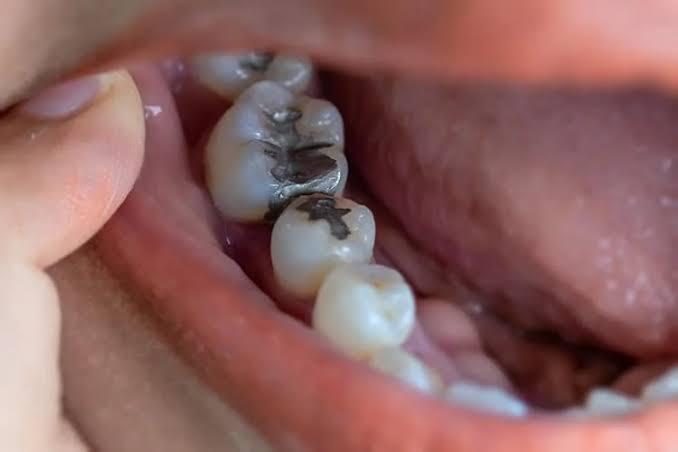
Visual Structural Discontinuity: Clear identification of a dark brown, black, or grey hollow inside the clinical crown upon visual inspection.
Lost Tooth Filling Pain: Does it Cause Pain?
A primary concern among patients facing this issue is: does a lost filling cause pain? The manifestation of lost tooth filling pain is determined by the depth of the initial preparation and its proximity to the pulp chamber.
If the cavity is shallow, the patient may experience only transient discomfort. However, if the loss exposes deep dentinal tubules, external thermal (ice water) or chemical (sugar) stimuli travel directly to the pulp. This causes a sharp, lingering pain. If left untreated, bacteria enter the nerve space, triggering spontaneous, throbbing pain that often worsens at night.
Why a Root Canal Loss of a Filling Requires Urgent Triage
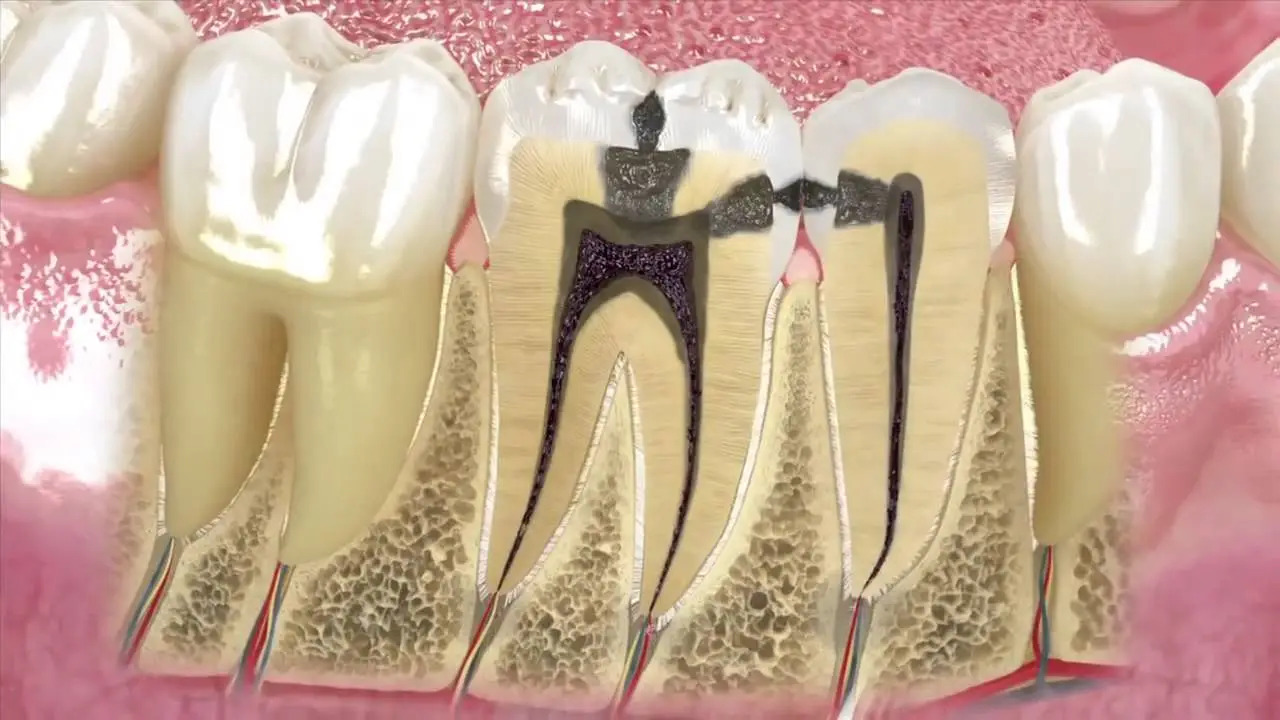
Experiencing a root canal loss of a filling is an exceptionally critical complication that demands immediate clinical attention. Because a root-canal-treated tooth has had its inner vital nerves removed, the loss of the overlying filling will not cause any biological pain. However, this lack of pain can create a false sense of security for the patient.
The biocompatible material sealing the root canals (gutta-percha) becomes contaminated when exposed to oral fluids and oral bacteria. Clinical trials demonstrate that the root canal system of a tooth with a missing filling can become fully re-contaminated with micro-organisms within 24 to 48 hours. When this occurs, simply placing a new filling is no longer medically sufficient; the existing root canal therapy must be removed to perform a complete Endodontic Retreatment before sealing the tooth again.
What to Do During a Temporary Loss of a Filling
Between active endodontic visits, soft, low-strength materials are placed to provisionally seal the chamber. A temporary loss of a filling is a common occurrence because these materials are intentionally designed to be easily removed during sequential visits.
If a temporary filling falls out completely or partially, contact your clinic immediately rather than waiting for your scheduled appointment. An open provisional cavity allows food debris to accumulate, disrupting the sterile environment of the canals and compromising the long-term success of the root canal therapy.
Classification of Fallen Fillings and Emergency Clinical Protocols
Filling Classification | Associated Risks and Manifestations | Advanced Clinical Protocol |
Composite (Tooth-Colored) Filling | Sharp thermal sensitivity, sweet sensitivity, tactile roughness. | Removal of secondary decay and placement of a nano-composite or porcelain inlay/onley. |
Root-Canal-Treated Upper Filling | Zero pain reported, silent bacterial micro-leakage, high root infection risk. | Disinfection of the chambers, endodontic retreatment if contaminated, and permanent restoration. |
Provisional (Temporary) Filling | Loss of medicament aroma, open void, potential canal infection. | Ultrasonic cleaning of the cavity, re-sterilization, and immediate replacement of the provisional seal. |
Traditional Amalgam (Silver) Filling | Metallic taste, high risk of cusp fracture, underlying structural staining. | Clean-up using safe amalgam removal protocols, followed by a biocompatible restoration. |
Emergency At-Home Steps Prior to Your Dental Appointment
If you experience the loss of a filling and cannot access an immediate dental appointment, implement these self-care steps to manage lost tooth filling pain:
Maintain Strict Cavity Hygiene: Gently flush the open cavity with warm water after every meal to clear impacted food particles, preventing localized acid fermentation.
Avoid Mastication on the Affected Side: A tooth with a missing filling loses its structural support and is highly vulnerable to fractures. Chewing hard items on this tooth can cause a vertical root fracture, making extraction necessary. Force yourself to chew on the opposite side.
Warm Saline Rinses: Rinse with warm saline 3–4 times daily to reduce the intraoral bacterial load and soothe the surrounding periodontal tissues.
Clove Oil Application: For intense neural pain, place a single drop of therapeutic clove oil (eugenol) onto a small sterile cotton pellet and insert it gently into the void. Clove oil acts as a natural anesthetic to temporarily calm the exposed nerve endings.
Frequently Asked Questions (FAQ)
How long can a tooth safely remain without its filling?
A tooth with a missing filling should be evaluated by a dental specialist within 24 to 48 hours. Even if the tooth is completely asymptomatic, the exposed dentin is rapidly broken down by oral acids, allowing decay to reach the pulp chamber quickly. Delaying treatment shifts a straightforward restorative procedure into complex root canal therapy or can lead to severe fractures that necessitate extraction.
Does the loss of a filling cause pain, and can pain relievers resolve it permanently?
Yes, the loss of a filling can trigger sharp, throbbing pain, particularly when stimulated by thermal (cold water) or chemical (high-sugar foods) factors. Over-the-counter anti-inflammatory medications (NSAIDs) cannot permanently resolve the pain because they do not address the physical exposure of the cavity. They merely block pain signals for a few hours. Once the medication wears off, the pain will return, often with greater intensity, as bacterial activity continues.
Will the dentist need to drill the tooth again to place a new filling? Does it hurt?
Before placing a new restoration, any residual debris from the failed filling and any secondary decay must be completely cleared. This requires a gentle, micro-scale preparation of the cavity surfaces to ensure a clean interface for bonding. Because this procedure is performed under modern local anesthesia, the patient experiences absolute zero sharp pain or discomfort during the process.