Contentsexpand_more
- What is Gum Darkening?
- What Causes Gum Darkening?
- Purple Gums and Pain: What Does This Clinical Combination Signal?
- How to Cure Dark Gums?
- 1. Advanced Laser Gum Bleaching
- 2. Traditional Mechanical Scalpel Excision
- Strategic Solutions: Curing Purple Gums and Dark Discolorations
- Essential Instructions on Post-Depigmentation Aftercare
- Frequently Asked Questions (FAQ)
- Does a laser gum depigmentation treatment hurt?
- How long does the laser gum bleaching treatment take and when are final results visible?
- Will the cleared dark gum stains eventually grow back or relapse over time?
Engineering a high-impact, radiant smile makeover requires vastly more than optimizing the shade and alignment of the teeth (white aesthetics). The biological framework of the gums (pink aesthetics) that surrounds each crown like a custom museum frame is equally fundamental to the facial equation. Under established clinical guidelines, an ideal pink aesthetic pattern dictates that the gingival soft tissues present a healthy, firm, stippled texture, exhibiting a uniform light coral pink hue.
Gum darkening or blackening (a condition frequently investigated) is a significant aesthetic issue that disrupts the uniformity of the pink gum tissue, thereby hindering a person's ability to smile freely and participate in social activities. Although this condition often presents without overt warning signs, it points to underlying activity or the influence of external factors. Thanks to modern dental laser procedures performed by today's technology-driven dentists, this discoloration can be painlessly removed in a single, intensive session.
What is Gum Darkening?
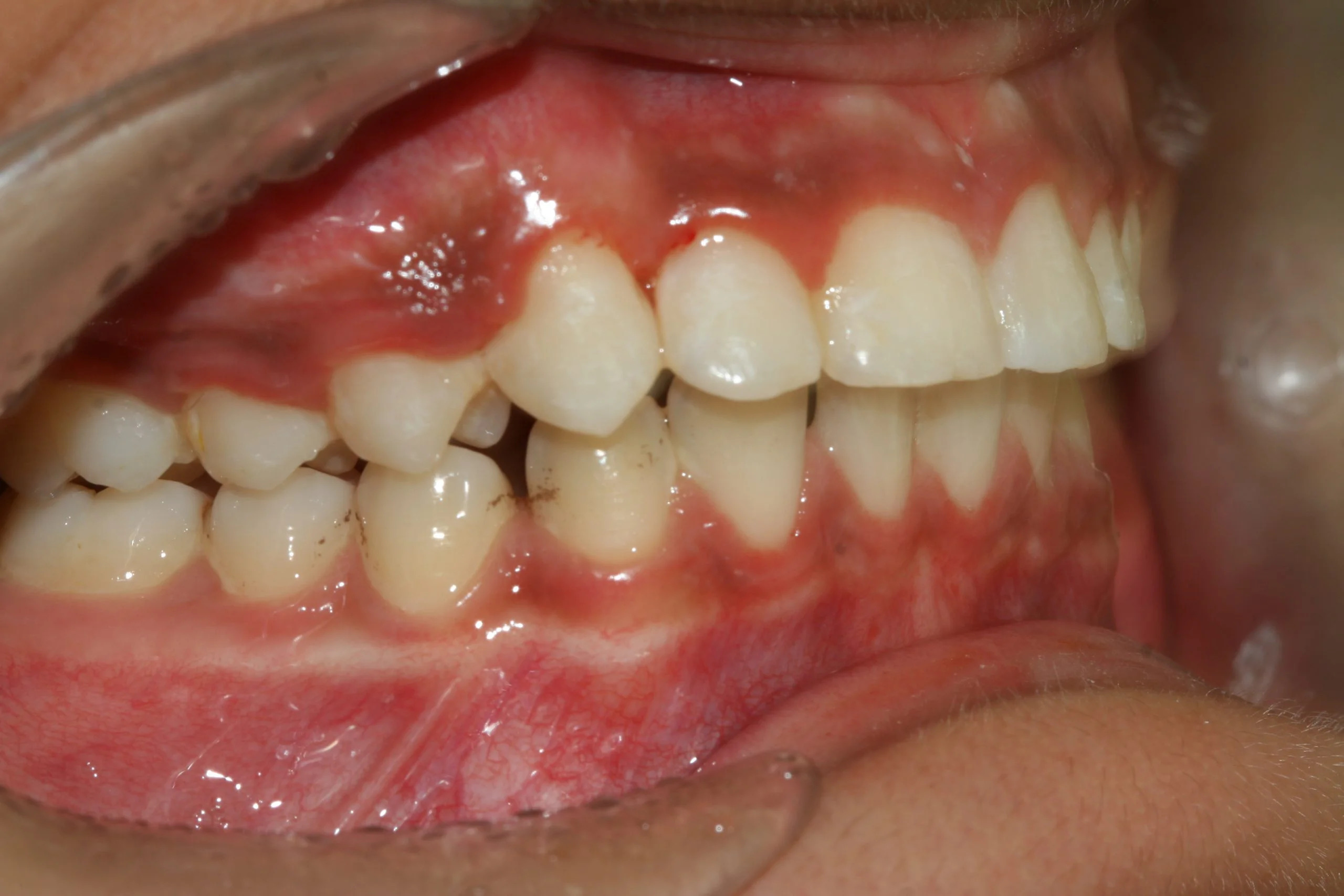
The primary baseline query raised by individuals exploring cosmetic gum corrections at our periodontics department is what is gum darkening. Gum darkening represents the local or widespread accumulation of melanin particles within the basal layer of the oral epithelium, driven by the hyper-functional metabolic activity of specialized cells called melanocytes.
Visually, this soft tissue modification can present as small, isolated black flecks, continuous horizontal tan bands, or a monolithic dark purple layer dominating the upper and lower arches. In the vast majority of presentations, this alteration does not indicate cellular necrosis or a dangerous tissue disease; rather, it represents a biological pigment variation.
What Causes Gum Darkening?
Before designing a definitive treatment plan, our periodontists thoroughly map the patient's anamnesis to answer what causes gum darkening and identify causes of gum discoloration. The core clinical vectors include:
Genetic and Ethnic Blueprints (Physiological Pigment): This represents the most highly recorded vector. Individuals of Mediterranean, African, Middle Eastern, or Asian ancestry naturally exhibit hyper-active basilar melanocytes, leading to deep, natural systemic gum darkening.
Chronic Tobacco and Smoking Habits: Systemic nicotine and heat introduced via tobacco smoke actively stimulate the oral melanocytes as a defensive biological shield, forcing excessive melanin production. Gum darkening in chronic smokers is highly aggressive.
Subgingival Silver Restorations: Microscopic silver or mercury fragments introduced beneath the soft tissue barrier during the mechanical placement or removal of old silver fillings generate localized, permanent blue-black patches.
Systemic Medication Pathways: Chronic use of specific antimalarial drugs, minocycline-based long-term antibiotics, or heavy tranquilizers can prompt systemic intraoral pigmentation deposition.
Endocrine and Systemic Disease Factors: Rare conditions like adrenal insufficiency (Addison’s Disease) or complex metabolic syndromes can prompt sudden, widespread dark pigmentation across cutaneous and oral mucous membranes.
Purple Gums and Pain: What Does This Clinical Combination Signal?
When a patient presents with purple gums and pain developing simultaneously, the condition shifts from a cosmetic pigmentation issue to an acute biological complication. This clinical combination typically indicates:
Acute Periodontal or Periapical Abscess: An active bacterial infection at the root apex can tunnel through the alveolar bone, forming a dark purple, swollen, highly painful pus pocket on the gum surface.
Acute Tissue Necrosis (ANUG): Severe, aggressive periodontal diseases can cut off localized capillary blood flow, turning the gum margins a necrotic grey-purple hue, accompanied by severe pain and halitosis.
Post-Surgical Hematoma: Following traumatic tooth extractions or bone-grafting implant surgeries, blood can pool beneath the mucosal lining, generating a temporary purple bruise and localized pressure pain.
How to Cure Dark Gums?
The primary technical search query addressed by patients seeking immediate resolution is how to cure dark gums and how to treat dark spots on gums. Because the melanin clusters are fully integrated within the cellular architecture of the tissue, over-the-counter charcoal dusts, aggressive lemon scrubs, or baking soda rubs cannot cure the condition; instead, they strip the protective barrier and cause severe infections.
Definitive clinical depigmentation is successfully executed via two primary methods:
1. Advanced Laser Gum Bleaching
This represents the premium, bloodless milestone engineered at Livera Dental Clinic for permanent tissue transformation. Utilizing specialized soft tissue dental lasers (such as high-affinity Diode or Er:YAG networks) calibrated to match the absorption coefficient of melanin, the light energy vaporizes the ultra-thin, pigmented outer epithelial matrix layer by layer (laser ablation) within milliseconds. The entire sequence is completely bloodless, suture-free, and virtually painless, instantly revealing the radiant, healthy coral pink matrix beneath.
2. Traditional Mechanical Scalpel Excision
This historical approach utilizes specialized surgical blades to mechanically slice and scrape away the outer pigmented epithelium under local anesthesia blocks. While clinically effective, it introduces capillary oozing during surgery, carries an elongated healing phase, and requires packing the raw margins with a thick protective clay putty (periodontal dressing) for 7 days post-surgery.
Strategic Solutions: Curing Purple Gums and Dark Discolorations
Discoloration Type | Primary Root Cause | Clinical Solution / What is Effective? |
Melanin-Driven Darkening | Genetics, Chronic Smoking, Race | Laser Depigmentation (Peeling): The pigmented epithelial cells are completely vaporized via laser in 15 mins. |
Post-Operative Bruising | Capillary bleeding after implant surgery | Cryotherapy (Ice Packing): External ice application over the cheek for the first 24 hours quickly dissolves the bruise. |
Infectious Purple Swelling | Advanced root canal failure, deep abscess | Endodontic Treatment / Curettage: The active bacterial core must be cleaned; otherwise, the purple lesion will not resolve. |
Essential Instructions on Post-Depigmentation Aftercare
To support a comfortable recovery and ensure the newly exposed coral pink architecture matures without complication, the following aftercare protocols must be strictly followed:
For the initial 48 hours post-treatment, avoid all boiling-hot fluids, ice-cold items, highly acidic juices (citrus), and heavy spices to prevent a burning sensation on the vulnerable epithelial surface.
Do not direct hard-bristled toothbrushes onto the treated soft tissue zones for the initial 5 days; sanitize the area exclusively via gentle rinsing with a prescribed, alcohol-free chlorhexidine wash.
The Golden Rule: Complete tobacco and nicotine cessation is mandatory during the healing phase. Tobacco smoke causes severe peripheral vasoconstriction, starving the healing cells of oxygen and instantly re-activating the melanocytes, causing rapid color relapse.
Frequently Asked Questions (FAQ)
Does a laser gum depigmentation treatment hurt?
No, laser gum depigmentation is an entirely pain-free procedure. Prior to launching the laser ablation sequence, highly effective topical desensitizing gels are placed over the mucosa, followed by minimal local anesthetic blocks to completely deaden the quadrant; the patient feels absolute zero sharp pain or cutting sensations during the treatment. Once the numbing agents taper off several hours later, a mild, superficial tenderness similar to a minor pizza burn is normal, which is effortlessly managed utilizing basic acetaminophen.
How long does the laser gum bleaching treatment take and when are final results visible?
The active chairside laser depigmentation process is exceptionally rapid, routinely finalized within 15 to 30 minutes for a full arch. While the dark melanin spots are removed immediately, a temporary, protective whitish-grey fibrin film will overlay the treated gum surfaces for the first 3-4 days. This matrix sheds off naturally, allowing the gums to fully complete deep remodeling and reveal the uniform, bright coral pink aesthetic within 7 to 14 days (1-2 weeks).
Will the cleared dark gum stains eventually grow back or relapse over time?
If the underlying source of the hyperpigmentation is purely genetic and physiological, a precise laser ablation executed by an expert periodontist yields permanent, lifelong results with zero structural relapse. Gazing at the clinical outcomes, if the gum discoloration was driven by toxic smoking patterns and the patient actively resumes smoking post-treatment, the melanocytes will undergo defensive reactivity, creating a high probability of dark spot recurrence over subsequent years.