Contentsexpand_more
- The Biological Basis of Impacted Teeth
- Common Types of Impacted Teeth
- How an Impacted Tooth Is Detected and Assessed
- How Impacted Tooth Surgery Is Planned
- Recovery and Adaptation After Impacted Tooth Surgery
- Long-Term Considerations for Impacted Teeth
- Scientific Research and Current Views on Impacted Teeth
- A Comprehensive Look at Impacted Teeth
An impacted tooth is a dental condition that seems simple at first glance but turns out to be layered and complex on closer inspection. When people first come across the term, they often picture a tooth that simply failed to come in. In reality, this process involves jaw anatomy, stages of development, genetic factors, and long-term biological interactions. At Livera Clinic, an impacted tooth is viewed not as an isolated problem but as part of the mouth as a whole system.
An impacted tooth is generally defined as a tooth that has not erupted into the mouth within the expected time frame or has settled into the wrong position. This condition is not always accompanied by pain or noticeable discomfort. In many cases, an impacted tooth can go unnoticed for years while gradually affecting the surrounding teeth and bone. Understanding this process helps people ask more precise questions and approach the topic with confidence.
The Biological Basis of Impacted Teeth
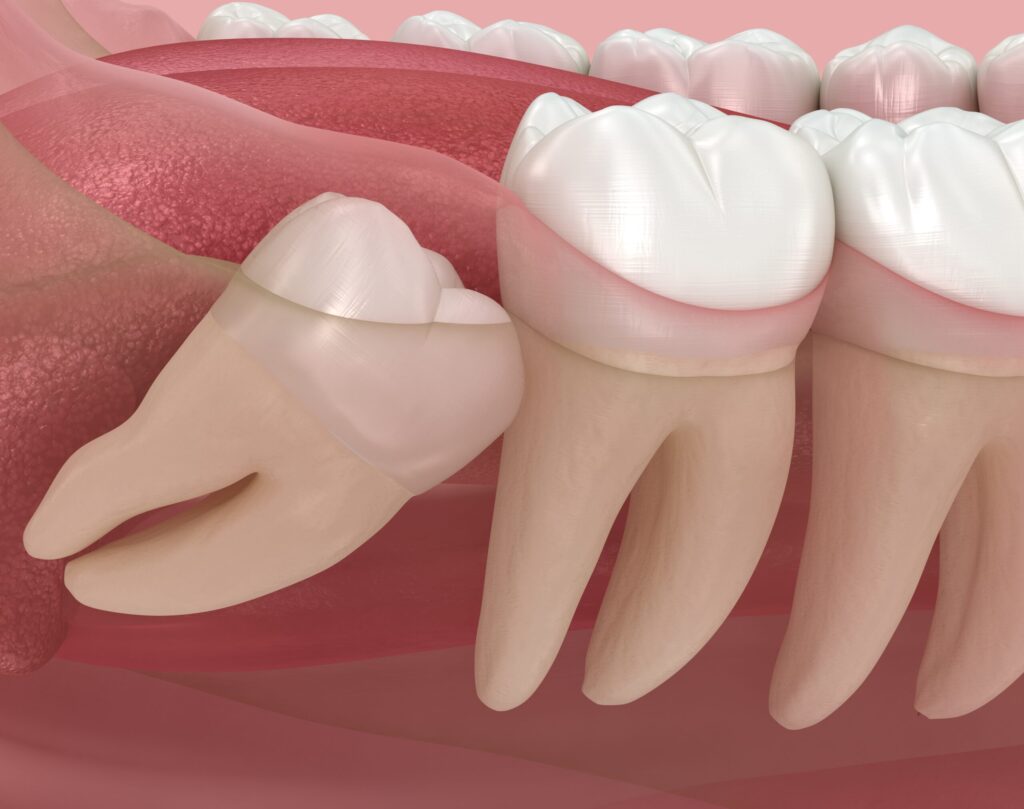
A tooth becomes impacted when its natural eruption path is disrupted. Every tooth is programmed to move from the jawbone into the mouth. If that path is blocked or altered, the result is an impacted tooth.
Scientific observations show that in modern humans, jaw size is shrinking faster than tooth size. As a result, a lack of space has become one of the main reasons teeth become impacted.
Timing also plays an important role. When the eruption sequence is disrupted, one tooth may block the path of another. In such cases, an impacted tooth is the result of a chain of interrelated changes.
Common Types of Impacted Teeth
Not every impacted tooth behaves the same way. In clinical practice, impacted teeth are classified by position, depth, and angle. These differences explain why the clinical picture can vary so widely.
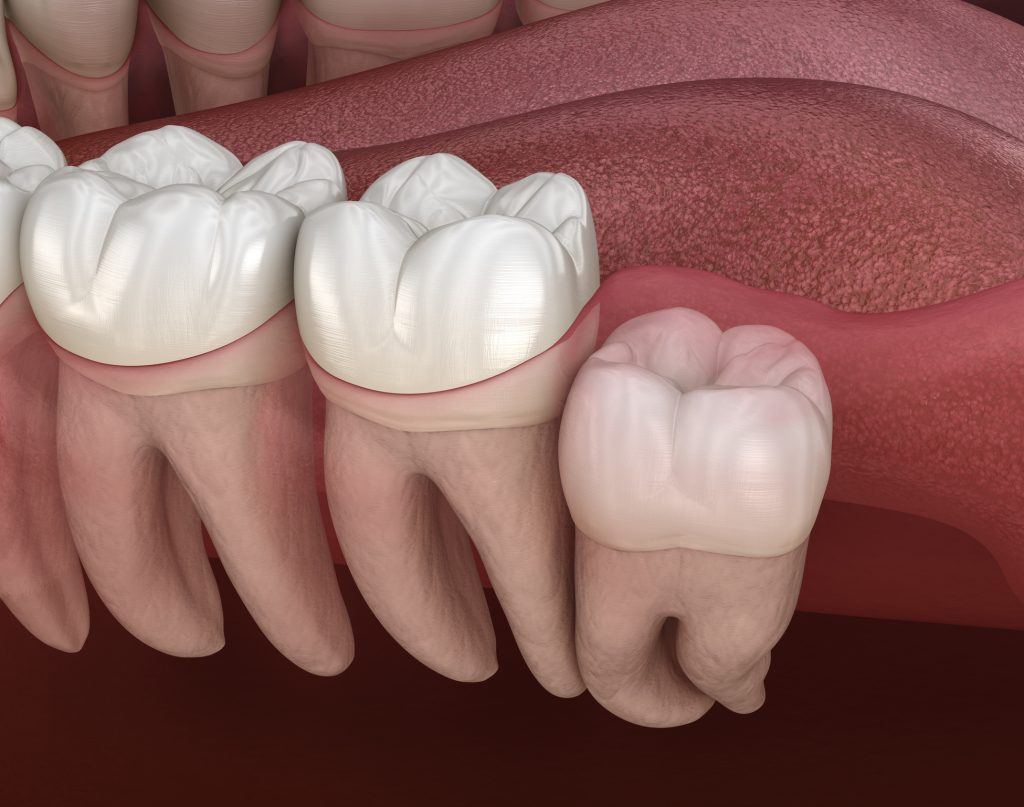
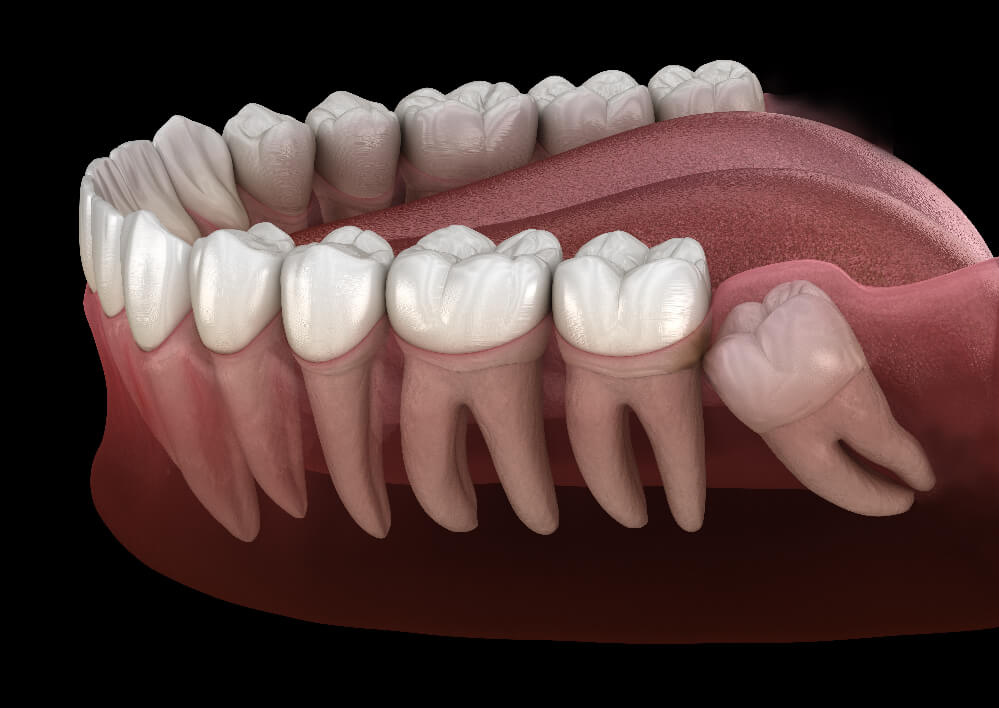
In some situations, the impacted tooth sits entirely within the bone; in others, it partially breaks through the gum. A tilted impacted tooth may put pressure on neighboring teeth, while a vertically positioned one simply lacks enough room to emerge.
The most commonly impacted teeth are the third molars, canines, and premolars. Each impacted wisdom tooth or other impacted tooth interacts with the surrounding tissues in its own way, which shapes how it is monitored and assessed.
How an Impacted Tooth Is Detected and Assessed
An impacted tooth is often first suspected because of indirect signs. A mild feeling of pressure, changes in tooth position, or a disrupted bite can point to its presence. In many cases, an impacted tooth is discovered by chance on routine X-rays.
Imaging methods make it possible to pinpoint the position of an impacted tooth in relation to nerves, the maxillary sinuses, and the roots of neighboring teeth. This turns an abstract concept into a clear anatomical picture.
The assessment is not limited to the tooth itself. Bone density, gum health, and the position of neighboring teeth are also analyzed. That is why an impacted tooth is always considered part of the overall structure of the mouth.
How Impacted Tooth Surgery Is Planned
When it comes to impacted tooth surgery, it is important to understand that there is no one-size-fits-all approach. The surgical strategy depends on the position, depth, and anatomical features of the specific tooth.
The process begins with detailed planning. Imaging data are analyzed, and possible surgical access routes and tissue relationships are evaluated. A deeply positioned impacted tooth may require creating a window in the bone, while a partially erupted tooth calls for a different approach.
Modern techniques focus on precision and control. Impacted tooth surgery is performed with the preservation of surrounding structures in mind, reflecting an understanding of the tooth as part of a living biological system.
Recovery and Adaptation After Impacted Tooth Surgery
After a procedure involving an impacted tooth, the body launches an active healing process. This includes bone remodeling, soft tissue adaptation, and cellular renewal. It is not a passive waiting period but a dynamic biological stage of recovery after impacted tooth removal.
Bone cells reorganize in the area where the impacted tooth used to be, gradually forming new structure. The gum tissue adapts, creating a protective barrier. These changes happen in stages and depend on each person's individual characteristics.
Research shows that once an impacted tooth has been removed, the mouth displays a remarkable ability to adapt. Neighboring teeth may shift slightly, and chewing forces are redistributed over time.
Long-Term Considerations for Impacted Teeth
An impacted tooth should be considered not only in terms of its current condition but also in light of its long-term consequences. Even an impacted tooth with no symptoms can, over time, affect the position of neighboring teeth and the health of the jawbone.
In some cases, an impacted tooth contributes to crowding or changes in root structures. The surrounding tissues may respond gradually, which makes monitoring an important part of a long-term approach.
From an analytical point of view, impacted teeth highlight that oral health is an evolving system in which decisions are based on many factors.
Scientific Research and Current Views on Impacted Teeth
Interest in impacted teeth has grown thanks to advances in imaging technology and data analysis. Current research explores the link between impacted tooth formation and the growth patterns of the facial skeleton.
Some studies suggest that a soft diet may reduce the stimulation of jaw growth, increasing the likelihood of impacted teeth. Other research focuses on the genetic mechanisms that influence the timing of tooth eruption.
These findings do not offer final conclusions, but they broaden our understanding of how impacted teeth fit into the bigger picture of human biology.
A Comprehensive Look at Impacted Teeth
An impacted tooth is not simply a tooth that failed to come in. It is the result of the interplay between time, space, genetics, and biological adaptation. From developmental stages to possible surgical solutions, an impacted tooth represents a long-term process.
Understanding how an impacted tooth forms, how it is assessed, and how the body responds to change allows for a deeper look at the issue. At Livera Clinic, this subject is approached as something to analyze and understand, not as a source of fear.
Seen as a whole, an impacted tooth is a clear example of the human body's ability to adapt to changing conditions.