Contentsexpand_more
- Can You Get a Filling for a Broken Tooth?
- How is a Filling for a Broken Tooth Done?
- Management of a Half Broken Tooth Filling
- Anterior Broken Tooth Bonding
- Addressing a Decayed Broken Tooth Filling
- Risks of Leaving an Untreated Broken Tooth
- Understanding the Cost of a Filling for a Broken Tooth
- Fracture Severity Classification and Restoration Modality Matrix
- Crucial Post-Treatment Maintenance Instructions
- Frequently Asked Questions (FAQ)
- Does getting a filling for a broken tooth hurt?
- Can a fractured tooth fragment be reattached instead of using filling material?
- Will an anterior broken tooth bonding easily fall out or discolor over time?
In our everyday lives, an unexpected physical trauma, a sports-related injury, biting down incautiously on hard food substrates (such as nutshells or unpopped kernels), or the silent progression of internal dental caries can weaken a tooth wall, leading to an abrupt fracture. When a structural fracture occurs within the anterior esthetic zone, it triggers immediate psychological distress, severe cosmetic anxiety, and an instant impairment of normal masticatory functions. Consequently, the primary diagnostics inquiries raised by patients universally focus on filling for a broken tooth configurations and whether a fractured crown can be safely restored using direct dental bonding.
Under the contemporary paradigms of advanced restorative dentistry, new-generation nano-hybrid composite matrices and high-affinity dental adhesives make the structural rehabilitation of fractured teeth highly predictable. However, long-term clinical success depends directly on the precise depth of the fracture line, the vitality index of the internal nerve complex (pulp), and the structural volume of the missing calcified tissue. At Livera Dental Clinic, our biomimetic team has generated this evidence-based manual outlining modern layer-by-step techniques, the management of a half broken tooth filling, and the critical biological consequences of leaving a fractured tooth untreated.
Can You Get a Filling for a Broken Tooth?
The immediate medical response developed across our clinical facilities is: Yes, a filling for a broken tooth is highly viable and stands as the first line of defense in structural tooth preservation.
If the fracture is limited to the outer protective enamel shell and the underlying dentin layer, utilizing advanced incremental layering techniques with specialized composite resins can fully restore both function and aesthetics. However, if the fracture line extends deeply into the internal pulp chamber or involves subgingival root structures, a direct filling alone is insufficient; the tooth will first require endodontic treatment or micro-surgical lengthening before final reconstruction.
How is a Filling for a Broken Tooth Done?
At our smile restoration suites, the reconstruction of fractured hard tissues follows a meticulous, micro-invasive workflow:
Radiographic and Vitality Assessment: High-resolution digital periapical radiographs are captured to evaluate the root structure and bone architecture. Vitality testing (thermal or electrical) is performed to measure the health index of the internal dental pulp.
Cavity and Structural Beveling: Sharp, jagged, or structurally unsupported enamel walls left by the trauma are smoothed using microscopic diamond finishing burs. A star-angled circumferential "bevel" is prepared along the fracture margins to maximize the surface area for microscopic adhesive retention.
Digital Optical Shade Matching: This is the most demanding phase during an anterior broken tooth bonding procedure. The unique translucency, fluorescence, and natural internal saturation gradients of the patient’s tooth enamel are measured using digital spectrophotometers to prevent a "patchy" appearance.
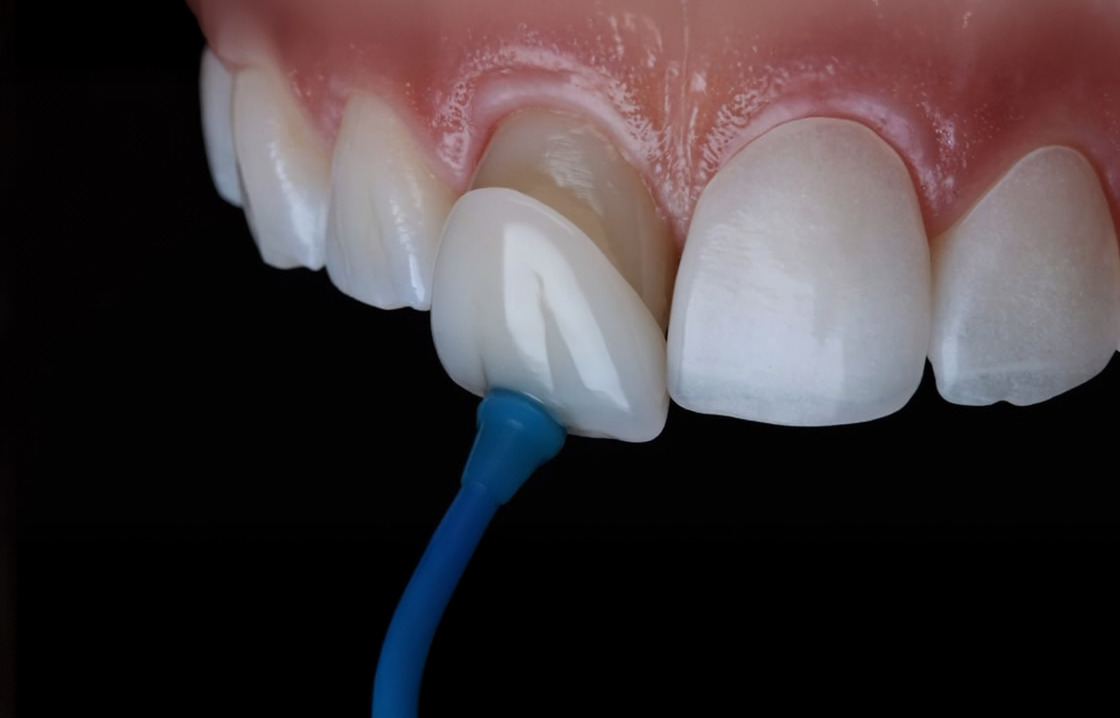
Adhesive Conditioning and Layering: The prepared enamel and dentin undergo selective acid etching and application of high-affinity bonding agents, which are polymerized using focused light-curing systems. Nano-composite resins of varying opacities are incrementally layered to replicate the tooth's natural internal anatomy.
Micro-Polishing and Occlusal Refinement: The restoration is checked dynamically against opposing teeth to eliminate premature contacts. It is then finished using diamond-impregnated polishing discs and high-gloss pastes until its surface texture and reflectivity perfectly match the natural enamel.
Management of a Half Broken Tooth Filling
When a major macro-fracture takes place, executing a half broken tooth filling requires advanced engineering to ensure long-term structural integrity under heavy biting loads.
If exactly half of the clinical crown is missing but the remaining vertical walls are strong enough to support occlusal forces, the tooth can be restored using fiber-post reinforced core build-ups. High-tensile glass-fiber posts are cemented within the root canal space to act as an internal anchor, and the crown is built up using nano-filled composite resins.
However, if the remaining tooth structure is thin or undermined, a direct filling is contraindicated. To prevent future stress fractures, the tooth should be restored using a computer-guided porcelain inlay/onley or a monolithic zirconium crown.
Anterior Broken Tooth Bonding
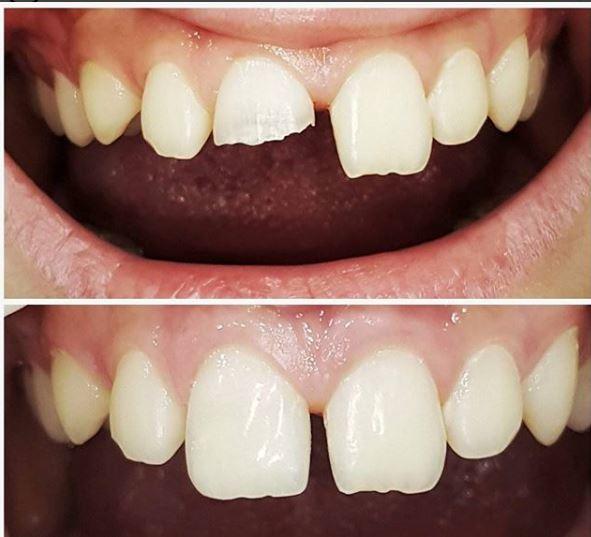
Fractures occurring within the visible smile zone require artistic detailing. The technique of restoring an anterior broken tooth bonding using custom-layered resin matrices is clinically referred to as Cosmetic Bonding.
Optical Characteristics of Anterior Restorations: The incisal edges of front teeth naturally display a translucent, semi-transparent character. Our cosmetic specialists replicate this optical phenomenon by using advanced composite formulations with built-in halo effects. Once fully polished, the interface becomes completely invisible under natural light.
Addressing a Decayed Broken Tooth Filling
A common clinical scenario involves a hidden cavity hollowing out the tooth from within until the unsupported outer enamel shell collapses. Can you place a decayed broken tooth filling?
Yes, but the protocol requires complete caries eradication first. Before any restorative material can be placed, all soft, infected, and demineralized dentin must be thoroughly cleared using conservative bur designs or specialized dental lasers. If the remaining cavity is deep but has not exposed the nerve, bioceramics or protective calcium silicate bases (pulp capping) are placed to insulate the pulp before the final composite filling is built.
Risks of Leaving an Untreated Broken Tooth
Patients who delay seeking professional care because a fractured tooth is not currently causing pain face significant biological risks. The consequences of an untreated broken tooth risks profile include:
Irreversible Pulpitis and Spontaneous Pain: A fracture exposes raw dentinal tubules to the oral cavity. Oral pathogens migrate through these microscopic channels, leading to irreversible internal nerve inflammation, which can manifest as intense, throbbing pain that worsens at night.
Catastrophic Vertical Root Fracture: Fractured enamel surfaces have compromised structural integrity. Exposing these weakened walls to normal chewing forces can cause a secondary, catastrophic vertical split extending beneath the bone level. A vertical root fracture cannot be saved, making immediate tooth extraction necessary.
Chronic Mucosal Ulceration: The sharp, razor-like edges of a fractured tooth can cause continuous mechanical trauma to the tongue, cheeks, and lips during speech and mastication, leading to chronic, painful traumatic ulcers.
Understanding the Cost of a Filling for a Broken Tooth
Publishing a single, fixed fee for a filling for a broken tooth cost is clinically impractical due to the highly variable structural factors involved. The total financial investment is calculated post-examination. The core cost variables include:
Volume of Structural Loss: Restoring a minor single-surface incisal chip carries a different pricing matrix compared to a multi-surface, complex core build-up spanning over half the tooth.
Esthetic Location Factor: Advanced cosmetic bonding procedures requiring meticulous polychromatic layering on anterior teeth demand specialized materials and higher chairside time compared to posterior restorations.
Adjunctive Procedures: The overall cost will reflect whether the tooth requires pre-restorative laser caries removal, direct pulp capping, or root canal therapy.
Fracture Severity Classification and Restoration Modality Matrix
Fracture Severity Level | Clinical Presentation & Diagnostics | Advanced Treatment Choice |
Minor Fracture (Enamel Only) | Asymptomatic; localized sharp edge causing tactile tongue irritation. | Cosmetic Micro-Bonding / Composite Reshaping or simple enamel contouring. |
Moderate Fracture (Enamel + Dentin) | Acute sharp sensitivity when exposed to cold fluids or air flow. | Polychromatic Layered Nano-Composite Filling. |
Advanced Fracture (Half Broken Tooth) | Loss of half the crown volume; high vulnerability to biting pressure. | Fiber-Post Reinforced Core Build-Up or a CAD/CAM Porcelain Onlay. |
Caries-Induced Fracture | Visible internal dark hollow; sudden structural collapse during meals. | Laser Caries Debridement + Pulp Capping + Structural Composite Filling. |
Subgingival Root Fracture | Fracture line extends beneath the gum margin; active bleeding and severe pain. | Surgical Crown Lengthening + Core Build-Up or Extraction followed by a Dental Implant. |
Crucial Post-Treatment Maintenance Instructions
To extend the lifespan of your composite restoration and protect its polished finish, adhere to the following guidelines:
Thermal Protection (First 24 Hours): Avoid extreme temperature shifts (such as ice-cold or boiling-hot liquids) immediately following placement to ensure optimal setting and marginal adaptation of the adhesive interface.
Avoid Deleterious Occlusal Habits: Composite resins possess high compressive strength but are susceptible to structural failure under localized shearing forces. Refrain from using your teeth to open packages, biting on pens, or cracking hard nutshells. Slice hard fruits like apples into smaller pieces rather than biting directly into them.
Stain Prevention (First 48 Hours): For the initial 48 hours following an anterior bonding procedure, avoid consuming heavily pigmented substances (such as red wine, dark coffee, black tea, or tobacco) to prevent staining along the fresh margins of the composite resin.
Frequently Asked Questions (FAQ)
Does getting a filling for a broken tooth hurt?
No, getting a filling for a broken tooth is an entirely pain-free procedure. Before beginning any structural preparation or caries removal, local anesthesia is administered to completely numb the tooth and surrounding periodontal tissues. The patient will not feel any sharp pain or sensitivity during the treatment.
Can a fractured tooth fragment be reattached instead of using filling material?
If the fracture was caused by clean trauma without any underlying decay, and the broken fragment was recovered and kept hydrated (stored in milk or sterile saline), it can sometimes be reattached using advanced adhesive systems. However, if the fragment is too small or has dried out, replacing the missing structure with our custom-shaded nano-composite resins provides a much more predictable, long-lasting, and aesthetically superior result.
Will an anterior broken tooth bonding easily fall out or discolor over time?
The advanced nano-composites used at Livera Dental Clinic form a tight chemical and microscopic bond with the enamel, meaning they will not detach under normal physiological chewing forces. However, a secondary traumatic blow or biting down on hard objects can fracture the composite, just as it would natural enamel. Modern nano-composites are highly resistant to staining; however, heavy exposure to coffee or tobacco over several years can cause mild marginal dullness. This can be easily refreshed during your 6-month checkup with a quick, non-invasive professional repolishing.