Contentsexpand_more
- What is Tongue-Tie Surgery? (Ankyloglossia and Frenectomy)
- Clinical Consequences of Untreated Ankyloglossia
- How is Laser Tongue-Tie Surgery Performed?
- Tongue-Tie Surgery in Adults
- What Age Can You Get Tongue-Tie Surgery?
- Operational Duration and Healing Timeline
- What to Do After Tongue-Tie Surgery (Post-Operative Care)
- Comparison Matrix: Laser Frenectomy vs. Conventional Scalpel Surgery
- Frequently Asked Questions (FAQ)
- Is laser tongue-tie surgery painful for infants or adults?
- Does speech improve automatically after tongue-tie surgery?
- Can a released tongue-tie reattach or grow back?
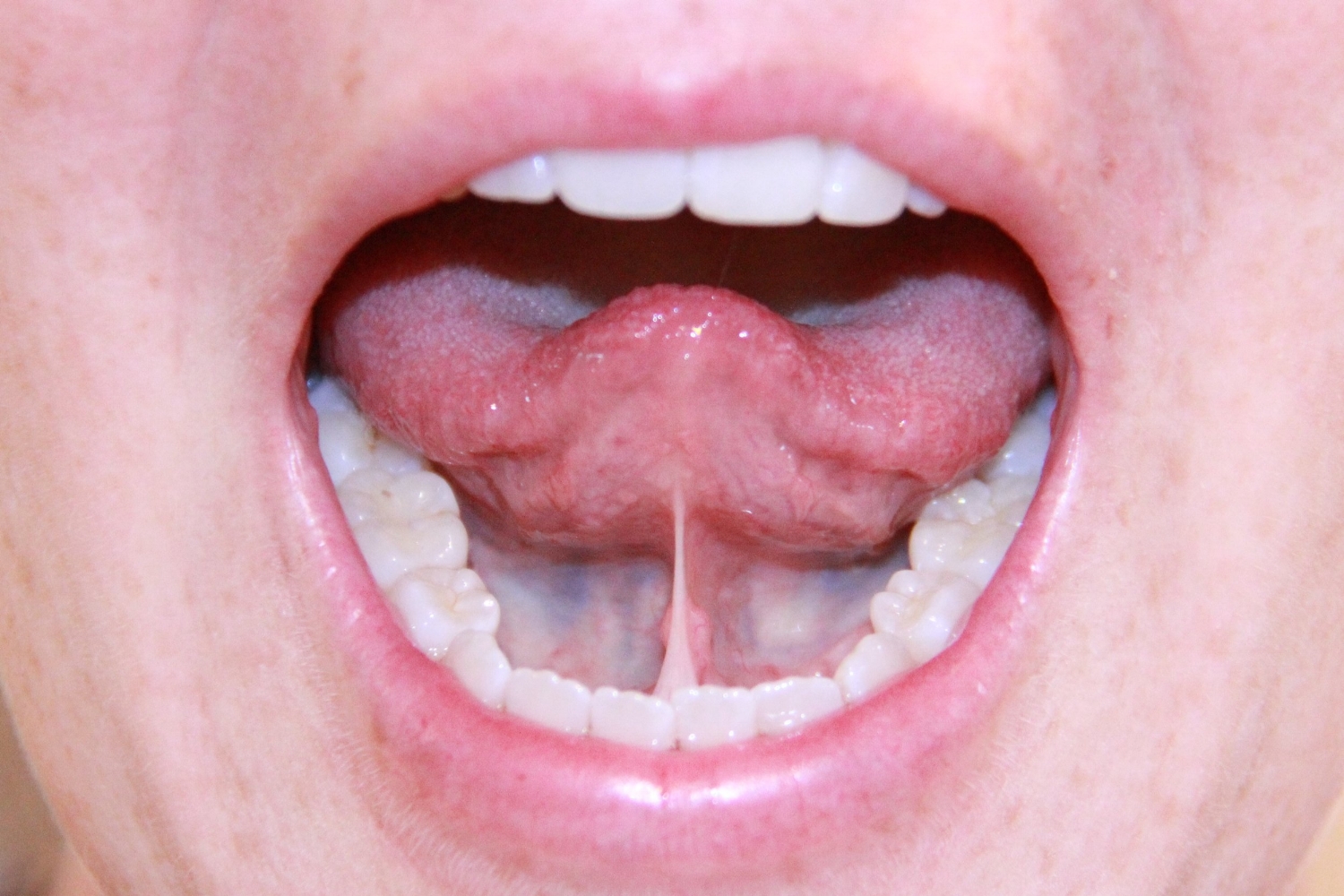
Difficulty latching during infancy, speech articulation disorders in childhood (struggling with sounds like "r", "l", "s", "th"), or mandibular gingival recession in adults often stem from a frequently overlooked anatomical condition: tongue-tie (ankyloglossia). When the lingual frenulum, the mucosal band tethering the ventral tongue to the floor of the mouth, is unusually short, thick, or attached too close to the lingual apex, it restricts tongue elevation and forward protrusion.
Traditional scalpel and suture techniques have been largely superseded by precise, bloodless, and suture-free laser tongue-tie surgery (laser lingual frenectomy).
What is Tongue-Tie Surgery? (Ankyloglossia and Frenectomy)
In oral surgery, the clinical definition of what is tongue-tie surgery is: A surgical procedure aimed at releasing, excising, or reshaping an abnormally short, thick, or fibrotic lingual frenulum to restore physiological range of motion to the tongue.
Surgical modalities include:
Frenotomy (Frenulotomy): A straightforward incision of the frenular band, commonly performed in infants.
Frenectomy / Frenuloplasty: Complete excision of the fibrous frenulum combined with tissue realignment, indicated for thicker, muscular attachments in older children and adults.
Clinical Consequences of Untreated Ankyloglossia
Unresolved tongue-tie presents with distinct functional impairments across life stages:
In Infants: Ineffective latch during breastfeeding, maternal nipple pain, poor weight gain, and aerophagia (excessive air swallowing leading to reflux-like colic).
In Children: Speech articulation challenges (difficulty pronouncing lingual-alveolar consonants such as R, L, S, Z, T, D), a characteristic heart-shaped notched tongue tip on protrusion, and inability to lick the lips.
In Dental Development: Low tongue posture prevents physiological palatal expansion, leading to maxillary constriction, anterior dental crowding, and tension-induced gingival recession on mandibular incisors.
How is Laser Tongue-Tie Surgery Performed?
Modern laser tongue-tie surgery utilizes dental soft-tissue diode or Er:YAG lasers:
Topical Anesthesia: A localized anesthetic gel or spray is applied beneath the tongue, numbing the tissue.
Laser Ablation: The laser beam vaporizes the restrictive frenular fibers with micron precision.
Bloodless, Suture-Free Procedure: The laser coagulates blood vessels and seals nerve endings simultaneously, eliminating surgical bleeding and the need for sutures.
Immediate Function: Infants can breastfeed immediately following the procedure, and older patients can resume normal speaking.
Tongue-Tie Surgery in Adults
A common misconception is that frenectomies are restricted to infant patients. In practice, tongue-tie surgery in adults provides meaningful functional improvements:
Adults often report chronic tension in the floor of the mouth, neck stiffness, speech fatigue, and localized plaque accumulation behind the lower front teeth.
Following laser frenectomy, the tongue is freed; adjunctive myofunctional therapy or speech therapy is recommended to retrain compensatory muscle habits.
What Age Can You Get Tongue-Tie Surgery?
Answering what age can you get tongue-tie surgery: There is NO upper chronological age limit for tongue-tie surgery.
Infancy (0 to 12 Months): Performed early if breastfeeding or weight gain is compromised.
Early Childhood (3 to 6 Years): Optimal for correcting speech articulation deficits before school entry.
Adolescence and Adulthood: Safely performed at any age (20s, 40s, or beyond) to address orthodontic needs, periodontal tension, or articulation.
Operational Duration and Healing Timeline
How Long Does Tongue-Tie Surgery Take?: Utilizing laser technology, the procedure takes 5 to 10 minutes.
How Many Days Does Tongue-Tie Surgery Take to Heal?:
Initial Epithelialization: A superficial, whitish-yellow fibrin patch forms over the diamond-shaped surgical wound within 24 hours. This is normal healing tissue, resolving within 3 to 5 days.
Complete Tissue Remodeling: Full mucosal healing and structural elasticity are established within 7 to 10 days.
What to Do After Tongue-Tie Surgery (Post-Operative Care)
To prevent tissue re-adhesion and ensure mobility after tongue-tie surgery, observe these guidelines:
Active Tongue Elevation Exercises: Perform prescribed tongue stretches (elevating to the palate, protruding, side-to-side sweeping) 3 to 4 times daily for 2 to 3 weeks to prevent scar contracture.
Dietary Care for the First 24 Hours: Consume cool, soft, non-spicy, and non-acidic foods. Cold smoothies or ice cream help soothe local tissues.
Maintain Gentle Hygiene: Brush teeth normally and use prescribed alcohol-free antiseptic mouth rinses or warm saline.
Do Not Scrape the Fibrin Patch: Do not attempt to scrub away the soft white healing layer beneath the tongue.
Comparison Matrix: Laser Frenectomy vs. Conventional Scalpel Surgery
Feature | Laser Tongue-Tie Surgery | Conventional Scalpel Surgery |
Intraoperative Bleeding | None / Negligible | Moderate |
Suture Requirement | Suture-Free | Typically requires sutures |
Procedure Duration | 5 – 10 Minutes | 15 – 25 Minutes |
Anesthesia Type | Topical Gel / Minimal Infiltration | Standard Infiltration Injection |
Post-Op Discomfort | Minimal (Sealed nerve endings) | Moderate soreness and swelling |
Healing Timeline | Rapid (3 – 5 Days) | 7 – 14 Days |
Frequently Asked Questions (FAQ)
Is laser tongue-tie surgery painful for infants or adults?
No. Laser tongue-tie surgery is virtually painless. Topical anesthetic gels applied to the sublingual mucosa numb the tissue. Because the laser seals peripheral nerve endings during tissue ablation, post-operative discomfort is minimal.
Does speech improve automatically after tongue-tie surgery?
Surgical release immediately restores anatomical range of motion. However, patients who have spent years using compensatory muscle patterns to speak may require short-term myofunctional or speech therapy to reprogram correct phonetic articulation.
Can a released tongue-tie reattach or grow back?
True anatomical re-growth does not occur. However, if active post-operative tongue elevation exercises are neglected during the first 10 to 14 days, the healing edges can adhere, resulting in partial re-attachment. Performing daily tongue stretches prevents this.