A confident smile can change how a person speaks, laughs, and even shows up in photos. When people begin researching cosmetic and restorative dentistry, one comparison appears again and again: Veneers vs. Crowns. It is a practical question, but also a deeply personal one, because the right option depends on goals, tooth structure, budget, durability expectations, and aesthetic priorities. At Livera Clinic, this topic comes up often among patients who want clearer information before making any decisions. This process involves minimal prep veneers (veneers requiring only slight enamel reduction).
In the broadest sense, Veneers vs. Crowns is a comparison between two different ways of improving teeth. Veneers usually focus on the front, visible surface of a tooth, while crowns typically cover the entire tooth. That sounds simple, yet the real differences involve preparation methods, material choices, longevity patterns, clinical indications, and cost variables. This guide explores those layers in a clear and engaging way, using scientific logic without losing the human side of the conversation, supported by advanced no-prep veneers.
What Does Veneers vs. Crowns Really Mean?
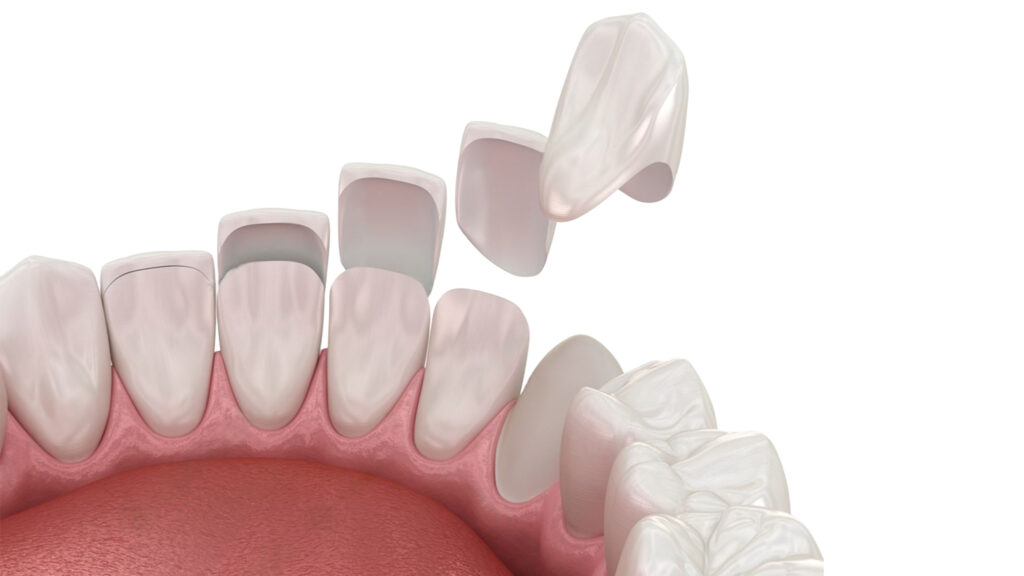
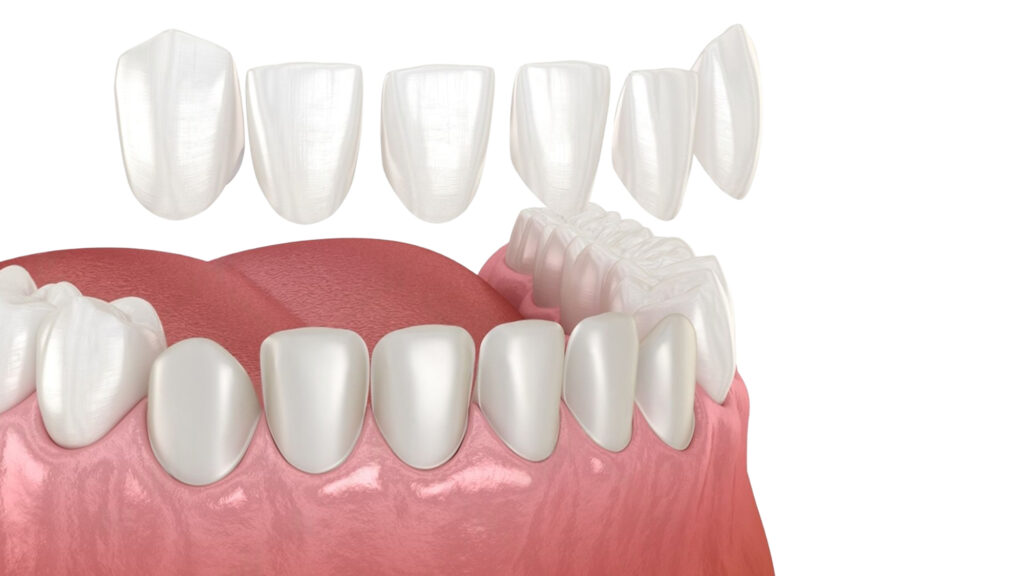
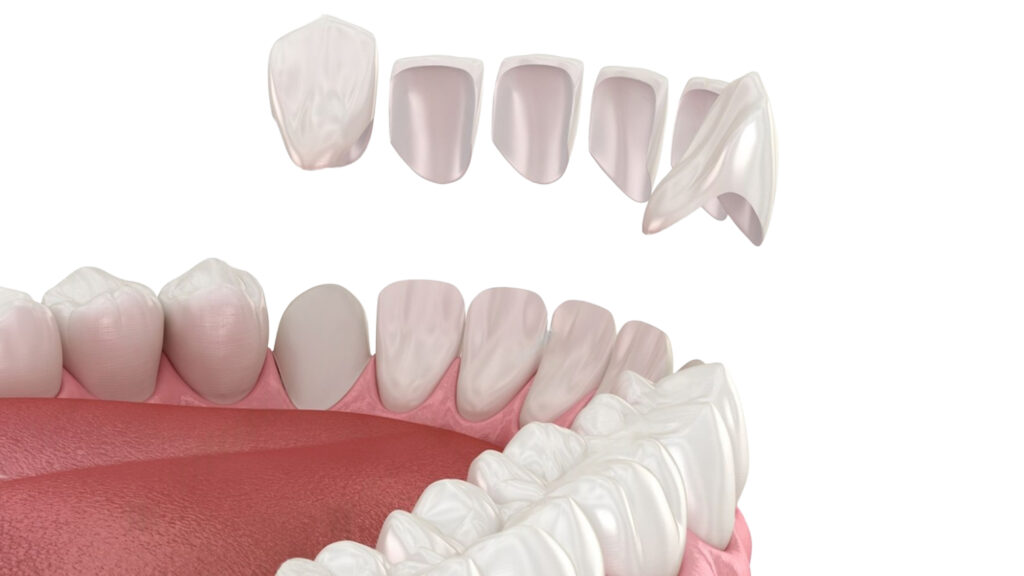
The phrase Veneers vs. Crowns is often treated like a cosmetic debate, but it is more accurate to see it as a structural and aesthetic comparison. Dental veneers are thin shells, usually made from porcelain or composite resin, designed to bond to the front of a tooth. They are commonly considered when the main concerns are color, shape, minor spacing, or mild surface irregularities. Crowns, by contrast, are cap-like restorations that cover the entire visible part of a tooth above the gumline, supported by advanced dental bonding.
This difference matters because the tooth’s starting condition changes the recommendation. If a tooth is largely healthy but visually disappointing, veneers may enter the conversation. If a tooth has significant damage, a large filling, root canal history, or weakened structure, crowns may be discussed more often. In other words, Veneers vs. Crowns is not only about beauty; it is also about biomechanics.
From a materials science perspective, both restorations have evolved considerably over the last two decades. Modern ceramics can mimic enamel surprisingly well, reflecting and transmitting light in ways that create a natural look. At the same time, stronger ceramic systems and digital design tools have improved fit and consistency. That is one reason the comparison between dental laminates and full-coverage caps has become more nuanced than it used to be.
Veneers vs. Crowns: The Main Structural Differences
When examining Veneers vs. Crowns, the biggest distinction is the amount of tooth coverage. Veneers attach mainly to the front surface and sometimes wrap slightly around the edge of the tooth. Crowns surround the tooth more completely. Because of this, crowns generally require more preparation, although the exact amount can vary depending on the case, material, and technique.
That preparation difference has functional implications. Veneers are often associated with a more conservative approach when the tooth is intact enough to support them properly. Crowns are generally selected when more reinforcement is needed. A heavily filled, cracked, or structurally compromised tooth may benefit from the broader coverage of a crown. In contrast, a tooth with mostly aesthetic concerns may not need that level of intervention.
Another useful way to understand Veneers vs. Crowns is to think in terms of purpose. Veneers are often chosen to refine appearance: discoloration that does not respond well to whitening, slight misalignment, worn edges, or uneven shapes. Crowns tend to serve both cosmetic and restorative roles. They can improve appearance, but they are also frequently used to rebuild strength and function. This overlap is why the comparison can be confusing: both can look beautiful, but they do not solve exactly the same problems, supported by advanced lithium disilicate.
Who May Consider Veneers vs. Crowns?
The discussion around Veneers vs. Crowns usually begins with a person’s priorities. Some people want a brighter, more symmetrical smile for social confidence or professional reasons. Others are dealing with old restorations, fractures, or sensitivity and want a solution that feels secure. These goals are not identical, and the best path may differ accordingly.
Veneers may be considered by people with:
- Staining resistant to bleaching
- Small chips or mild wear
- Minor gaps between teeth
- Slight shape differences
- Generally healthy tooth structure
Crowns may be considered more often when there is:
- Extensive decay or a large filling
- A cracked or weakened tooth
- Significant structural loss
- A tooth treated with root canal therapy
- A need for broader reinforcement
Still, the line is not always sharp. In real clinical planning, smile design, bite patterns, clenching habits, gum health, and enamel quality all influence the decision. That is why Veneers vs. Crowns should be understood as a comparison framework rather than a one-size-fits-all verdict. Dentistry is part science, part engineering, and part individualized design.
Veneers vs. Crowns and Aesthetic Results
For many patients, the heart of Veneers vs. Crowns is appearance. Which one looks more natural? Which one creates the “Hollywood smile” effect? Which one blends best with neighboring teeth? The answer depends less on the name of the treatment and more on planning, material selection, shade design, and the skill of the dental team.
Porcelain veneers are often admired for their lifelike translucency. Because they are thin and usually bonded to enamel, they can produce a refined, natural-looking surface with elegant light reflection. This makes them popular in smile makeovers where front teeth are otherwise healthy. Their visual effect can be subtle or dramatic, depending on the design goals.
Crowns can also deliver highly aesthetic results, especially with advanced ceramic materials such as zirconia-based or porcelain-based systems. In the past, some crowns were associated with a more opaque look, but material science has improved significantly. Today, many crowns can be made with impressive realism. In the Veneers vs. Crowns conversation, aesthetics should not be reduced to a simplistic “veneers look better” assumption. The better question is: what restoration best suits the tooth while meeting the smile objective?. Feldspathic ceramic (a type of dental ceramic known for exceptional translucency) is an integral part of this approach.
Veneers vs. Crowns: Durability, Longevity, and Daily Function
One of the most searched aspects of Veneers vs. Crowns is durability. People naturally want to know how long each option may last and how each restoration behaves under daily chewing, temperature changes, and occasional bad habits. While no dental restoration is eternal, both veneers and crowns can function well for years under the right conditions.
Veneers are generally durable, especially porcelain veneers, but they rely heavily on proper case selection and bonding. If a person has strong enamel, a stable bite, and no significant grinding habit, veneers may perform predictably. However, because they are thinner and more selective in coverage, they may not be ideal for every structural situation.
Crowns are often associated with greater strength because they cover more of the tooth. That broader coverage can help protect a weakened tooth from further breakdown. In the Veneers vs. Crowns comparison, crowns may be favored when function is a bigger concern than minimal preparation. Of course, strength is not only about the restoration itself. Bite forces, oral hygiene, diet patterns, and parafunctional habits such as clenching all influence longevity. This process involves Vita shade guide (the standard color reference system used in dentistry).
Here is a simple comparison table:
| Feature | Veneers | Crowns |
| Coverage | Front surface mainly | Full visible tooth coverage |
| Main Goal | Cosmetic enhancement | Restoration + cosmetic improvement |
| Tooth Preparation | Usually more conservative | Usually more extensive |
| Best For | Healthy teeth with aesthetic concerns | Damaged or weakened teeth |
| Material Options | Porcelain, composite | Porcelain, zirconia, metal-ceramic, others |
| Functional Support | Moderate | Higher for compromised teeth |
Cost Factors in Veneers vs. Crowns
Cost is one of the most practical parts of Veneers vs. Crowns, and it is also one of the most misunderstood. There is rarely a universal price because treatment fees often vary according to country, clinic standards, material type, laboratory involvement, digital technology, number of teeth treated, and whether additional procedures are needed beforehand.
Veneers can sometimes appear less invasive, but that does not always mean they are less expensive. High-quality porcelain veneers often involve detailed smile analysis, custom shade planning, precise laboratory craftsmanship, and careful bonding protocols. This level of customization can influence cost. Composite veneers may present a different fee structure, although their maintenance profile may differ as well.
Crowns can vary widely in price depending on the material. Full ceramic crowns, zirconia crowns, and porcelain-fused-to-metal crowns do not necessarily sit in the same cost range. In the Veneers vs. Crowns discussion, the financial comparison should include not only the initial fee but also expected maintenance, possible replacement timing, and the complexity of the underlying tooth condition. A weaker tooth may require additional restorative steps, and that can affect the total plan, supported by advanced shade matching.
For patients exploring treatment abroad, clinics like Livera Clinic are often part of a wider dental tourism conversation. In such settings, people may compare overall value rather than just raw cost. They often consider clinician experience, laboratory standards, transparent communication, planning support, and aftercare structure alongside the treatment price.
How Dentists Evaluate Veneers vs. Crowns in Real Cases
The most meaningful Veneers vs. Crowns assessment does not begin with a product. It begins with diagnosis. Dentists usually evaluate the amount of remaining tooth structure, enamel availability, gum symmetry, bite relationship, habits such as grinding, and the patient’s goals. If a person wants a whiter, more balanced smile but has multiple weakened teeth, veneers may not automatically be the preferred route. Likewise, using crowns on every front tooth when conservative veneer treatment could work may not always align with minimal-intervention principles, supported by advanced porcelain laminate.
Photography, digital smile design, x-rays, and clinical examination often help shape the decision. In many contemporary clinics, mock-ups or trial smiles may also be used to visualize the likely result before final treatment. This is especially useful because Veneers vs. Crowns is not just technical; it is emotional. People want to imagine how they will look, how their speech may feel, and how natural the final smile will seem.
A careful evaluation also addresses long-term maintenance. For example, someone with nighttime grinding may need protective planning regardless of whether veneers or crowns are chosen. A person with gum inflammation may benefit from stabilizing oral health first. This diagnostic approach is what makes a treatment plan feel responsible rather than rushed.
Veneers vs. Crowns: Similarities That People Often Overlook
Although most of the attention goes to differences, Veneers vs. Crowns also includes important similarities. Both are custom dental restorations designed to improve how teeth look, and in many cases, how they function. Both can be crafted in tooth-colored materials. Both may require impressions or digital scans. Both benefit from good oral hygiene and regular follow-up.
Another shared feature is that both rely on planning and precision. Even the finest material cannot compensate for poor case selection or rushed design. Contact points, bite harmony, color layering, margins, and gum integration all matter. In this sense, Veneers vs. Crowns is not a battle between “good” and “bad” solutions. It is a comparison between two valid tools used for different clinical goals.
There is also a psychological similarity. Whether a person receives veneers or crowns, the desired outcome is often the same: greater comfort when smiling, speaking, and socializing. That emotional dimension is easy to underestimate, yet it is one of the reasons cosmetic and restorative dentistry can feel so transformative. A restoration may be measured in millimeters, but its social effect can feel much larger.
Choosing Between Veneers vs. Crowns with a Balanced Perspective
A balanced view of Veneers vs. Crowns avoids extremes. Veneers are not automatically the superior cosmetic choice in every smile, and crowns are not only for severely damaged teeth. Both can be excellent in the right context. The key is matching the restoration to the biology of the tooth and the expectations of the person.
When comparing smile enhancement options, it may help to think in three layers:
- Aesthetic needs – color, shape, alignment illusion, symmetry
- Structural needs – cracks, fillings, weakness, wear
- Functional needs – bite forces, chewing demands, parafunction
If most of the challenge sits in the first layer, veneers may be part of the discussion. If the second and third layers are more dominant, crowns may be brought forward more strongly. This framework keeps the Veneers vs. Crowns comparison grounded in logic rather than trends.
At Livera Clinic, patients exploring cosmetic dental solutions are often looking for clarity as much as treatment. That is understandable. Dental terms can sound similar, while the implications are quite different. A thoughtful consultation helps translate technical options into real-life outcomes: how the smile may look, how the teeth may function, and what maintenance may be involved over time.
Veneers vs. Crowns Is About Fit, Not Hype
In the end, Veneers vs. Crowns is best understood as a question of fit rather than superiority. Veneers can be elegant, conservative, and highly aesthetic when the underlying teeth are suitable. Crowns can be protective, versatile, and visually impressive when a tooth needs more support. Both share the goal of improving the smile, yet they do so through different strategies.
The smartest comparison is not “Which is better?” but “Which is more appropriate for this tooth, this smile, and these priorities?” That shift in perspective makes the entire topic more honest and more useful. For anyone researching Veneers vs. Crowns, a clear understanding of differences, similarities, and cost factors is the best starting point for an informed conversation.