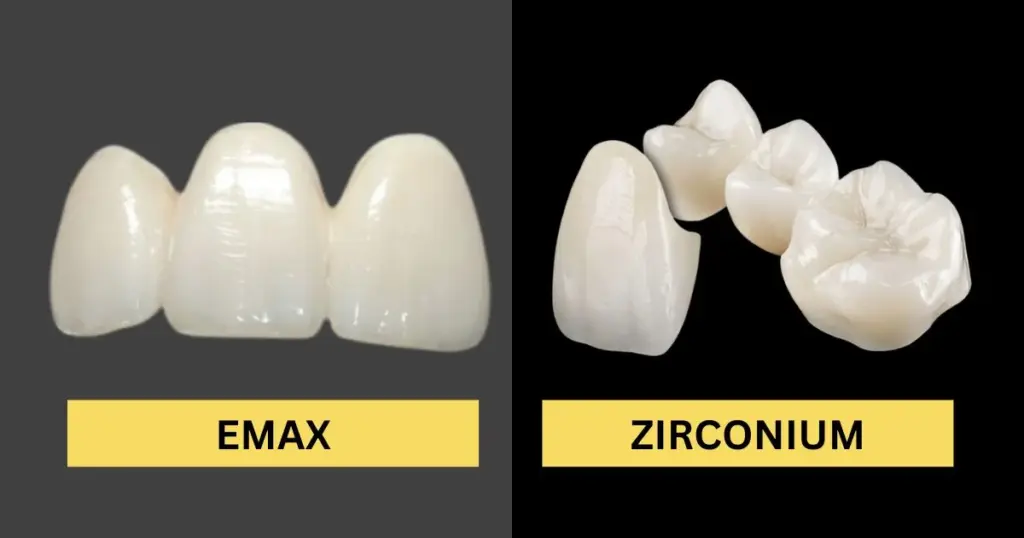
With the advancement of technology, aesthetic dentistry now allows for restorations that are indistinguishable from natural teeth in terms of form and texture, rather than just whitening. At this point, the two most common options patients encounter are zirconium Emax coatings. On one side stands Zirconium, known for its sturdiness, and on the other, E-max, which fascinates with its aesthetic depth.
The chewing load on a back tooth and the reflection of a front tooth under sunlight may not be solved with the same material. In this guide, we will examine these two giants of digital dentistry from every angle.
Table of Contents
Zirconium or E-max? Which One Is More Suitable for You?
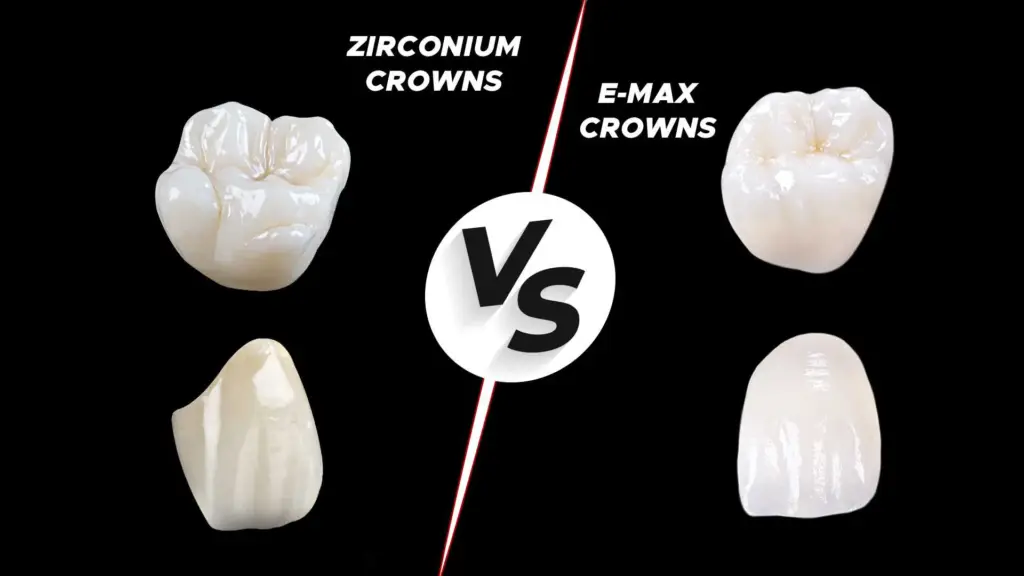
The first question people considering dental treatment usually ask is: Is it Emax or Zirconium? There is no single answer to this; the choice depends entirely on the area to be treated and the patient’s expectations. When deciding between zirconium Emax, your dentist usually considers the following criteria:
- Application Area: Since aesthetics are a priority for front teeth, E-max is generally preferred; for back teeth, Zirconium is chosen because strength is required.
- Tooth Loss: If there is a missing tooth and a bridge is to be made, the high resistance of Zirconium comes into play. E-max is generally not recommended for long bridges due to its brittle structure.
- Existing Color of the Tooth: If the underlying tooth is very dark or has a metal pin, Zirconium has better masking properties. E-max may reflect the underlying color due to its translucent structure.
What is E-max Coating?
E-max is a special material produced from compressed glass-ceramic called lithium disilicate. The most fundamental feature that distinguishes it from others is that it has light transmittance values closest to natural tooth enamel. Because it passes light through it just like a real tooth instead of reflecting it, it does not look like an artificial block in the mouth.
E-max generally falls into the category of full ceramic (full porcelain) restorations. It does not contain any metal or zirconium infrastructure. In this way, it offers a vibrant and natural smile with depth under light. It is considered the gold standard, especially for single-tooth restorations in the front area or laminate applications.
What is Zirconium Coating?
Zirconium is a material obtained from zirconium dioxide ceramic that combines the strength of metal with the aesthetics of porcelain. This material, which started the revolution of metal-free coatings, is known for being tissue-friendly. Unlike traditional porcelain coatings, it does not have gray metal in its infrastructure, so it does not create bruising or dark lines on the gums.
The biggest advantage of Zirconium is its durability. It can withstand high chewing pressure on the back teeth for years. Additionally, thanks to monolithic zirconium technology, more aesthetic forms can now be obtained; this makes Zirconium a strong option not only for back teeth but also for front teeth.
What are the Differences Between Zirconium and E-max Coatings?
Many patients wonder about the difference between Zirconium and Emax. The chemical structures of these two materials and their interactions with light constitute the fundamental differences.
Aesthetics and Light Transmittance
E-max is the material that transmits light best. Zirconium is more opaque compared to E-max. For this reason, while E-max offers a more deep-seated look on the front teeth, Zirconium has a more masking structure. If you are thinking about Emax laminate or Zirconium, E-max is almost always preferred for laminate applications because it is essential for this thin porcelain bonded only to the front surface of the tooth to look natural.
Durability and Strength Resistance
Zirconium is much harder than E-max. During grinding movements on the back teeth, the risk of E-max breaking may be higher. However, Zirconium can easily withstand this pressure. Therefore, when durability is sought, Zirconium is one step ahead; when aesthetics are sought, E-max is ahead.
Application Areas
The zirconium Emax difference is most clearly seen in the application areas. Zirconium is a mandatory choice for long bridges. For single-tooth coatings or aesthetic smile designs, E-max is the priority.
How Long is the Lifespan of Zirconium and E-max Coatings?
One of the issues patients are most curious about is longevity. Both Zirconium and E-max can be used without problems for 10 to 15 years, or even much longer, with correct oral care. These materials themselves are extremely resistant to wear, color change, or decay.
However, the main factor determining the life of the coating is the health of the underlying natural tooth and the gums. Regular tooth brushing, the use of interdental brushes, and professional dentist check-ups twice a year maximize the life of the restoration.
Zirconium and E-max Coating Prices
The issue of cost can be a decisive factor for patients. The answer to the question “Is Zirconium or Emax more expensive?” is usually E-max. This is because the production processes of the E-max material are more sensitive and require special craftsmanship during laboratory stages.
Dental coating prices as of 2026 vary according to the following factors:
- The brand and quality of the blocks used,
- The technological equipment of the laboratory (CAD/CAM systems),
- The expertise of the dentist and technician on these sensitive materials,
- The number of teeth to be treated and additional treatments (gum contouring, etc.).
| Feature | Zirconium Coating | E-max (Glass Ceramic) |
| Light Transmittance | Medium | Very High |
| Force Resistance | Very High | Medium |
| Front Tooth Suitability | Good | Excellent |
| Back Tooth Suitability | Excellent | Limited |
| Bridge Application | Yes (Including long bridges) | No (Usually single tooth) |
| Biocompatibility | 100% | 100% |
Frequently Asked Questions (FAQ)
Which looks more natural, Zirconium or E-max?
E-max generally looks more natural because it has the light transmittance closest to natural tooth enamel. However, if the underlying tooth is very dark, Zirconium can provide a more aesthetic result by providing better masking.
Can E-max be applied to back teeth?
Back teeth are where the chewing load is most intense. E-max may carry a risk of breaking here. For this reason, Zirconium or monolithic zirconium, which has high durability, is a much safer choice in the back area.
Do Zirconium and E-max coatings cause bruising on the gums?
No. Neither material contains metal. Gum bruising usually occurs as a result of the oxidation of the metal inside metal-supported porcelains or its failure to reflect light. Zirconium and E-max are completely biocompatible and tissue-friendly.
Should Laminate or Zirconium be chosen?
If you do not have much substance loss in your teeth and only aesthetic defects on the front surface are to be corrected, laminate (E-max) is preferred. However, if there are large fillings, root canal treatment, or excessive fractures in the tooth, Zirconium is healthier.