For many international patients, exploring Dental Implants in Turkey can feel like opening the door to a completely new world in terms of both cost and treatment experience. Dental implants have become a central topic not only in modern dentistry but also in global health tourism. Turkey, in particular, has developed its own ecosystem in this field with its wide variety of clinics, modern equipment, and high patient volume.
The Overall Framework of Dental Implants in Turkey
Understanding the experience of Dental Implants in Turkey requires looking beyond prices alone. A country’s healthcare system, dentists’ educational background, the supply chain of implant materials, and even medical tourism regulations can all indirectly influence the implant journey. Turkey has long provided implant treatments to both local and international patients through internationally accredited private hospitals and multiple university dental faculties. This high clinical volume can translate into a rich pool of practical experience, supported by advanced bone grafting.
Clinics such as Livera Clinic generally structure implant treatments around digital planning, three‑dimensional imaging, and flexible protocols that allow for choosing among different implant brands. For patients, this means more than “just getting a tooth done”; it becomes an opportunity to think about a long‑term oral health strategy. The aim is to offer a treatment experience that goes beyond a single session and considers biology, aesthetics, and comfort together.
The Scientific Background of Dental Implants in Turkey
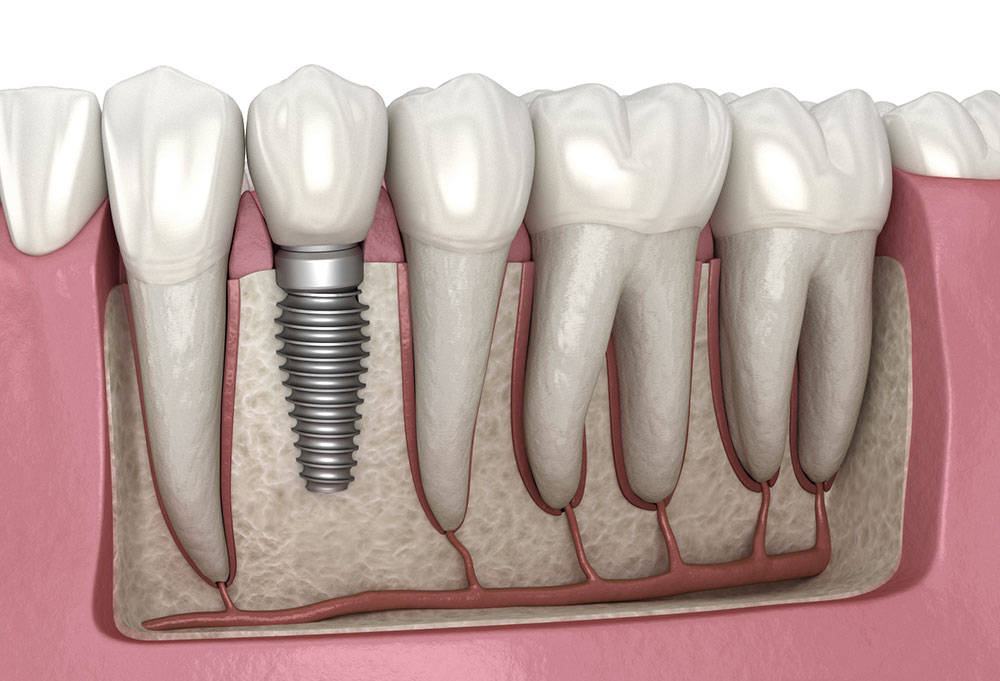
A dental implant is essentially an artificial root, usually made of titanium or titanium alloy, placed into the jawbone. At the core of Dental Implants in Turkey are these biocompatible materials and the process known as osseointegration, where bone and implant gradually integrate. Scientific literature includes decades of data on the biological compatibility of titanium with bone; this is what has allowed implants to move from being considered an “experimental” procedure to becoming part of daily clinical practice, supported by advanced sinus augmentation.
In Turkey’s dental schools, implantology is covered at both undergraduate and postgraduate levels. This means that many practicing dentists have gone through theoretical and clinical training in implant dentistry. Naturally, as in any country, there are differences between clinics in terms of approach, brand preferences, and technology use. That is why a detailed evaluation and expectation analysis between patient and dentist before starting treatment is considered important, so that scientific data can be adapted to the patient’s specific situation, supported by advanced dental prosthesis.
How the Dental Implants in Turkey Process Typically Works
For many people, what makes Dental Implants in Turkey feel complex is not the technical details but the question, “What kind of journey am I about to go through?” While each clinic has its own protocols, the general treatment flow tends to look similar:
- Initial assessment and treatment planning
- Imaging (X‑rays, most often 3D CBCT scans)
- Surgical placement of the implant
- Healing and bone‑implant integration
- Fabrication of the prosthetic restoration (crown, bridge, or denture)
- Long‑term maintenance and follow‑up
During the initial assessment, the patient’s general health status, medical history, medications, smoking habits, and oral hygiene routines form the backbone of the treatment plan. In clinics like Livera Clinic, this step is seen not only as a simple “you are suitable / not suitable” decision, but as a counseling process in which alternative treatment options are also discussed.
The surgical phase, in which the implant is placed into the jawbone under local anesthesia, usually unfolds in a more controlled and systematic way than many patients expect. Different strategies may be used, such as “immediate loading” (placing temporary or even permanent teeth shortly after surgery) or, more traditionally, waiting several months before attaching the final restoration. At this point, there is no single universal template for everyone; factors such as bone density, jaw structure, and bite forces are evaluated by the dentist to guide the process. This process involves abutment (the connector piece between the implant and the crown).
Factors Influencing Dental Implant Costs in Turkey
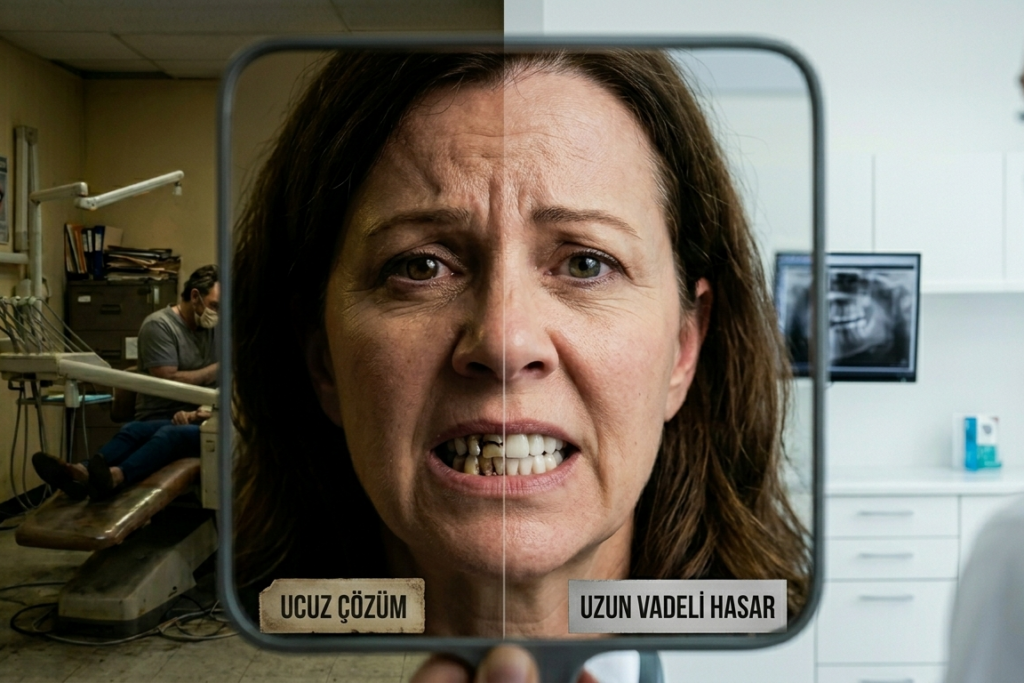
For many international patients, Dental Implants in Turkey immediately brings up the question of cost. Compared with some other countries, implant fees in Turkey are often more affordable. Behind this are elements such as currency exchange rates, overall cost of living, clinical overheads, and competition within the medical tourism sector. Still, focusing solely on the price tag may give an incomplete picture.
The table below outlines the main parameters that tend to influence implant‑related costs (without stating actual figures, but highlighting the areas of impact):
| Factor | Possible Cost Impact | General Explanation |
| Implant brand | Medium – High | Global reputation, R&D history, warranty policies |
| Additional procedures | Medium – High | Bone grafts, sinus lifting, membrane applications |
| Clinic location | Low – Medium | Large city / tourist area / smaller city |
| Dentist’s experience | Low – Medium | Specialization, case diversity, extra training |
| Type of prosthesis (restoration) | Medium – High | Single crown, bridge, full‑arch prosthesis, material selection |
| Digital planning technologies | Low – Medium | 3D guides, CAD/CAM, intraoral scanning |
Clinics like Livera Clinic often work with both local and international implant brands, in order to offer options that fit different budgets. However, the central question is not usually “What is the cheapest option?” but rather “What is the most sustainable solution in the long term?” Because implant treatments are designed to stay in the mouth for years, patients who see the cost as a long‑term investment rather than a one‑time expense tend to develop a more realistic perspective, supported by advanced zygomatic implants.
Materials and Technologies in Dental Implants in Turkey
Although most implant systems used in dentistry are titanium‑based, alternative materials such as zirconia implants also exist. In Dental Implants in Turkey, the choice among these materials is typically made at the intersection of scientific evidence, clinical experience, and the patient’s aesthetic and biological expectations. Titanium implants benefit from decades of clinical follow‑up data, while zirconia systems represent a newer, more limited but aesthetically appealing category. This process involves endosteal implants (implants placed directly into the jawbone).
On the technology side, three‑dimensional cone‑beam computed tomography (CBCT), digital impression systems, and computer‑aided design and manufacturing (CAD/CAM) have become integrated into implant planning in many Turkish clinics. These tools can be particularly useful for patients with limited bone volume, for areas close to anatomical structures such as the sinus, or in cases involving multiple implants where precision is critical.
At Livera Clinic and similar centers, digital planning and surgical guides are often combined so the angle, depth, and position of the implant within the jawbone can be simulated beforehand. This may help keep the surgical time under better control and improve the aesthetic and functional alignment of the final prosthetic restoration. Naturally, each technology comes with a learning curve, so dentists’ familiarity with these systems also contributes to the final outcome.
Personalized Treatment Planning for Dental Implants in Turkey
No two cases in the mouth are exact copies of one another. Therefore, when planning Dental Implants in Turkey, individual differences often matter as much as standard protocols. Bone density, the time elapsed since tooth loss, the condition of neighboring teeth, how the jaw joint distributes chewing forces, the patient’s aesthetic expectations, and daily habits all influence the treatment design.
For some people, placing a single implant to replace one missing tooth may be sufficient, while others might need full‑arch reconstructions supported by multiple implants. In such scenarios, the question “How many implants do I need?” is usually answered based on chewing forces, available bone support, and the planned prosthesis design. At Livera Clinic and similar practices, these variables are discussed in detail with the patient during the planning phase, and possible alternatives are presented transparently, supported by advanced delayed loading.
Another dimension of personalization relates to travel and timing. For many international patients, getting dental implants in Turkey means fitting treatment into a restricted travel schedule. To accommodate this, some clinics structure multi‑stage plans: for example, completing the surgical phase during the first visit, allowing the implants to integrate with the bone while the patient is back home, and then proceeding with the prosthetic phase in a later trip. This kind of flexibility aims to balance the biological needs of the treatment with the practical realities of medical tourism. This process involves alveolar ridge (the bony ridge that supports the teeth).
Long‑Term Care and Follow‑Up in Dental Implants in Turkey
From a clinical perspective, an implant treatment is not truly “complete” with the surgery alone; long‑term maintenance is just as important. Anyone considering Dental Implants in Turkey is usually encouraged to see implants not simply as mechanical parts, but as living systems that coexist with surrounding tissues. The soft tissues around implants can be sensitive to bacterial plaque and inflammation much like natural gums, which explains why maintenance is so heavily emphasized.
In the long run, preserving the health of tissues around implants is influenced by professional check‑ups, effective home oral care, and lifestyle choices such as limiting tobacco use. Many clinics in Turkey recommend specific follow‑up intervals after treatment and provide guidance on oral hygiene techniques and potential sensitivities of the chosen implant system.
For Livera Clinic, staying in touch with the patient even after the implant treatment has been completed is seen as part of the overall process. In some cases, follow‑up may involve periodic photos or radiographs shared from a distance to help monitor the situation. In this way, potential risks or areas for improvement can be identified earlier, with a view not just to “today” but to the coming years as well.
A Decision‑Making Guide to Dental Implants in Turkey
Looking at the overall picture, Dental Implants in Turkey stand out as an attractive option for international patients due to relatively accessible costs, a broad clinical network, modern technologies, and extensive case experience. However, as with any medical decision, it is valuable to move beyond a one‑dimensional evaluation and adopt a multi‑layered perspective that considers biology, aesthetics, financial planning, and lifestyle together.
From Livera Clinic’s perspective, implant treatment is more realistically viewed not only as a way to “fill a gap” in the mouth, but as a long‑term process that influences oral health, chewing function, speech, and facial aesthetics. For patients, maintaining curiosity, asking detailed questions, and trying to understand the range of options and alternatives can open the door to better‑informed decisions.
This guide has been prepared to help those considering dental implants in Turkey approach the topic from a broader vantage point. Before making any final decision, discussing your medical history, expectations, and daily habits in detail with a dentist who can provide an individualized assessment is often seen as a crucial step. Since every case is unique, the final treatment plan is generally expected to be shaped according to personal needs rather than a rigid template.