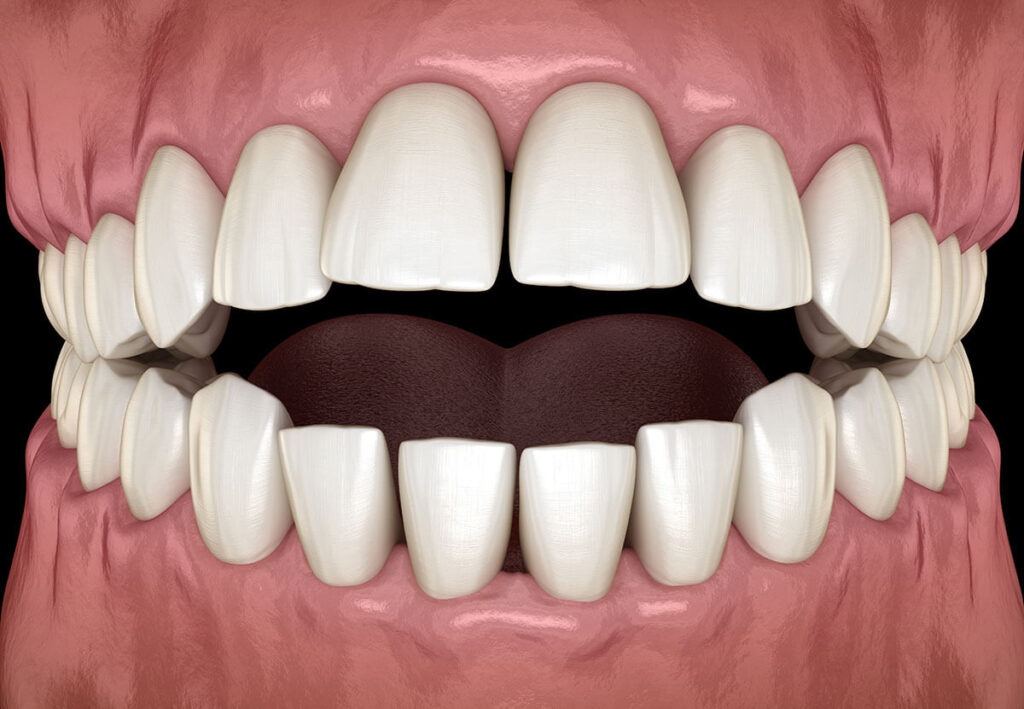
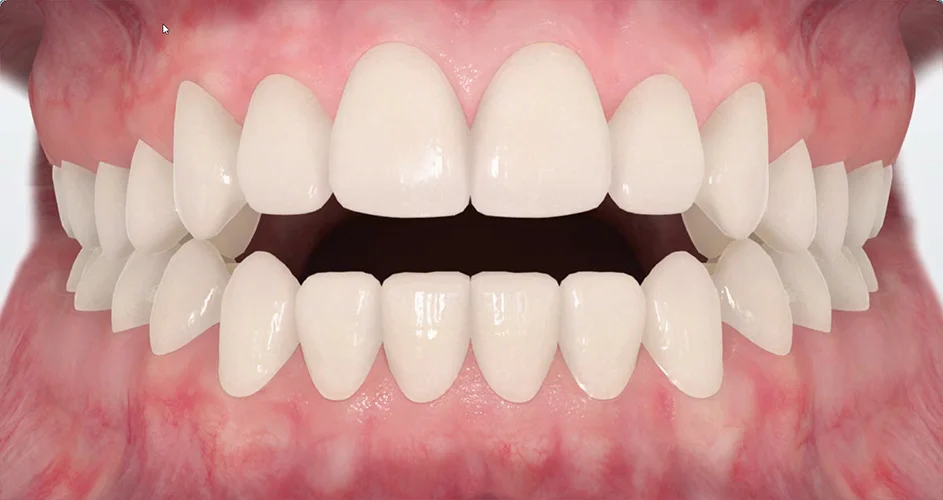
Open Bite is one of the most intriguing and functionally significant orthodontic conditions in modern dentistry. Unlike common alignment problems that involve crowding or spacing, Open Bite creates a visible gap between the upper and lower teeth when the mouth is closed. This seemingly simple gap can influence speech, chewing efficiency, facial aesthetics, and long term oral health.
At Livera Clinic, comprehensive smile analysis often reveals that Open Bite is not merely a cosmetic concern. It is a complex dental and skeletal pattern shaped by genetics, growth dynamics, and behavioral habits. Understanding the nature of Open Bite helps patients evaluate their options more clearly and make informed decisions about potential treatment pathways.
What Is Open Bite and How Does It Affect Oral Function?
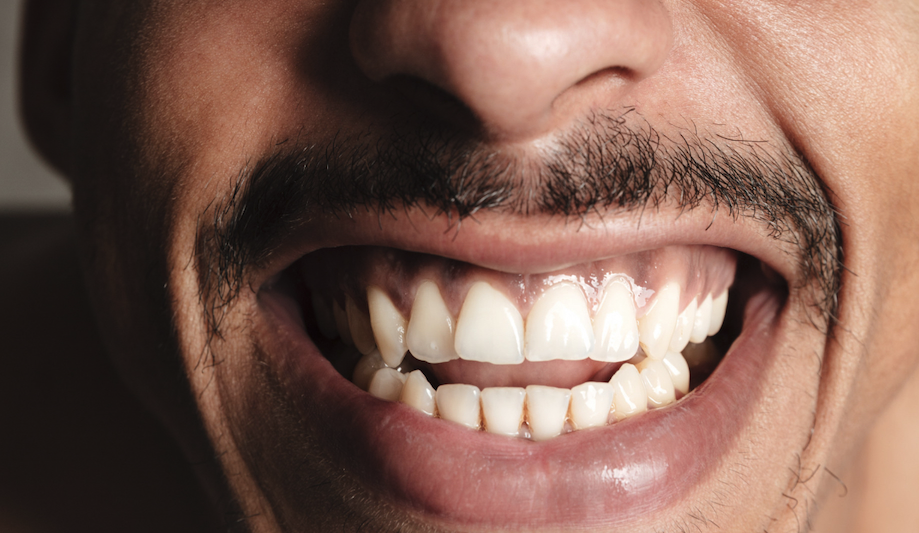
Open Bite is a type of malocclusion in which certain upper and lower teeth do not touch when the jaws are fully closed. In most cases, the gap appears in the front teeth, known as anterior open bite. Less commonly, it affects the back teeth, referred to as posterior open bite. Both forms may alter bite force distribution and jaw mechanics.
From a functional perspective, Open Bite may influence how efficiently food is broken down. Because the incisors fail to meet, patients often rely heavily on posterior teeth during chewing. Over time, this uneven pressure distribution may lead to muscular strain or abnormal wear patterns. Speech articulation, particularly sounds such as s and z, can also be subtly affected.
In many adults, untreated Open Bite may coexist with temporomandibular joint sensitivity. While not every case leads to discomfort, the altered bite relationship may influence jaw positioning and muscle coordination.
Common Causes Behind Open Bite Development
The formation of Open Bite is rarely linked to a single factor. Research in orthodontics suggests a multifactorial origin that combines skeletal growth patterns, dental eruption sequences, and environmental habits.
1. Genetic Growth Patterns
Some individuals inherit vertical growth tendencies in the facial skeleton. This vertical development can increase lower facial height and prevent proper overlap of the incisors, creating a skeletal open bite. In these cases, jaw positioning rather than tooth alignment alone is the primary contributor.
2. Oral Habits in Childhood
Prolonged thumb sucking, pacifier use, or tongue thrusting during early development may contribute to Open Bite. When the tongue consistently pushes against the front teeth during swallowing, it can gradually shift tooth position. Pediatric studies have shown that persistent habits beyond early childhood may influence occlusal development.
3. Airway and Posture Factors
Emerging orthodontic research explores the link between airway function and vertical facial growth. Mouth breathing due to nasal obstruction may affect jaw posture and eruption patterns. Although findings are still evolving, some clinicians observe correlations between airway adaptation and Open Bite patterns.
Because the causes vary, accurate diagnosis requires a detailed clinical examination supported by radiographic imaging and digital bite analysis.
Signs and Symptoms Associated with Open Bite
While the visible gap is the defining characteristic, Open Bite can manifest in additional ways that are not immediately obvious.
Patients may notice difficulty biting into foods such as sandwiches or apples. Instead of incising food cleanly, they often tear it using canines or posterior teeth. This adaptation may seem minor, yet it reflects altered biomechanics.
Another subtle sign of Open Bite involves speech resonance. Certain phonetic sounds may escape slightly due to incomplete anterior tooth contact. Although not always pronounced, this articulation difference can be noticeable in professional settings.
Facial aesthetics also play a role. Individuals with skeletal open bite often present increased lower facial height and lip incompetence at rest. This may influence overall smile balance and profile harmony.
Diagnosis and Evaluation of Open Bite
A precise Open Bite assessment involves more than visual inspection. At Livera Clinic, diagnostic protocols typically include digital scans, panoramic radiographs, and cephalometric analysis. These tools help determine whether the condition is dental, skeletal, or a combination of both.
Orthodontists analyze vertical dimensions, incisor angulation, and jaw relationships. By comparing anatomical landmarks, clinicians can evaluate growth direction and structural proportions. This detailed analysis allows treatment planning to be tailored to each individual case.
Modern three dimensional imaging further enhances understanding of Open Bite complexity. With digital modeling, clinicians can simulate potential treatment outcomes and evaluate bite closure dynamics before initiating therapy.
Open Bite Treatment Options: Modern Approaches Explained
Managing Open Bite depends largely on age, severity, and underlying cause. Treatment strategies range from orthodontic correction to surgical intervention in advanced skeletal cases.
Orthodontic Treatment
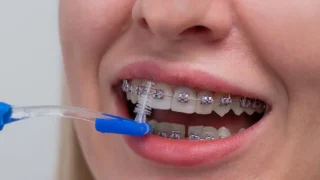
In mild to moderate cases, braces or clear aligners may gradually reposition teeth and encourage bite closure. Elastics are sometimes used to guide vertical tooth movement. For dental open bite cases, orthodontic therapy alone may achieve satisfactory results.
Skeletal Correction
When Open Bite is primarily skeletal, orthognathic surgery combined with orthodontics may be considered. Surgical repositioning of the jaw aims to harmonize vertical proportions. Such interventions are typically evaluated after growth completion.
Myofunctional Therapy
Addressing tongue posture and swallowing patterns can support stability. Behavioral adaptation techniques may complement orthodontic treatment by minimizing relapse risk.
Each approach requires careful case selection. Because Open Bite stability can vary, long term retention protocols are often emphasized.
Open Bite Treatment Costs: What Influences Pricing?
The cost of Open Bite correction varies significantly depending on complexity and chosen modality. There is no universal fee structure, as treatment plans are highly individualized.
Below is a general comparison framework:
| Treatment Type | Complexity Level | Relative Cost Range |
| Clear Aligners | Mild to Moderate | Moderate |
| Traditional Braces | Mild to Severe | Moderate to High |
| Orthognathic Surgery + Orthodontics | Severe Skeletal | High |
| Adjunctive Myofunctional Therapy | Supportive | Variable |
Several factors influence overall Open Bite treatment costs:
- Diagnostic imaging and digital planning technology
- Duration of orthodontic therapy
- Need for surgical coordination
- Geographic location and clinical expertise
At Livera Clinic, treatment planning typically begins with comprehensive evaluation rather than cost estimation. Because Open Bite management may require multidisciplinary coordination, transparent communication is essential.
Long Term Stability and Prognosis of Open Bite
One of the most discussed topics in orthodontic literature is the stability of Open Bite correction. Studies indicate that relapse potential may exist, particularly in cases influenced by persistent tongue habits or vertical skeletal patterns.
Retention strategies play a critical role in maintaining bite closure. Fixed or removable retainers may be recommended depending on tooth movement patterns. In skeletal cases, stability often depends on growth completion and muscular adaptation.
Despite these challenges, advancements in biomechanics and digital planning have improved predictability. With careful case selection and patient cooperation, Open Bite correction outcomes can be functionally and aesthetically satisfying.
Open Bite in Adults vs Children: Key Differences
Age significantly influences how Open Bite is approached. In children, interceptive orthodontics may guide growth and modify habits early. Early intervention can sometimes prevent more complex skeletal discrepancies from progressing.
In adults, treatment focuses on structural correction rather than growth modification. Because bone development is complete, therapeutic strategies emphasize controlled tooth movement or surgical repositioning.
The biological response to treatment also differs by age. Younger patients may demonstrate faster adaptation, while adult Open Bite cases often require longer monitoring to ensure stability.
A Comprehensive Perspective on Open Bite
Open Bite is more than a visible gap between teeth. It represents a dynamic interaction between skeletal growth, dental eruption, muscular function, and behavioral patterns. While it may appear subtle, its influence extends to chewing efficiency, speech clarity, and facial balance.
Understanding the causes and potential treatment costs of Open Bite allows patients to approach orthodontic consultation with clarity. Because every case presents unique anatomical variables, individualized planning remains essential.
At Livera Clinic, advanced diagnostic technologies and interdisciplinary evaluation contribute to comprehensive assessment. Rather than viewing Open Bite solely as a cosmetic irregularity, it is approached as a functional condition requiring thoughtful analysis and precision based planning.