Tooth Discoloration is one of the most common aesthetic concerns related to oral appearance, yet it is also one of the most misunderstood. When people notice changes in tooth color, the first reaction is often cosmetic anxiety. However, Tooth Discoloration is a multifactorial condition influenced by lifestyle habits, biological processes, environmental exposure, and age related changes.
At Livera Clinic, the topic of Tooth Discoloration is approached not as a simple surface issue but as a layered phenomenon involving enamel structure, dentin interaction, and external pigments.
Understanding Tooth Discoloration and How It Develops
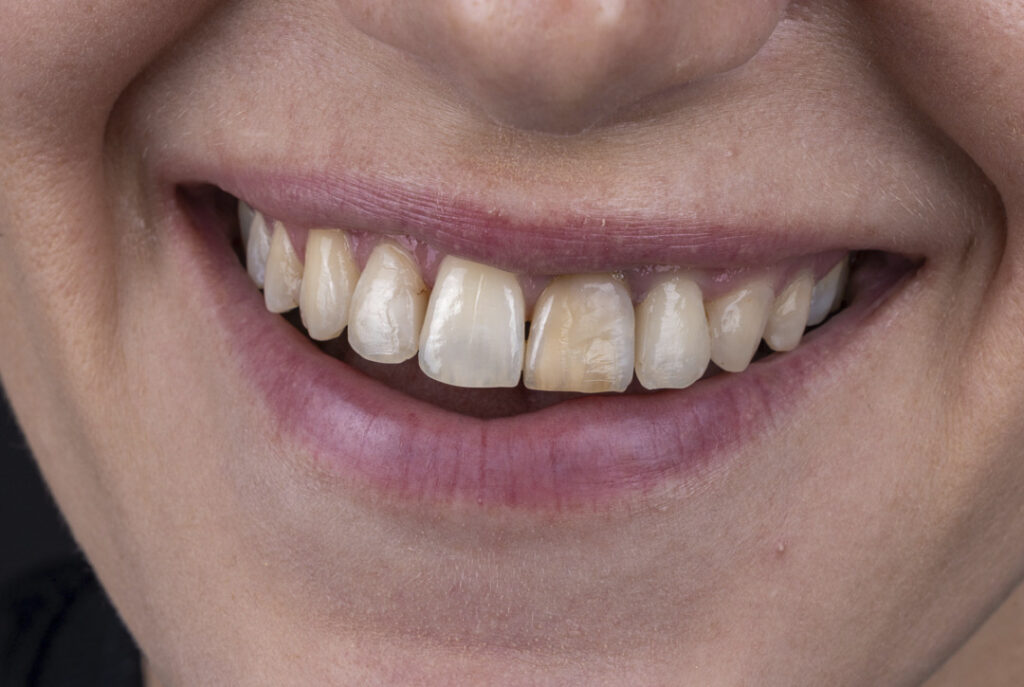
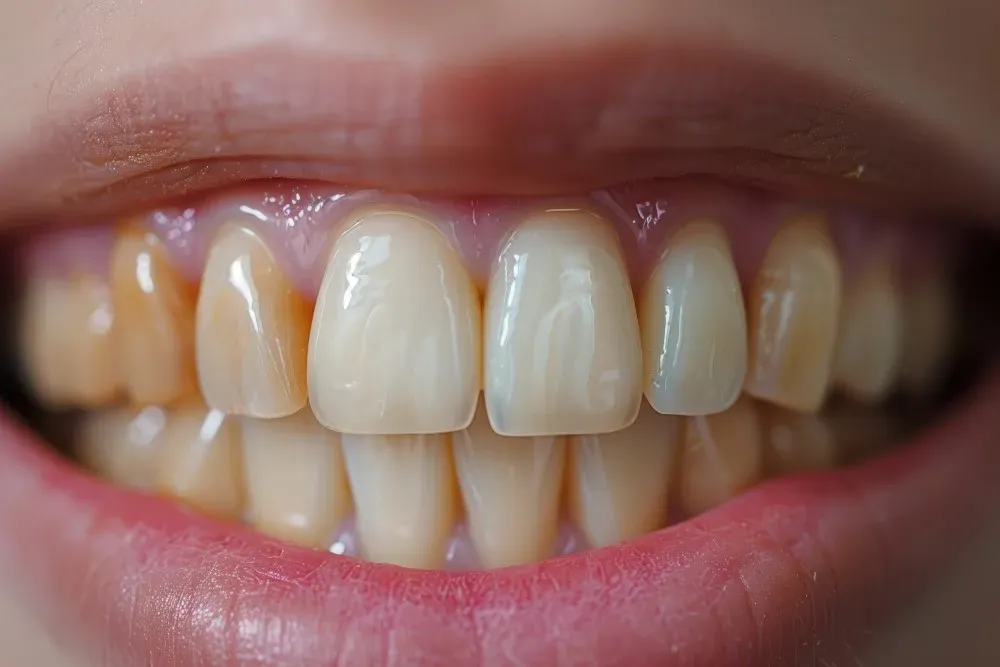
Tooth Discoloration refers to any visible change in the natural shade of teeth. While teeth are often assumed to be naturally white, their actual color exists on a spectrum influenced by enamel thickness and dentin tone underneath.
From a scientific standpoint, Tooth Discoloration develops when light interacting with enamel is absorbed or scattered differently. Enamel is semi translucent. When it becomes thinner or more porous over time, underlying dentin becomes more visible, creating a darker or yellowish appearance.
Researchers studying dental optics suggest that even subtle mineral changes can alter how teeth reflect light. This explains why Tooth Discoloration may occur gradually, sometimes without noticeable triggers, and why two individuals with similar habits can experience different discoloration patterns.
Types of Tooth Discoloration Based on Origin
Not all Tooth Discoloration is the same. Dental literature typically categorizes discoloration by where it originates. Understanding these categories helps explain why some color changes respond differently to cosmetic approaches.
Extrinsic Tooth Discoloration
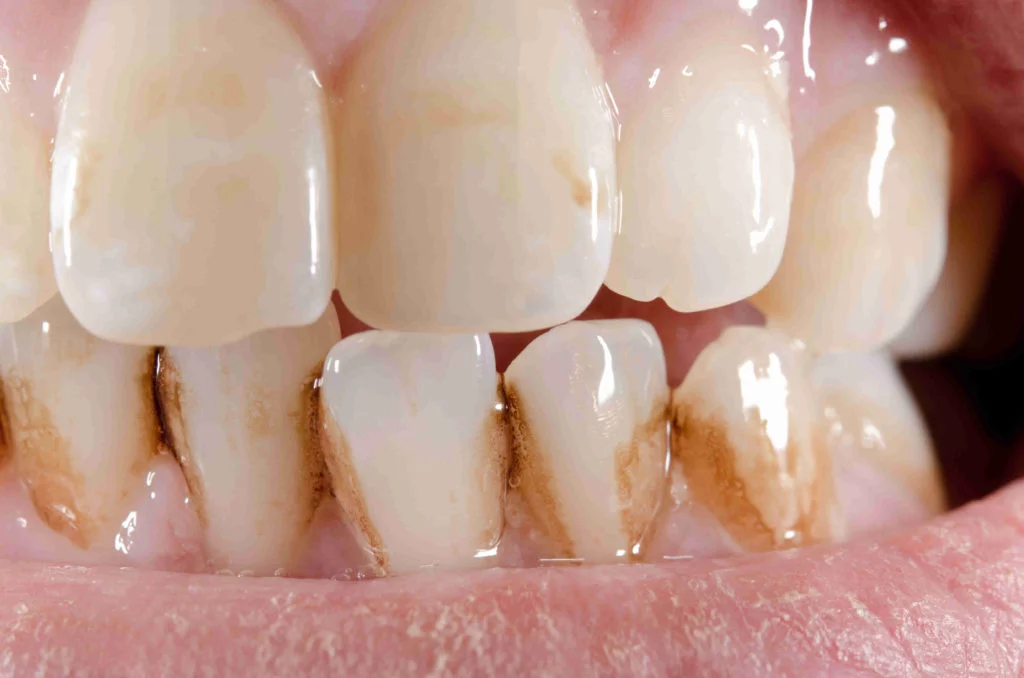
Extrinsic Tooth Discoloration affects the outer enamel surface. It is commonly associated with pigments from food, beverages, and environmental exposure. These pigments adhere to microscopic enamel irregularities.
What makes extrinsic Tooth Discoloration interesting is its cumulative nature. Studies show that repeated low level exposure can be just as influential as occasional high exposure. The color shift often appears brown, yellow, or slightly gray.
Intrinsic Tooth Discoloration
Intrinsic Tooth Discoloration occurs beneath the enamel, within the dentin structure. This type is linked to developmental factors, systemic influences, or internal chemical changes.
Unlike surface stains, intrinsic Tooth Discoloration tends to appear uniform and deeper in tone. Scientific discussions often highlight how dentin naturally darkens with age, making intrinsic changes more noticeable over time.
Age Related Tooth Discoloration
Age related Tooth Discoloration is not a separate category but a layered interaction of enamel thinning and dentin darkening. Over decades, enamel erosion and mineral shifts subtly reshape tooth color.
This explains why age related Tooth Discoloration often presents as a generalized yellow or muted shade rather than isolated spots.
Common Causes of Tooth Discoloration in Daily Life
The causes of Tooth Discoloration extend beyond obvious habits. While popular culture focuses on coffee or tea, scientific research points to a broader picture.
Key contributing factors include:
- Chromogenic compounds in foods and drinks that bind to enamel proteins
- Acidic environments that increase enamel porosity
- Natural oxidative changes within dentin
- Environmental exposure to metallic ions
- Genetic variation in enamel thickness
Interestingly, not all causes of Tooth Discoloration are negative. Some are simply byproducts of normal biological aging. This perspective helps remove stigma from natural color variation.
Tooth Discoloration and the Role of Enamel Structure
One of the most overlooked aspects of Tooth Discoloration is enamel microstructure. Enamel is not a flat surface. It contains microscopic rods and spaces that interact with pigments.
When enamel integrity changes, whether through wear or mineral imbalance, its optical properties shift. This is why Tooth Discoloration may appear uneven or patchy in certain lighting conditions.
Research using electron microscopy has shown that enamel roughness increases pigment retention. This does not mean damage, but rather natural adaptation over time. Understanding this helps explain why Tooth Discoloration is often progressive rather than sudden.
Psychological and Social Perception of Tooth Discoloration
Beyond biology, Tooth Discoloration carries a psychological dimension. Studies in social psychology suggest that tooth color influences perceived age, health, and even trustworthiness.
However, these perceptions are culturally shaped. In some societies, slight Tooth Discoloration is associated with maturity and authenticity rather than neglect. This highlights the subjective nature of aesthetic standards.
Livera Clinic emphasizes that understanding Tooth Discoloration scientifically helps separate personal perception from biological reality. Teeth are not static objects but living structures influenced by time and environment.
How Tooth Discoloration Is Interpreted in Modern Dentistry
Modern dentistry views Tooth Discoloration as diagnostic information rather than merely an aesthetic flaw. Color changes can indicate enamel thickness, hydration levels, and even historical exposure patterns.
Digital shade mapping technologies now analyze Tooth Discoloration across multiple zones of a single tooth. These maps show that uniform color is rare in natural teeth, reinforcing the idea that variation is normal.
This analytical approach reframes Tooth Discoloration as a data point rather than a defect, contributing to more personalized interpretations of dental appearance.
Tooth Discoloration Patterns and What They Suggest
Different Tooth Discoloration patterns tend to follow recognizable distributions:
| Pattern Location | Typical Interpretation |
| Near gum line | Natural enamel thinning |
| Tooth edges | Light refraction changes |
| Central surface | External pigment interaction |
| Overall yellowing | Dentin visibility increase |
These patterns do not indicate conditions or diagnoses but rather illustrate how Tooth Discoloration reflects structural and environmental interactions.
Tooth Discoloration in Research and Future Perspectives
Ongoing research into Tooth Discoloration focuses on biomimetic enamel regeneration and optical correction rather than surface alteration. Scientists are exploring how light scattering can be modified without changing tooth structure.
This suggests a future where Tooth Discoloration is addressed through advanced material science rather than purely cosmetic methods. While still experimental, these developments show how seriously the topic is studied within academic dentistry.
Rethinking Tooth Discoloration with Awareness
Tooth Discoloration is not a single problem with a single explanation. It is a layered phenomenon shaped by biology, environment, time, and perception. When viewed through a scientific lens, Tooth Discoloration becomes less about imperfection and more about understanding.
At Livera Clinic, the focus remains on informed awareness rather than judgment. By exploring the causes, types, and interpretations of Tooth Discoloration, individuals gain clarity about what they see in the mirror and why it exists.