Cracked Teeth are often misunderstood because they rarely announce themselves clearly, yet they play a significant role in how people experience oral comfort, chewing ability, and even confidence. At first glance, the idea of a cracked tooth may seem simple, but in reality, it represents a complex interaction between tooth structure, daily habits, and long term stress on the mouth. Understanding this topic requires moving beyond surface level explanations and looking at how cracks form, how they behave over time, and why they attract growing attention in modern dentistry.
In everyday life, teeth are exposed to forces that are far greater than many people realize. Biting, grinding, sudden temperature changes, and accidental impacts all place stress on enamel. Cracked Teeth emerge not from a single dramatic moment in most cases, but from accumulated micro stresses that gradually exceed what the tooth structure can absorb. This is why cracks may appear even in teeth that look healthy from the outside.
What makes this subject particularly interesting is how subtle it can be. Many people live with Cracked Teeth without realizing it, attributing mild discomfort to sensitivity or fatigue. Others only become aware when a change in sensation occurs while chewing or when a visual line becomes noticeable. These variations explain why cracked teeth are discussed not as a single condition, but as a spectrum of structural changes.
Understanding Cracked Teeth Beyond the Obvious
When discussing Cracked Teeth, it is helpful to move past the idea of a tooth being either intact or broken. Teeth exist in a state of balance, and small disruptions in that balance can create cracks that behave differently depending on their depth and direction. Some cracks remain stable for years, while others slowly progress.
From a structural perspective, enamel is strong but brittle. Once a crack begins, it may follow natural lines within the tooth. Cracked Teeth therefore do not always spread randomly. Instead, they often reflect how force travels through the tooth during biting and grinding. This explains why molars are more frequently affected than front teeth.
Another important aspect is perception. A visible crack does not always correlate with discomfort, and discomfort does not always mean a visible crack exists. Cracked Teeth challenge the assumption that dental issues are always easy to identify. This ambiguity contributes to both curiosity and concern among patients and professionals alike.
Why Cracked Teeth Occur Over Time
The causes behind Cracked Teeth are rarely isolated. Instead, they develop through a combination of biological factors and daily behavior. Teeth are living structures connected to nerves and surrounding bone, which means they respond dynamically to stress rather than passively absorbing it.
Common contributing elements include repetitive pressure from chewing hard foods, jaw clenching during sleep, and exposure to extreme temperature contrasts. For example, alternating between very hot and very cold foods can cause enamel to expand and contract repeatedly. Over time, this movement may encourage the formation of cracks.
Age also plays a role, though not in a simplistic way. Cracked Teeth are not merely a sign of aging, but of cumulative use. Teeth that have functioned reliably for decades may develop cracks simply because they have been asked to perform continuously without rest. This perspective reframes cracked teeth as a reflection of longevity rather than failure.
Types of Cracked Teeth and How They Differ
Not all Cracked Teeth behave the same way, and understanding their differences helps explain why outcomes vary so widely. Some cracks affect only the enamel surface, while others extend deeper toward the inner structures of the tooth. These distinctions influence how the tooth responds to pressure and sensation.
Surface level cracks may appear as fine lines and often remain stable. Deeper cracks, however, can interact with the dentin layer beneath the enamel. Because dentin transmits sensation more readily, Cracked Teeth involving this layer are more likely to produce noticeable discomfort during chewing.
Direction also matters. Vertical cracks tend to follow the natural orientation of tooth structure, while horizontal cracks may result from sudden force. Each pattern creates a different mechanical response. This diversity is why cracked teeth are discussed as a category rather than a single diagnosis.
How Cracked Teeth Are Perceived in Daily Life
One of the most fascinating aspects of Cracked Teeth is how people experience them subjectively. Sensations may come and go, appearing only under specific conditions. A tooth might feel normal most of the day, yet respond sharply to pressure from a particular angle.
This inconsistency can be confusing. People often question whether the sensation is real or temporary. Cracked Teeth do not always produce continuous signals, which makes them easy to overlook. This intermittent nature explains why many individuals delay seeking clarity about what they are experiencing.
Emotionally, the uncertainty surrounding cracked teeth can be more impactful than pain itself. Not knowing whether a sensation will worsen creates a sense of anticipation. This psychological element is an important, though often overlooked, part of how cracked teeth affect quality of life.
Early Observations About Cracked Teeth
Early observations of Cracked Teeth often come from small changes rather than dramatic symptoms. A slight hesitation when biting into certain foods or an awareness of pressure in one area of the mouth may prompt curiosity. These moments are subtle, yet meaningful.
Over time, patterns may emerge. People begin to notice that discomfort appears under similar conditions. These observations are valuable because they highlight how Cracked Teeth interact with daily habits rather than existing as isolated defects.
At this stage, the topic becomes less about immediate outcomes and more about understanding possibilities. Cracked teeth invite questions about durability, adaptation, and how the mouth responds to long term use. These questions form the foundation for deeper discussion in the following sections.
Cracked Teeth and the Science of Tooth Stress
Cracked Teeth can be better understood by looking at how stress distributes itself within a tooth. Teeth are not solid blocks. They are layered structures designed to absorb and redirect force. Enamel protects the surface, dentin cushions internal stress, and the pulp responds to changes in pressure and temperature. When force exceeds the system’s capacity, cracks may form as a form of structural release.
Interestingly, Cracked Teeth often develop at points where stress converges. Cusps, ridges, and previously restored areas tend to experience higher pressure during chewing. Over time, these stress points may weaken, even if the tooth appears intact. This is why cracks frequently appear in teeth that have undergone heavy use rather than those that have experienced obvious trauma.
Research in dental biomechanics suggests that repeated low level force can be just as influential as a single strong impact. This explains why people who clench or grind their teeth without realizing it often show signs associated with Cracked Teeth. The process is gradual, making awareness difficult but understanding essential.
The Role of Daily Habits in Cracked Teeth Formation
Daily habits play a quiet but significant role in the development of Cracked Teeth. Many behaviors considered harmless can, over time, contribute to micro damage within enamel. Chewing ice, opening packaging with teeth, or favoring one side of the mouth are examples of repeated actions that may influence crack formation.
Diet also contributes indirectly. Hard or brittle foods create sharp force peaks, while acidic foods can soften enamel temporarily, making it more vulnerable. When these factors overlap, the likelihood of Cracked Teeth increases, not because of one specific action, but due to accumulated effect.
What makes this relationship complex is that habits vary widely between individuals. Two people may eat similar foods yet experience different outcomes. This variability reinforces the idea that Cracked Teeth are the result of interaction between structure, behavior, and time rather than a single cause.
Cracked Teeth and Sensation Changes
One of the most discussed aspects of Cracked Teeth is how they influence sensation. Sensitivity associated with cracks often feels sharp and momentary, especially during chewing or temperature changes. This occurs because cracks can allow pressure to reach areas of the tooth that are normally insulated.
However, not all Cracked Teeth produce noticeable sensation. Some remain silent, detected only through visual examination or imaging. This inconsistency challenges the assumption that discomfort always signals severity. In reality, sensation depends on crack location, depth, and how force is applied.
This unpredictability often leads to delayed recognition. People may dismiss early signs as temporary sensitivity. Understanding that Cracked Teeth do not follow a predictable sensory pattern helps explain why awareness often comes later rather than sooner.
Visual Identification of Cracked Teeth
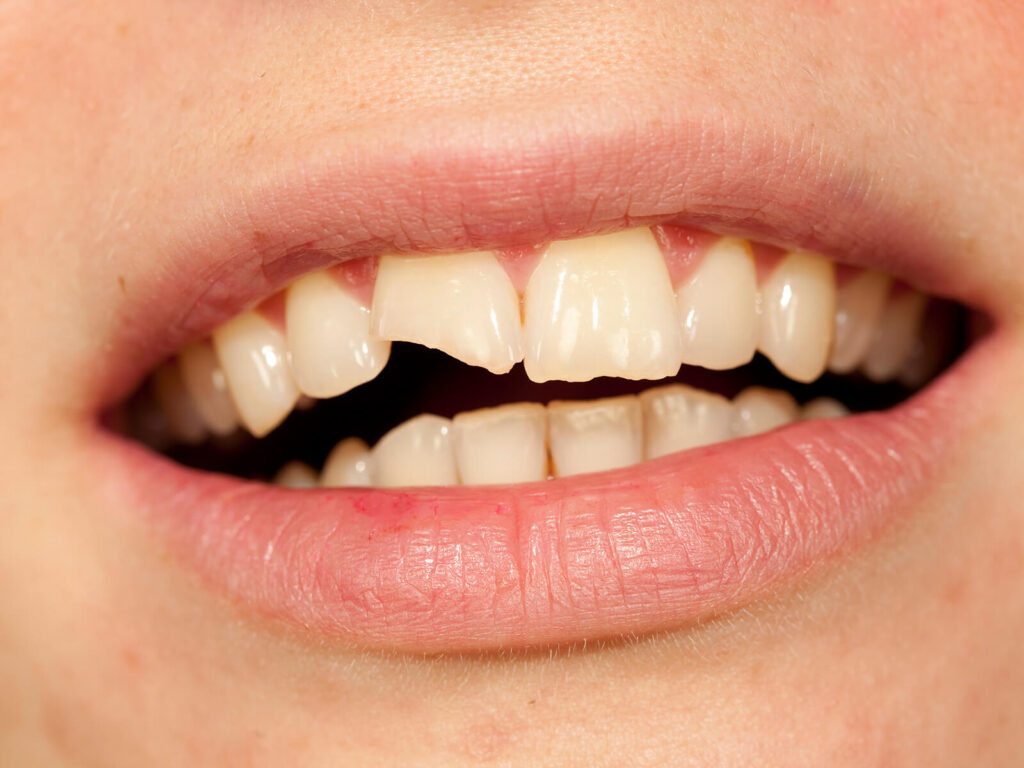
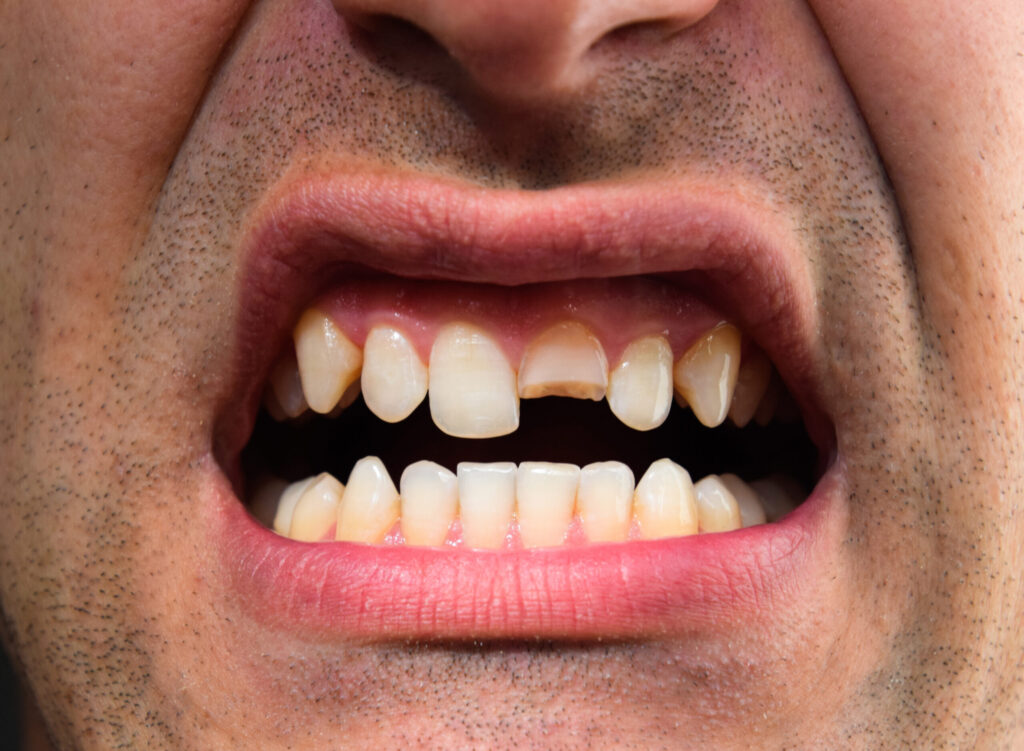
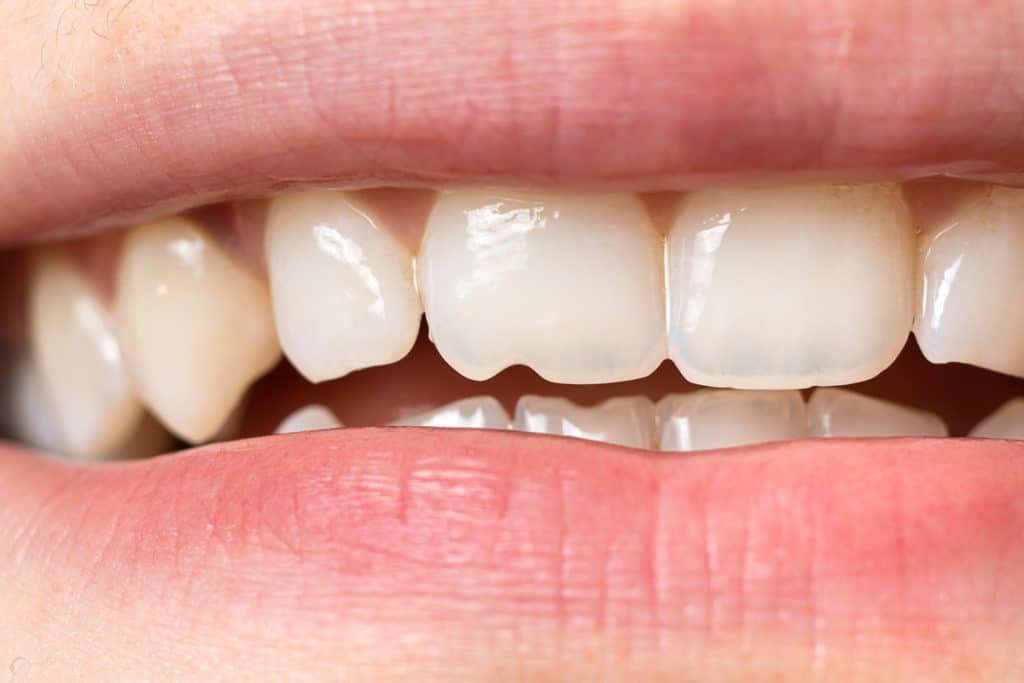
Visually identifying Cracked Teeth can be surprisingly difficult. Fine cracks may blend into the natural lines of enamel, becoming visible only under specific lighting or magnification. In some cases, stains collect along cracks, making them easier to notice over time.
The challenge lies in distinguishing between superficial enamel lines and deeper structural cracks. Not every visible line represents a structural concern. Cracked Teeth exist along a continuum, and appearance alone does not determine significance.
This visual ambiguity contributes to ongoing discussion. It reinforces the idea that cracked teeth are not defined by a single visual marker, but by a combination of appearance, sensation, and functional response. Observing these factors together offers a more complete picture.
Emotional and Psychological Dimensions of Cracked Teeth
Beyond physical sensation, Cracked Teeth often carry emotional weight. Uncertainty about what a crack might mean can create anxiety, even when discomfort is minimal. People tend to imagine worst case scenarios, especially when information is fragmented or unclear.
This emotional response is understandable. Teeth are associated with permanence and strength. Discovering Cracked Teeth challenges that assumption, reminding individuals that even durable structures have limits. This realization can feel unsettling.
At the same time, understanding the variability of cracked teeth can be reassuring. Knowing that not all cracks progress or cause harm helps balance concern with perspective. Emotional responses often soften as knowledge increases.
Cracked Teeth in the Context of Modern Dentistry
In modern dental discussions, Cracked Teeth occupy an interesting position. They are neither rare nor always urgent, yet they demand careful interpretation. Advances in imaging and materials have expanded how cracks are observed and discussed.
This evolving perspective has shifted focus from immediate action to long term understanding. Cracked Teeth are increasingly viewed as dynamic conditions influenced by multiple factors rather than static problems with fixed outcomes.
As a result, conversations about cracked teeth have become more nuanced. They emphasize monitoring, interpretation, and context. This shift sets the stage for exploring how cracked teeth are approached conceptually and how treatment considerations are framed, which will be explored in the final part.
Cracked Teeth and How Treatment Approaches Are Framed
Cracked Teeth are often discussed not in terms of a single treatment path, but as a spectrum of possibilities. Modern dentistry tends to approach cracks by first understanding their behavior rather than immediately categorizing them as problems to be fixed. This perspective recognizes that not every crack behaves the same way or progresses at the same pace.
In many discussions, Cracked Teeth are framed around stability. Some cracks remain unchanged for long periods, while others respond differently to pressure or temperature. Because of this variability, treatment concepts are often described as adaptive rather than definitive. The emphasis lies on matching the approach to how the crack interacts with daily function, rather than applying a uniform solution.
This way of thinking reflects a broader trend in healthcare conversations. Instead of focusing solely on intervention, attention is given to observation, context, and long term patterns. Cracked Teeth fit naturally into this framework, as they challenge the idea that visible damage always demands immediate correction.
Materials and Technologies Associated With Cracked Teeth
The conversation around Cracked Teeth frequently includes discussion of materials and technologies, even when outcomes are not the primary focus. Dental materials today are designed to work with natural tooth structures rather than replace them entirely. This has influenced how cracks are perceived and managed conceptually.
For example, restorative materials are often described in terms of flexibility and load distribution. These characteristics matter because Cracked Teeth respond to force in complex ways. Materials that mimic natural tooth behavior can theoretically reduce stress concentration, which explains why material science is often mentioned alongside cracked teeth discussions.
Technology also shapes perception. Imaging tools allow cracks to be observed from angles that were previously inaccessible. This increased visibility has not necessarily increased certainty, but it has deepened understanding. Cracked Teeth are now seen as layered conditions with varying depth and impact, rather than simple surface flaws.
Cracked Teeth and Long Term Observation
Long term observation plays a key role in how Cracked Teeth are understood. Unlike sudden dental events, cracks often evolve slowly. This gradual progression invites a different kind of attention, one focused on patterns rather than immediate outcomes.
Observers note changes in sensation, appearance, or response to pressure over time. These subtle shifts form the basis of many discussions about Cracked Teeth. Instead of asking what must be done, people often ask what the crack is doing. This change in questioning reflects a more analytical mindset.
This long view also reinforces patience. Cracked Teeth remind people that dental structures exist within a dynamic environment. Forces change, habits shift, and materials age. Understanding cracks as part of this ongoing process adds depth to the conversation and reduces the urge for oversimplified conclusions.
Cracked Teeth in Relation to Everyday Function
Everyday function is central to how Cracked Teeth are interpreted. Chewing, speaking, and even subtle jaw movements apply force to teeth in complex patterns. Cracks may respond differently depending on how these forces are distributed throughout the day.
This functional lens helps explain why two similar cracks may behave differently. One tooth may experience concentrated force due to bite alignment, while another may distribute pressure more evenly. Cracked Teeth are therefore often discussed in relation to function rather than appearance alone.
Understanding this relationship encourages a broader view. Teeth are part of a system, not isolated units. Cracked Teeth highlight the importance of considering how individual structures interact within that system, shaping both perception and discussion.
The Language Used Around Cracked Teeth
The way people talk about Cracked Teeth has evolved over time. Earlier language often implied damage and urgency. Contemporary discussions tend to use more neutral terms, focusing on observation and behavior rather than alarm.
This shift in language reflects a deeper change in understanding. By describing Cracked Teeth in measured terms, conversations become more informative and less intimidating. Words shape perception, and calmer language allows for clearer thinking.
This linguistic evolution also supports better dialogue. When Cracked Teeth are framed as conditions to be understood rather than problems to fear, people are more likely to engage thoughtfully with the topic and ask meaningful questions.
Cracked Teeth as Part of a Broader Oral Health Narrative
Within the broader narrative of oral health, Cracked Teeth occupy a unique position. They sit between visible change and hidden structure, between strength and vulnerability. This duality makes them especially interesting from an educational perspective.
Rather than representing failure, Cracked Teeth often illustrate adaptation. Teeth respond to years of use, pressure, and environment. Cracks can be seen as records of that history, marking where forces have traveled and accumulated.
This perspective reframes the conversation. Instead of focusing solely on correction, Cracked Teeth become part of a story about resilience and limits. They remind us that durability does not mean invulnerability.
Concluding Reflections on Cracked Teeth
When viewed holistically, Cracked Teeth are less about isolated damage and more about interaction over time. They reflect how structure, behavior, and environment intersect in subtle ways. Understanding them requires curiosity rather than certainty.
Throughout this discussion, Cracked Teeth have emerged as complex, layered phenomena. They resist simple definitions and encourage nuanced thinking. This complexity is precisely what makes them valuable topics of exploration.
In the end, conversations about Cracked Teeth serve a broader purpose. They invite people to think differently about oral structures, to appreciate their adaptability, and to recognize that even small changes can carry meaningful stories when observed with care.