The healing journey after a Dental Implant procedure often raises one essential question: what should you eat to support comfort and recovery? Nutrition plays a subtle yet meaningful role in how your body responds to surgical intervention. At Livera Clinic, patients frequently ask how dietary choices influence tissue healing, inflammation control, and overall well being following Dental Implant placement.
While every individual heals differently, understanding the biological processes behind a Dental Implant procedure can clarify why certain foods are commonly preferred during the early recovery phase.
Why Nutrition Matters After Dental Implant Surgery
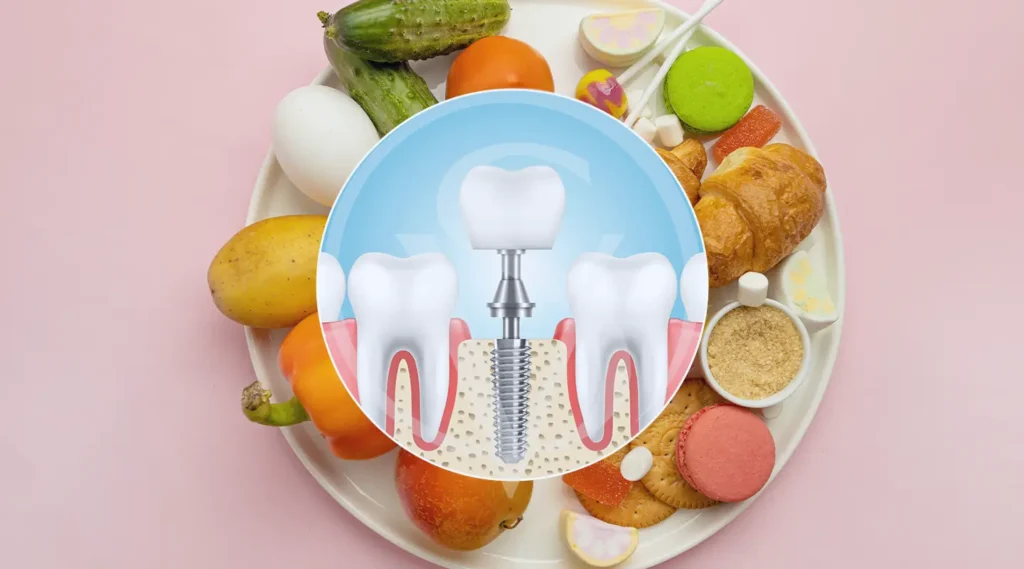
A Dental Implant procedure involves the placement of a titanium post into the jawbone. This post gradually integrates with bone through a biological process called osseointegration. During this phase, surrounding tissues respond to surgical trauma with inflammation, clot formation, and cellular regeneration.
Soft tissue repair and bone remodeling require adequate protein, micronutrients, and hydration. After a Dental Implant surgery, chewing force is temporarily limited, which makes food texture just as important as nutritional value. Choosing appropriate foods may help maintain comfort while the surgical site stabilizes.
Scientific literature suggests that wound healing relies on collagen synthesis, immune modulation, and controlled inflammation. These mechanisms are influenced by nutrients such as vitamin C, zinc, and high quality protein. Therefore, diet indirectly supports the biological environment around a newly placed Dental Implant.
The First 24 to 48 Hours After Dental Implant Placement
The first two days after Dental Implant surgery are typically focused on clot protection and minimizing irritation. During this stage, extremely hot foods and beverages are usually avoided, as temperature changes may increase local blood flow.
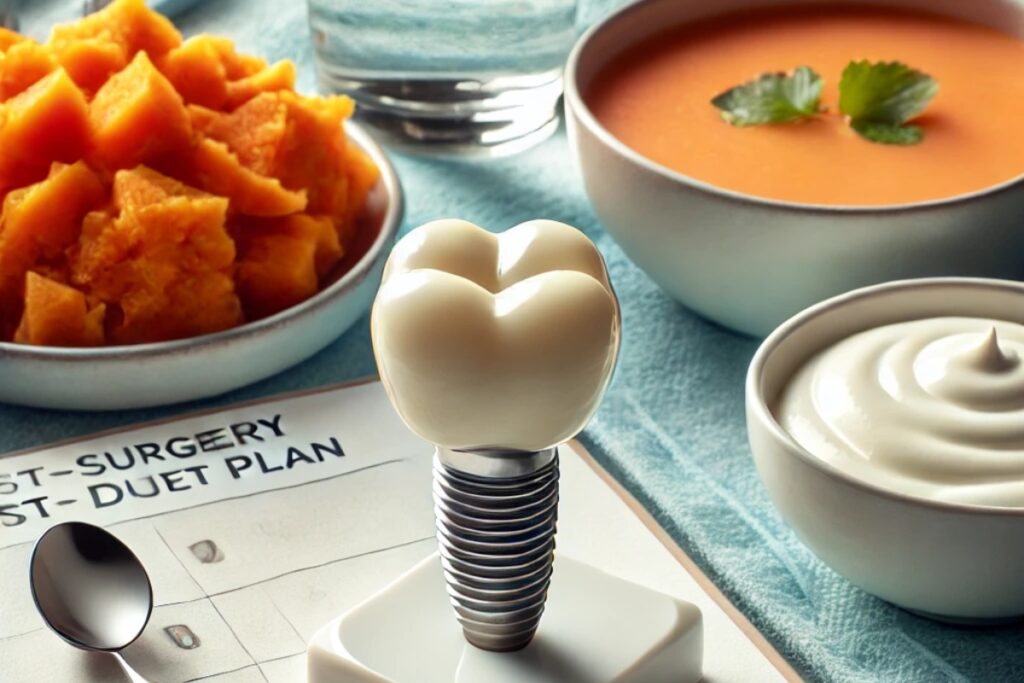
Cold or room temperature options are often preferred. Examples include:
- Yogurt without fruit chunks
- Smooth soups that are not hot
- Mashed avocado
- Protein enriched smoothies
- Soft oatmeal cooled to lukewarm
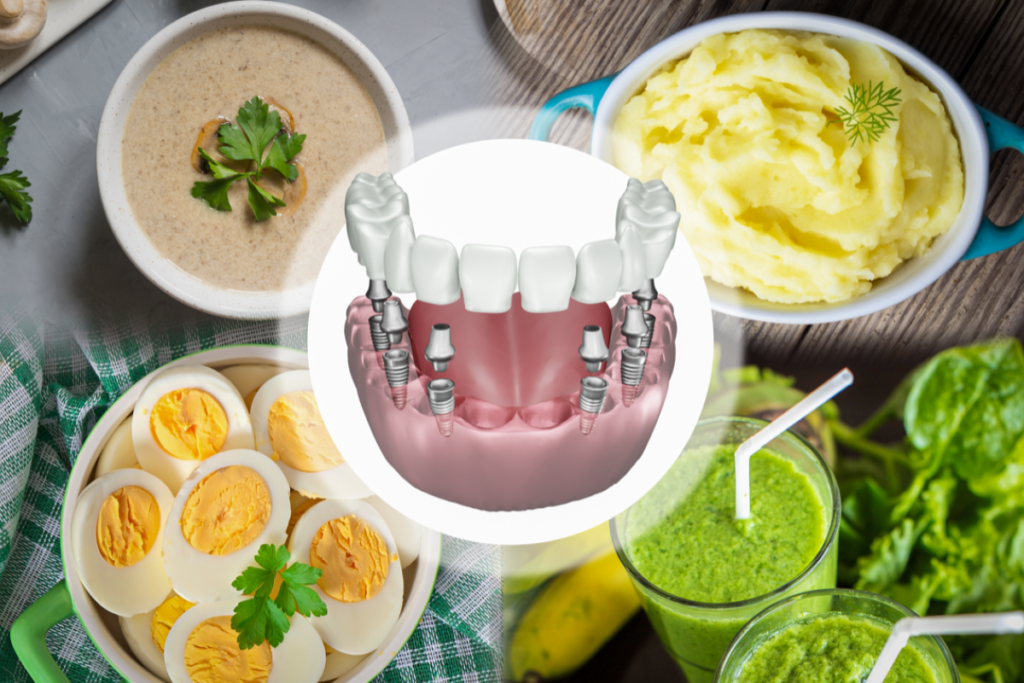
Texture is critical during this period. The surgical site following a Dental Implant should not be exposed to pressure from chewing. Blended or mashed foods reduce mechanical stress on the implant region.
Hydration is equally important. Adequate fluid intake supports circulation and cellular repair around the Dental Implant area.
Soft Foods That Support Dental Implant Recovery
As initial sensitivity decreases, patients can gradually expand their diet while still protecting the Dental Implant site. Soft foods rich in protein and essential nutrients are often prioritized.
Protein Focused Options
Protein contributes to tissue regeneration. After a Dental Implant, gentle protein sources may include scrambled eggs, cottage cheese, soft tofu, and finely shredded chicken.
Nutrient Dense Choices
Fruits like bananas or steamed apples offer vitamins without requiring intense chewing. Cooked vegetables such as carrots or zucchini can be softened to reduce strain near the Dental Implant region.
Below is a simple nutritional overview:
| Nutrient | Role in Healing | Food Examples |
| Protein | Tissue repair | Eggs, yogurt, tofu |
| Vitamin C | Collagen formation | Soft fruits, blended berries |
| Zinc | Immune support | Dairy, legumes |
| Iron | Oxygen transport | Soft meats, pureed spinach |
A balanced intake supports systemic recovery, which indirectly benefits the stability of a healing Dental Implant.
Foods Commonly Avoided After Dental Implant Surgery
Certain foods may increase discomfort or mechanical stress around a Dental Implant site. Crunchy, sticky, or hard textures can disturb early healing.
Examples often postponed include:
- Nuts and seeds
- Hard bread crusts
- Chewy candies
- Carbonated beverages
- Spicy sauces
Sticky foods may adhere near the Dental Implant incision area, complicating hygiene maintenance. Meanwhile, hard foods can apply pressure before osseointegration has progressed sufficiently.
Acidic foods are sometimes limited in the early days, as they may cause mild irritation around the surgical site following Dental Implant placement.
Gradual Transition to Normal Eating After Dental Implant Integration
As healing advances, chewing function typically improves. The timeline varies depending on bone density, surgical complexity, and individual biology. A Dental Implant integrates gradually, and dietary expansion often mirrors this process.
Patients usually reintroduce firmer textures step by step. Instead of biting directly into hard foods, cutting them into smaller pieces may reduce localized stress on the Dental Implant.
This gradual progression supports confidence during meals. Over time, most individuals return to a diverse diet, benefiting from the structural stability that a successfully integrated Dental Implant can provide.
Hydration, Micronutrients, and Bone Support After Dental Implant Surgery
Bone remodeling continues for months after a Dental Implant is placed. Calcium, vitamin D, and magnesium contribute to skeletal metabolism. While diet alone does not determine implant success, nutritional balance helps maintain systemic bone health.
Hydration supports blood flow and cellular exchange around the Dental Implant interface. Adequate fluid intake also assists saliva production, which naturally helps cleanse the oral environment.
Omega 3 fatty acids found in soft fish may contribute to balanced inflammatory responses. These elements interact within complex biological systems that influence healing after Dental Implant surgery.
Lifestyle Considerations That Influence Dental Implant Recovery
Beyond food selection, lifestyle factors also interact with Dental Implant outcomes. Smoking, for example, has been widely studied in relation to delayed healing and bone integration challenges.
Sleep quality, stress management, and general health conditions may indirectly affect how the body responds to a Dental Implant procedure. A holistic approach that includes thoughtful eating habits and overall wellness awareness tends to support optimal recovery conditions.
At Livera Clinic, comprehensive planning for Dental Implant treatments includes not only surgical precision but also patient education regarding lifestyle and nutritional considerations.
Building Confidence After Dental Implant Surgery
Understanding what to eat after Dental Implant surgery transforms uncertainty into clarity. Soft textures, balanced nutrients, and gradual dietary progression form the foundation of a comfortable recovery experience.
Although each Dental Implant journey is unique, the general principles of protecting the surgical site, prioritizing nutrient rich foods, and avoiding mechanical stress remain consistent themes in clinical discussions.
Livera Clinic approaches every Dental Implant procedure with a patient centered philosophy, combining scientific knowledge with practical guidance. With mindful nutrition and proper professional follow up, individuals can move confidently toward long term oral stability and renewed chewing function.