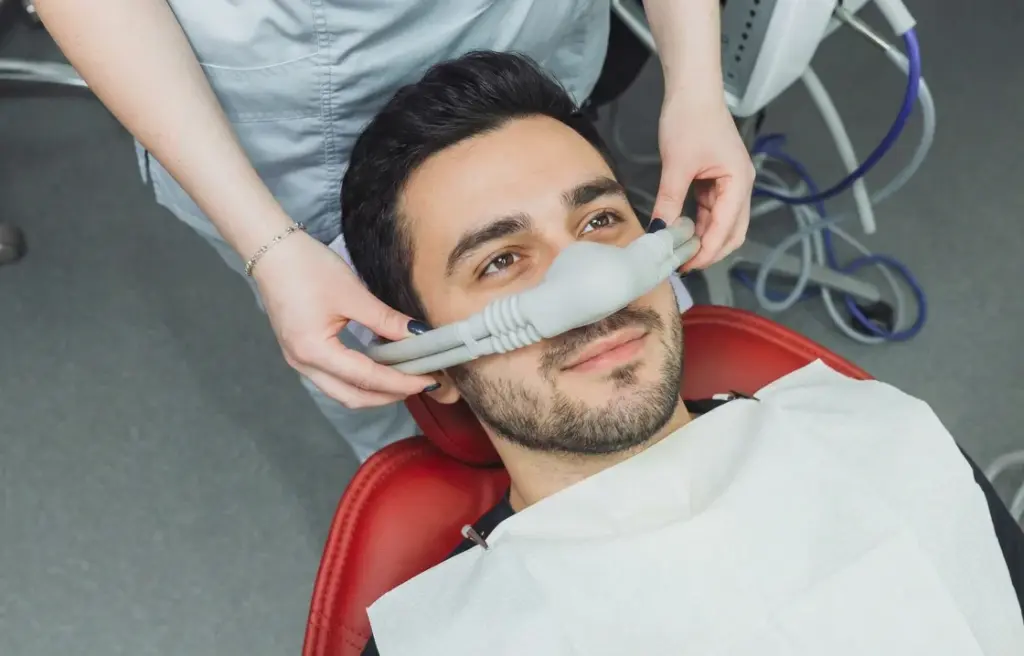
Modern dentistry now focuses not only on treatment results but also on the level of comfort the patient feels during the process. Many people hesitate to sit in the dentist’s chair due to past negative experiences or misinformation. This hesitation can cause simple problems, like a filling, to turn into serious issues requiring major surgical intervention over time. Many people wonder about the answers to questions like what is sedation and what advantages it offers to the patient.
The most accurate way to approach the question of what is sedation anesthesia is to see it as a comfort zone. Thanks to this method, even the most complex surgical procedures feel like light, one-minute naps to the patient. In this article, we have gathered all the details about sedation in dentistry, its application stages, and frequently asked safety questions.
Table of Contents
What is Sedation?
Technically, we can define the answer to what is sedation as the process of calming the patient by suppressing the central nervous system with the help of medications. Sedation applied in dentistry aims only to manage the patient’s anxiety and pain threshold without putting them into the depth of general anesthesia. During the procedure, even if the patient is aware of what is happening around them, they are not disturbed by it.
In this method, also known as “dentistry while sleeping” among the public, the semi-sleep state the patient experiences provides deep relaxation. This can stop stress thereby minimizing physical reactions such as increased blood pressure or palpitations. One of the biggest advantages of the application is the change in the patient’s perception of time; when an operation lasting hours is finished, the patient may feel as if only fifteen minutes have passed.
Why is Sedation Preferred in Dentistry?

Dental treatments can sometimes create psychological pressure on patients due to the sounds of the devices used or the fear of needles. For those wondering what dental treatment with sedation is, the clearest answer is the complete breaking of this pressure. Especially for individuals experiencing dentophobia, this method may become the only option that makes treatment possible. Patients who postpone dental treatment due to fear can sit in the chair with confidence thanks to sedation.
In addition, sedation is vital in cases where more than one procedure needs to be performed in a single session. For example, placing four implants at the same time or jawbone operations can physically tire the patient. A patient under sedation does not get tired and does not have difficulty keeping their mouth open. This allows the physician to focus better on their work and can increase the success of the operation.
What is Conscious Sedation? Advantages of the Semi-Sleep State
The answer to what is conscious sedation, one of the most common methods used in dental clinics, lies in its definition. At this level, the patient is not completely unconscious; they can breathe on their own and respond to the physician’s instructions, such as “open your mouth a little more.” However, this interaction does not create any trauma or discomfort in the patient’s mind.
The advantages of this state, defined as a semi-sleep state, are numerous:
- The patient’s protective reflexes, such as swallowing and coughing, continue.
- The drug dosage can be adjusted instantly according to the patient’s condition.
- An effect called “retrograde amnesia” occurs at the end of the procedure; meaning the patient does not remember the needle, the sound, or the moment of the operation.
- The patient’s recovery and waking process is much faster.
What are the Differences Between Sedation and General Anesthesia?
Although many people confuse these İwo methods, the difference between sedation and general anesthesia is quite clear. General anesthesia is a deep procedure where the patient’s consciousness is completely closed, breathing is performed with the help of a device, and it is usually applied in a hospital setting. Sedation, on the other hand, is a much lighter and more controlled method.
| Feature | Sedation | General Anesthesia |
| State of Consciousness | Semi-conscious / Semi-sleep state | Completely unconscious |
| Respiration | Patient breathes on their own | Device support (intubation) is required |
| Response to Commands | Patient can understand commands | Cannot respond |
| Recovery Time | Recovery starts in 10-20 minutes | The waking process is longer |
| Application Area | Equipped dental clinics / Operating rooms | Full-fledged operating rooms |
How is Sedation Applied? Step-by-Step Procedure
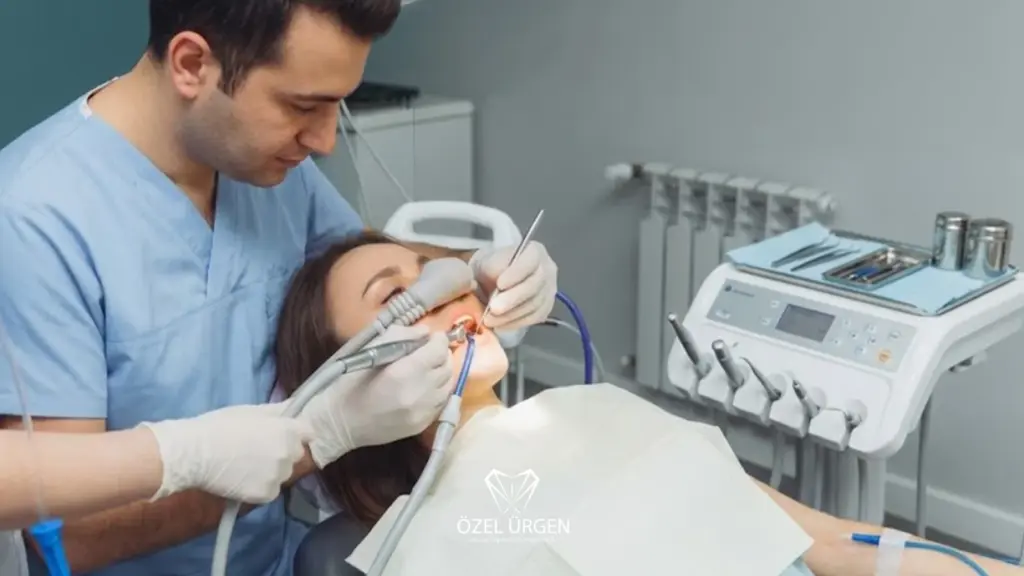
The topic of what is sedation and how it is done is important for patients to know what to expect on the day of the operation. The process proceeds under the supervision of an anesthesiologist or an experienced physician in accordance with safety protocols.
Pre-Procedure Preparation and Fasting Period
The preparation phase actually starts a day before the procedure. The patient’s existing diseases, medications used, and allergies, if any, are examined. For a safe application, it is usually requested to stop eating and drinking 6-8 hours before the procedure. This is a critical precaution to ensure the stomach remains empty and eliminate any risk of nausea.
The Moment of Application: IV Line and Monitoring
In the clinic, a thin intravenous (IV) line is opened in the patient’s arm, and sedative drugs begin to be given in a controlled manner. As the drug takes effect, the patient transitions into a state of deep peace and sleep. Throughout the procedure, the patient’s pulse, blood pressure, and oxygen level in the blood are monitored second by second by the anesthesiologist via monitors. When the patient is completely relaxed, the physician starts the local numbing procedures.
Who Can Have Dental Treatment with Sedation?
This method is suitable for a wide group of patients, not just those with fears:
- Highly Anxious Individuals: Adults who have difficulty sitting in the dentist’s chair.
- Pediatric Patients: It is a trauma-free solution especially for children who have harmony problems or require a large number of fillings/extractions.
- Patients with Gag Reflex: People who give a gagging reaction when a device enters the mouth can overcome this problem with sedation.
- Individuals with Intellectual Disabilities: It allows the treatment of patients with whom cooperation cannot be established to be performed safely.
- Long-Term Surgeries: People who will undergo implant or impacted tooth operations.
Is Sedation Safe? Risks to Consider
One of the questions patients ask the most is: Is sedation safe in dental treatment? The answer is definitely “yes” when the right conditions are met. Since drugs that are rapidly filtered by the liver and kidneys are used, it does not leave a permanent effect on the body.
The most important point to consider is that the application must be performed accompanied by an anesthesiologist and in a fully equipped clinic. When we look at the side effects of sedation, mild dizziness, temporary fatigue, or nausea can rarely be seen. However, these effects are short-lived and can be easily managed with professional intervention during the recovery phase.
Things to Consider After Sedation
After the treatment, the safety of the patient requires them to be under the supervision of a companion for a while. Since it will take a few hours for the drugs to be completely eliminated from the system:
- Driving: Vehicles or heavy machinery should definitely not be used on the day of the procedure.
- Critical Decisions: Important documents should not be signed, and serious decisions should not be made.
- Rest: One should rest at home and avoid heavy exercises.
- Alcohol Consumption: Alcohol should not be taken for at least 24 hours to prevent drug interactions.
FAQ
Is sedation safe in dental treatment?
Yes, it is an extremely safe method when performed accompanied by an anesthesiologist. Vital functions are continuously monitored throughout the procedure.
How long does tooth extraction with sedation take?
The duration of the procedure depends on the number of teeth to be extracted, but it will seem much shorter to you because your perception of time will change thanks to sedation.
When to eat after sedation?
About 2-3 hours after the end of the procedure, once the numbness has passed, you can start with light foods.
Am I awake during sedation?
In conscious sedation, you are technically awake but in a state of very deep relaxation and sleep; you can hear the physician’s commands.
When will I recover from the effect of sedation?
Waking may start 10-20 minutes after the drug is discontinued. It is necessary to rest for a few hours for full mental clarity.
Is there pain after tooth extraction with sedation?
Sedation only puts you to sleep and relaxes you; local anesthesia is still performed to stop the pain. You do not feel pain when the procedure is finished because the effect of local anesthesia continues.