
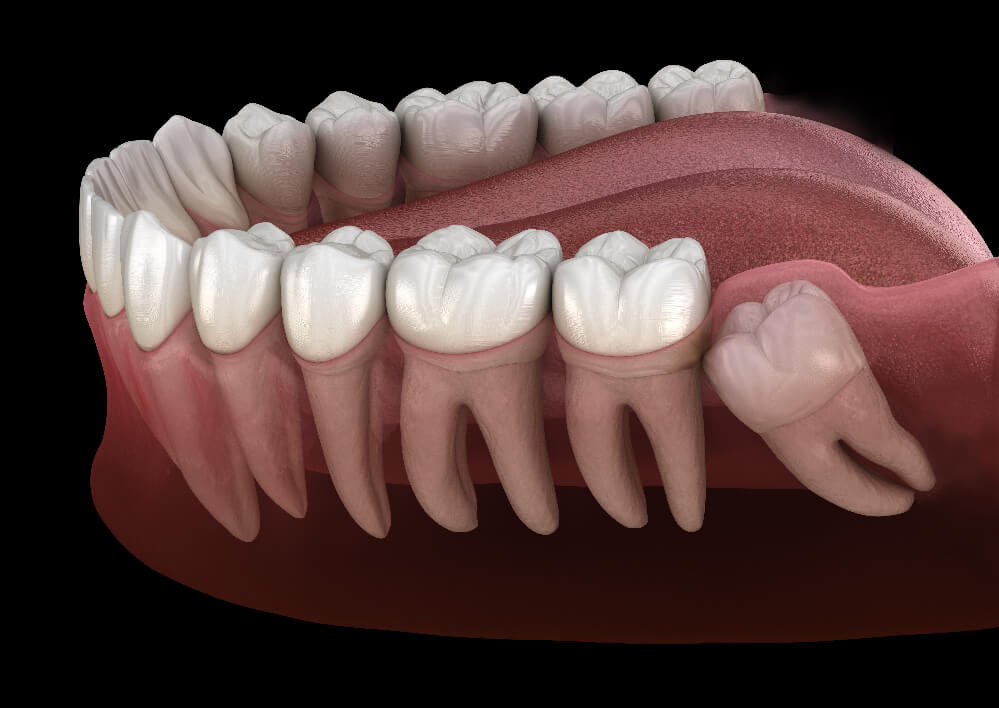
An impacted tooth is a surprisingly common dental condition that many people hear about but rarely understand in depth. In simple terms, an impacted tooth is a tooth that fails to erupt into its normal position within the dental arch. Instead of emerging smoothly through the gums, the impacted tooth remains partially or completely trapped in the jawbone or beneath gum tissue. This situation often develops silently and may go unnoticed for years, making the topic both medically fascinating and practically important.
From a clinical and biological perspective, the impacted tooth phenomenon reflects how genetics, jaw development, and evolutionary changes in human anatomy interact.
The Biological Meaning of an Impacted Tooth
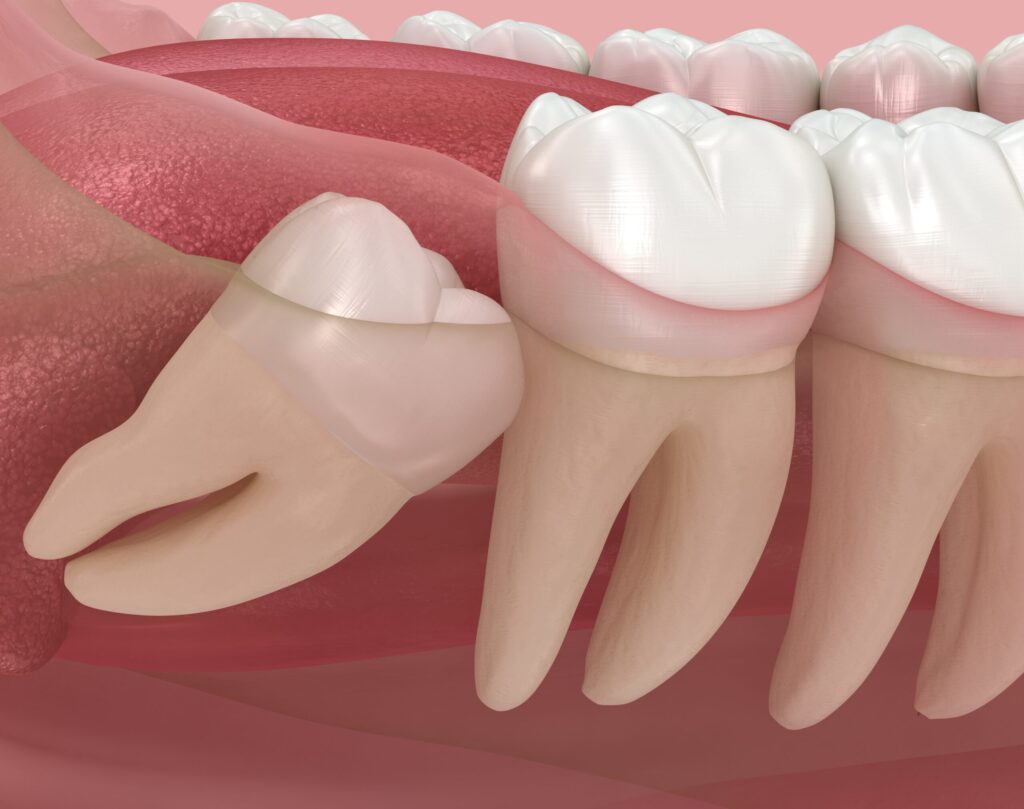
An impacted tooth develops when a tooth cannot complete its natural eruption pathway. Teeth are designed to move upward or outward from the jawbone, guided by surrounding tissues and space within the dental arch. When this pathway is blocked, the impacted tooth remains confined. This blockage may come from neighboring teeth, dense bone structure, or insufficient jaw space.
From an anatomical viewpoint, an impacted tooth is not static. Even when it appears inactive, it can exert pressure on surrounding roots or bone. Researchers have observed that impacted teeth may influence bone density and even alter the alignment of adjacent teeth over time. This dynamic nature explains why an impacted tooth is often monitored even when it does not cause immediate discomfort.
Another interesting aspect is that not all impacted teeth behave the same way. Some remain fully embedded and stable, while others partially erupt and create communication between the oral cavity and deeper tissues. These variations are crucial in deciding whether impacted tooth surgery becomes part of the discussion.
Common Types of Impacted Tooth Formation
The term impacted tooth covers several distinct patterns. Each pattern reflects how the tooth is positioned within the jaw and how it interacts with surrounding structures. Understanding these variations adds clarity to diagnostic imaging and clinical planning.
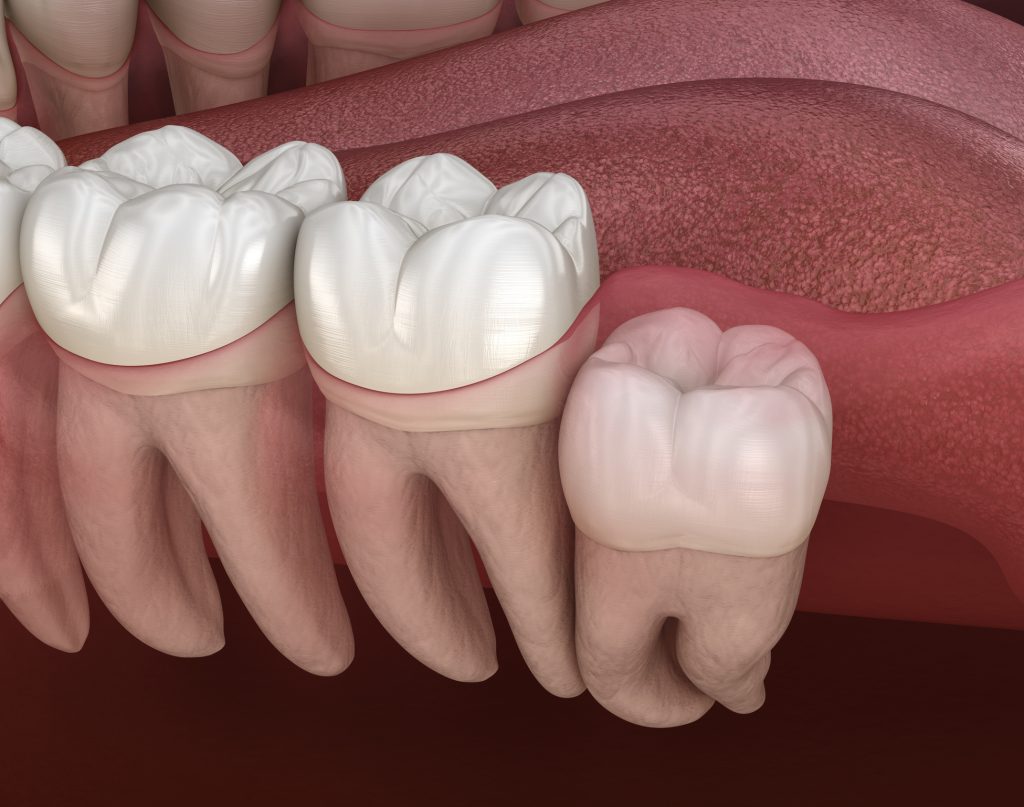
A vertically positioned impacted tooth is aligned correctly but lacks space to erupt. In contrast, a horizontally positioned impacted tooth lies sideways, often pressing directly against the root of a neighboring tooth. There are also angular forms, where the impacted tooth tilts forward or backward.
These positional differences matter because they influence surgical complexity and healing dynamics. For example, a deeply embedded impacted tooth may require more extensive bone management than a partially erupted one. Clinicians evaluate these factors carefully using radiographic analysis and three dimensional imaging technologies.
Symptoms and Silent Signals of an Impacted Tooth
One of the most intriguing features of an impacted tooth is that it can exist without obvious symptoms. Many individuals discover an impacted tooth incidentally during routine imaging or orthodontic evaluation. However, the absence of pain does not always indicate the absence of biological activity.
In some cases, an impacted tooth may contribute to vague pressure sensations, localized swelling, or intermittent discomfort. Subtle shifts in tooth alignment or unexplained gum sensitivity can also be indirect indicators. These signals are not always dramatic, which is why the impacted tooth is often described as a hidden condition.
From a research standpoint, studies suggest that the presence of an impacted tooth may increase the risk of cyst formation or localized inflammation in certain scenarios. These findings highlight the importance of understanding the condition holistically rather than focusing solely on pain based symptoms.
Diagnostic Approaches for an Impacted Tooth
Diagnosing an impacted tooth relies on a combination of clinical evaluation and imaging technology. Traditional panoramic radiographs provide a broad overview, while cone beam computed tomography offers precise spatial details. These tools allow clinicians to assess how the impacted tooth interacts with nerves, sinuses, and adjacent roots.
Beyond imaging, diagnostic interpretation plays a major role. The angle, depth, and developmental stage of the impacted tooth are analyzed together rather than in isolation. This comprehensive view helps determine whether observation or impacted tooth surgery becomes the primary focus.
At Livera Clinic, diagnostic protocols emphasize pattern recognition and risk assessment. The impacted tooth is evaluated not just as a single structure but as part of a dynamic oral system. This perspective aligns with modern dental science, which increasingly values long term biological harmony.
How Impacted Tooth Surgery Is Performed
Impacted tooth surgery is a structured and carefully planned process rather than a one size fits all procedure. When surgery is considered, the position and behavior of the impacted tooth guide every step. The goal is not simply removal but controlled intervention that respects surrounding tissues.
The surgical approach typically begins with precise access to the area. Depending on the depth of the impacted tooth, a small section of gum tissue and bone may be gently managed to expose the tooth. Specialized instruments are then used to mobilize the impacted tooth without excessive force.
In many cases, the impacted tooth is sectioned into smaller parts to allow safe removal. This method reduces stress on the jawbone and nearby structures. Throughout the procedure, attention is given to preserving bone integrity and supporting natural healing processes.
Healing Dynamics After Impacted Tooth Surgery
Healing following impacted tooth surgery is a biologically active phase. Once the impacted tooth is removed, the body initiates a cascade of regenerative responses. Blood clot formation, bone remodeling, and soft tissue adaptation all occur in a coordinated manner.
The speed and quality of healing depend on factors such as the depth of the impacted tooth, bone density, and individual biological variation. Researchers note that younger patients often experience faster bone regeneration, while adults may show more gradual remodeling patterns.
Importantly, healing is not limited to the surgical site. Removing an impacted tooth can influence overall oral balance, sometimes allowing neighboring teeth to stabilize or align more naturally. This systemic effect underscores why impacted tooth surgery is viewed as more than a localized intervention.
Long Term Considerations Related to an Impacted Tooth
Even after an impacted tooth is addressed, its long term implications remain an area of scientific interest. Studies have explored how the absence of an impacted tooth affects jaw mechanics, bite distribution, and periodontal stability.
In cases where the impacted tooth is monitored rather than removed, ongoing evaluation becomes essential. Changes in orientation or surrounding bone can alter the clinical picture over time. This adaptive approach reflects modern dentistry’s emphasis on personalized care rather than rigid protocols.
At an institutional level, clinics like Livera Clinic integrate research findings into clinical observation. The impacted tooth is seen as a window into broader oral health dynamics, offering insights into growth patterns, evolutionary anatomy, and patient specific variation.
Scientific and Clinical Perspective on Impacted Teeth
From an academic standpoint, the impacted tooth continues to be a topic of ongoing research. Anthropological studies suggest that changes in diet and jaw size over centuries have increased the prevalence of impacted teeth. This evolutionary angle adds depth to the clinical narrative.
Clinically, the impacted tooth serves as a reminder that oral health is shaped by both biology and environment. The interplay between genetics, development, and modern lifestyle factors makes each case unique. This complexity is why impacted tooth management often requires interdisciplinary insight.
By examining the impacted tooth through scientific, clinical, and human lenses, patients gain a richer understanding of their own oral anatomy. Knowledge transforms uncertainty into clarity, which is one of the core values embraced by Livera Clinic.
Understanding the Impacted Tooth in Context
An impacted tooth is far more than a dental anomaly. It is a reflection of human development, anatomical variation, and biological adaptation. Whether discovered incidentally or investigated due to symptoms, the impacted tooth invites a deeper look at how teeth, bone, and tissue interact over time.
Impacted tooth surgery, when considered, represents a thoughtful response to this complex condition. Rather than focusing on fear or urgency, modern approaches emphasize analysis, precision, and respect for natural healing processes. With the right perspective, the impacted tooth becomes a subject of understanding rather than concern.