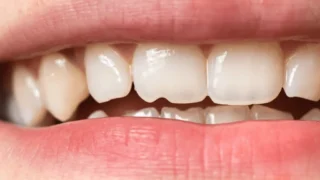
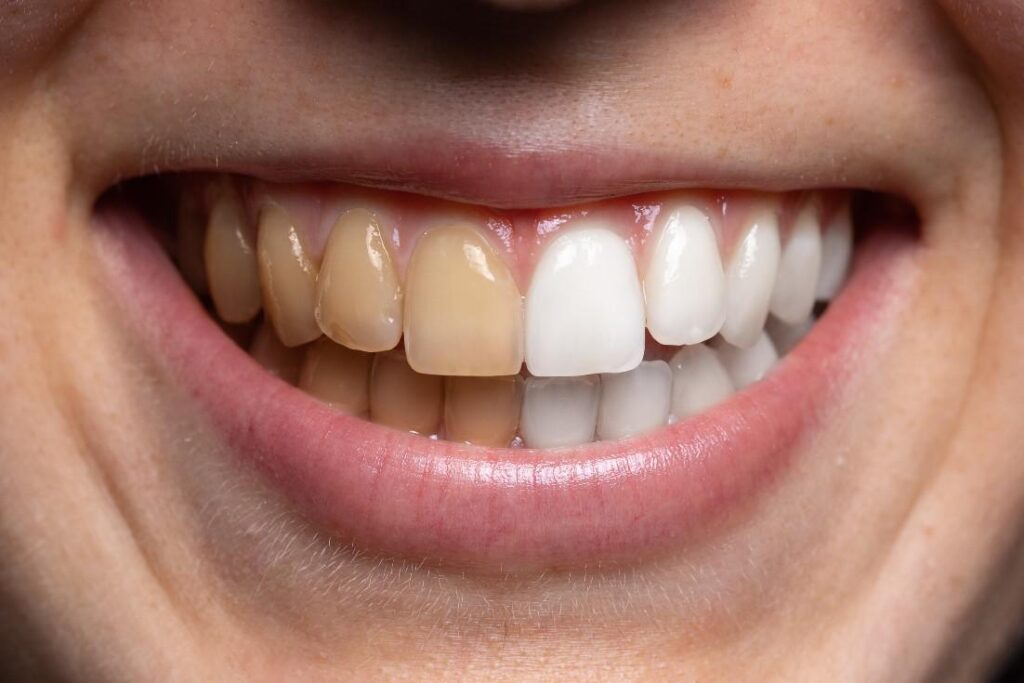
Tooth Stains are among the most talked about topics when people begin to examine changes in their smile. From subtle discoloration to visible surface marks, Tooth Stains often raise questions that blend curiosity with daily habits. In the first moments of noticing them, many people begin searching for explanations rather than immediate solutions. This is where natural products enter the conversation.
Rather than being a single condition, Tooth Stains are better understood as a visual outcome of long term interaction between teeth and their surrounding environment. Food pigments, chemical exposure, and surface texture all play a role. Natural products are frequently discussed not as guaranteed fixes, but as substances that interact with enamel in observable ways. Understanding those interactions helps create a clearer and more realistic picture.
Tooth Stains and the Science Behind Discoloration
Tooth Stains develop through processes that are both external and internal. On the surface level, enamel acts like a semi porous structure. While it appears smooth, microscopic openings allow pigments from food and drinks to settle over time. Coffee, tea, and naturally colored fruits are often discussed in relation to Tooth Stains because of their chromogenic compounds.
From a deeper perspective, internal changes also contribute. As enamel ages, light reflection changes, making stains appear more pronounced. This does not mean teeth are unhealthy, but it does explain why Tooth Stains can look different from person to person. Natural products are often evaluated in studies for how they interact with these surface characteristics rather than altering tooth structure.
Scientific discussions emphasize that Tooth Stains are not simply dirt that can be removed instantly. They are the result of repeated exposure and gradual absorption. This explains why natural products are explored as part of a broader understanding rather than a quick answer.
Tooth Stains and Natural Products in Historical Context
Long before modern oral products existed, natural substances were already being used to address Tooth Stains. Historical records show that different cultures experimented with plant based powders, mineral mixtures, and abrasive leaves. While these practices were not scientific by today’s standards, they reveal early awareness of discoloration.
Natural products gained attention because they were accessible and observable. When people noticed changes after repeated use, those observations were passed down. This historical curiosity laid the groundwork for today’s interest in how natural elements interact with Tooth Stains on a chemical level.
Modern analysis revisits these materials with laboratory methods. Instead of folklore, researchers now focus on surface interaction, pH levels, and particle size. This shift allows natural products to be discussed in relation to Tooth Stains with clarity rather than speculation.
Tooth Stains and Commonly Discussed Natural Ingredients
When people explore natural approaches to Tooth Stains, certain ingredients appear frequently in discussions. These substances are not grouped because they promise results, but because they have measurable properties that interact with enamel.
| Natural Ingredient | Commonly Discussed Property | Relation to Tooth Stains |
| Baking soda | Mild abrasiveness | Surface interaction |
| Coconut oil | Lipid structure | Pigment binding |
| Activated charcoal | Porous texture | Adsorption potential |
| Strawberries | Natural acids | Surface chemistry |
Each of these ingredients is examined for how it behaves when in contact with stained enamel. For example, mild abrasives are discussed for their ability to interact with surface deposits, while oils are explored for how they bind pigments.
What matters in these discussions is not assumption, but interaction. Tooth Stains respond differently depending on surface texture, frequency of exposure, and surrounding conditions. This complexity is why natural products remain a topic of analysis rather than certainty.
Tooth Stains and the Role of Enamel Texture
Enamel texture plays a central role in how Tooth Stains appear and persist. Smooth enamel reflects light evenly, which can make discoloration less noticeable. Rougher surfaces, however, scatter light and trap pigments more easily.
Natural products are often evaluated based on how they affect surface texture. Some are discussed for their polishing effect, while others are analyzed for how they interact with microscopic irregularities. This does not imply improvement or harm, but rather highlights why responses vary.
Understanding texture also explains why Tooth Stains may appear uneven. Two teeth exposed to the same environment can look different simply because their surface characteristics differ. Natural products become part of this discussion because they engage directly with that surface layer.
Tooth Stains and Daily Habits Interaction
Daily habits are inseparable from conversations about Tooth Stains. Eating patterns, beverage choices, and even timing influence how pigments settle. Natural products are often introduced into routines not as corrections, but as variables within those routines.
For instance, acidic foods can temporarily alter enamel permeability. When natural substances are used during these periods, interaction may differ. Researchers studying Tooth Stains often focus on timing and frequency rather than the substance alone.
This approach reframes the discussion. Instead of asking whether a natural product works, the more relevant question becomes how it interacts within a specific pattern. This mindset aligns with a broader scientific view that avoids oversimplification.
Tooth Stains and Perception of Whiteness
Perception plays a surprisingly large role in how Tooth Stains are evaluated. Whiteness is not a fixed color, but a visual balance influenced by lighting, contrast, and surrounding features. Natural products are sometimes discussed because they alter surface reflectivity rather than pigmentation.
Studies on visual perception show that small changes in surface brightness can influence how stains are perceived. This is why discussions around Tooth Stains often include optics alongside chemistry.
Understanding perception helps explain why experiences vary widely. What one person describes as improvement, another may describe as minimal change. Natural products sit at the intersection of these subjective and objective factors.
Tooth Stains and Long Term Observation
Long term observation provides the most valuable insights into Tooth Stains. Rather than focusing on immediate changes, observational studies track gradual shifts over time. Natural products are often included in these discussions as part of habitual exposure rather than isolated use.
What stands out in these observations is adaptability. Teeth respond to repeated conditions, and stains reflect cumulative interaction. This reinforces the idea that Tooth Stains are not static marks, but evolving surface characteristics.
Such perspectives move the conversation away from promises and toward understanding. Natural products become tools for exploration rather than expectation.
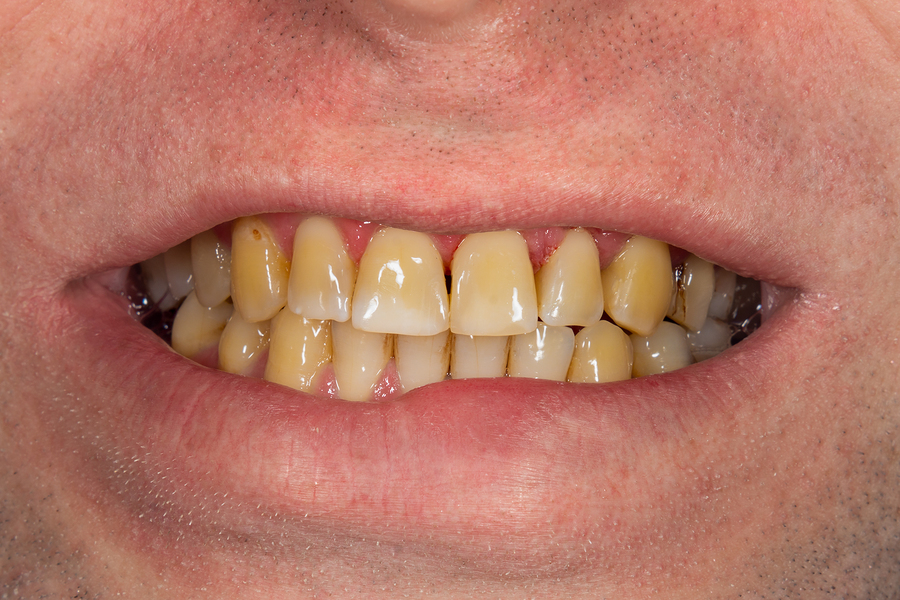
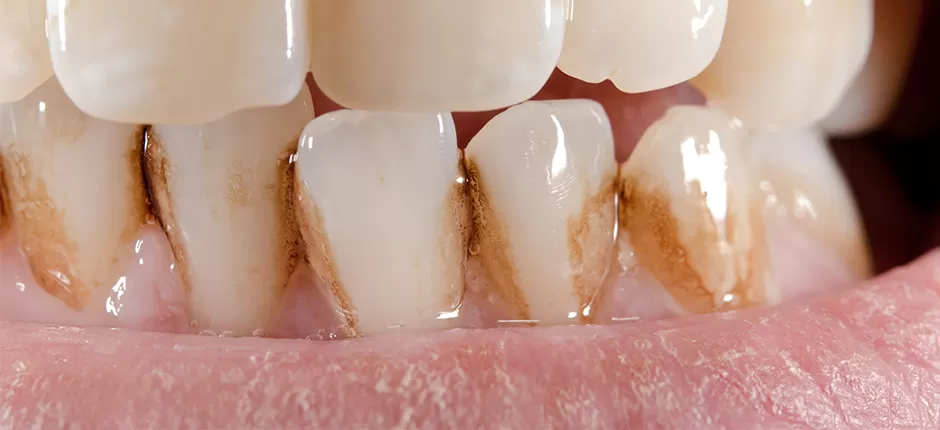
human teeth after smoking. Brown resinous plaque on teeth close-up. Smoking harm concept
Tooth Stains as a Broader Analytical Topic
Viewed analytically, Tooth Stains represent more than cosmetic variation. They offer insight into material interaction, environmental exposure, and human habits. Natural products enter this space not as definitive answers, but as variables that invite study.
By examining Tooth Stains through chemistry, optics, and behavior, the topic becomes richer and more nuanced. This approach aligns with scientific curiosity rather than quick conclusions.
Ultimately, understanding how natural products relate to Tooth Stains is less about removal and more about interaction. That broader view is what makes the subject both informative and engaging.
What Tooth Stains Reveal Beyond Surface Appearance
Tooth Stains are best understood as the visible record of long term interaction between teeth and their environment. Natural products appear in this discussion not because they guarantee outcomes, but because they provide observable points of interaction worth examining.
By exploring how enamel texture, daily habits, perception, and material properties intersect, the topic moves beyond surface level curiosity. Tooth Stains become a window into how small, repeated factors shape visible change over time.
This analytical perspective encourages informed exploration rather than assumptions, making the conversation around natural products both realistic and intellectually engaging.