Dental Implants are often described as one of the most durable and advanced solutions in modern dentistry. From a patient perspective, one of the most natural questions is simple yet powerful: how long do they really last? This article explores the lifespan of Dental Implants from multiple scientific, biological, and practical angles, without making promises or medical claims. Instead, it aims to explain what influences longevity, what research trends suggest, and how people typically experience Dental Implants over time.
Understanding the Lifespan of Dental Implants
When discussing Dental Implants, longevity is not a single number. Research literature often frames implant lifespan as a range influenced by biological adaptation, material science, and patient specific variables. Unlike natural teeth, Dental Implants do not decay, yet they interact constantly with living bone and soft tissue.
From a structural standpoint, most Dental Implants are designed to function for decades. Titanium based systems, which dominate implantology research, show high survival rates in long term observational studies. However, survival does not always mean unchanged. The crown, the abutment, and the surrounding tissues all age differently.
It is also important to distinguish between implant survival and implant success. Survival means the implant remains in place. Success considers comfort, stability, and tissue harmony. This distinction explains why conversations about Dental Implants last longer than a simple yes or no answer.
Dental Implants and the Role of Bone Integration
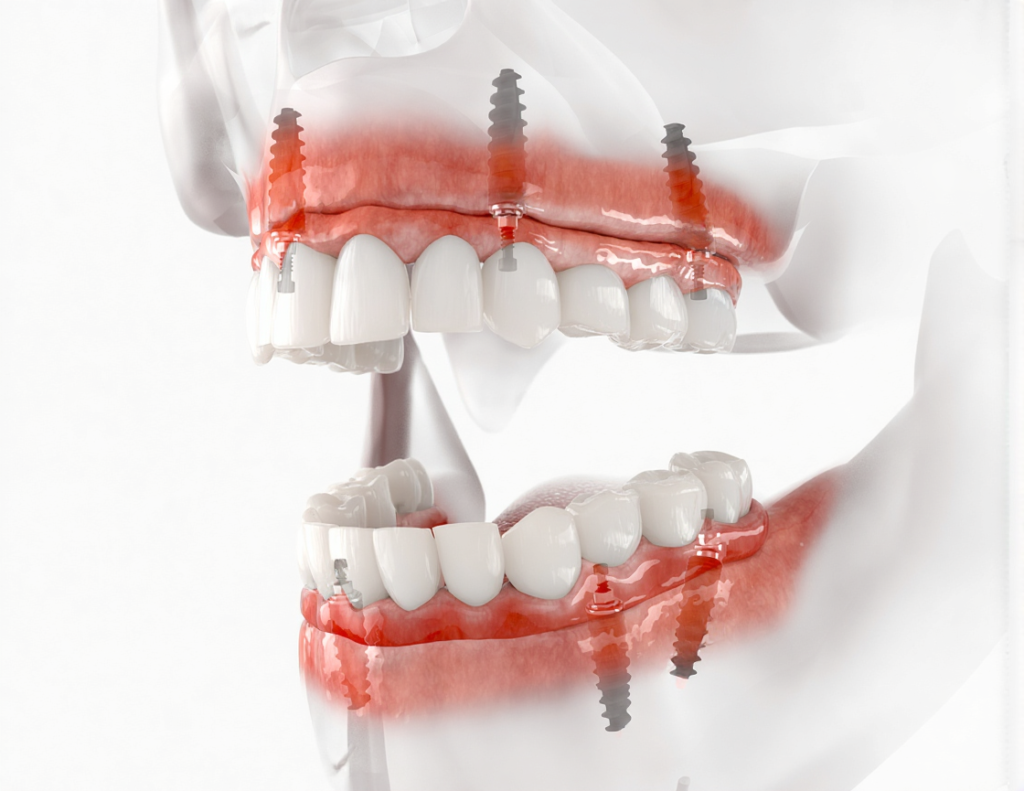
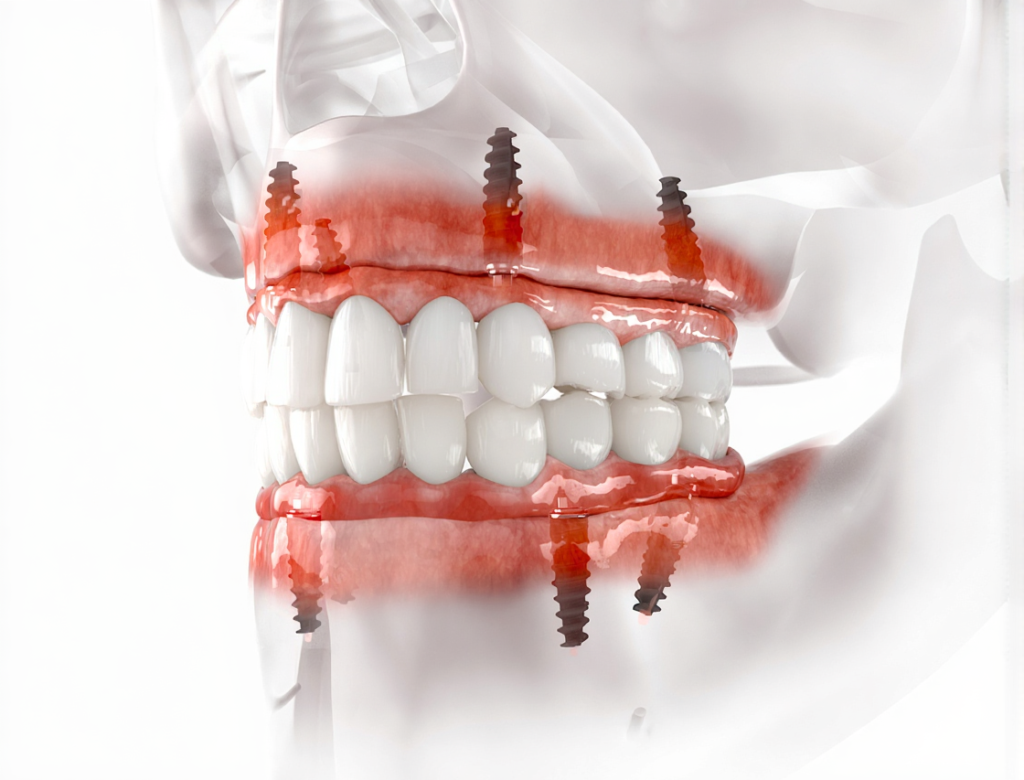
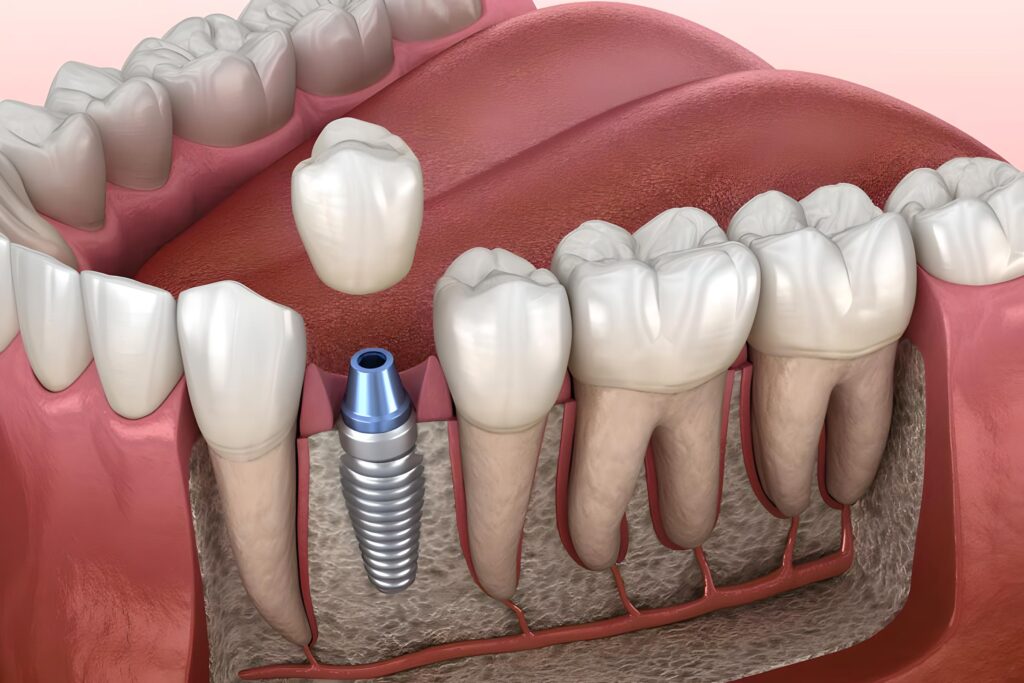
One of the most studied aspects of Dental Implants is osseointegration. This biological process describes how bone cells adapt and attach to the implant surface. Without stable integration, even the most advanced Dental Implants cannot perform as intended.
Scientific analysis shows that surface texture, implant geometry, and bone density all influence this process. Microscopic roughness, for example, has been linked to improved bone contact in many studies. This does not guarantee permanence, but it improves the biological dialogue between bone and implant.
Bone itself is dynamic. Over years, changes in metabolism, aging, or systemic conditions may subtly alter bone density. As a result, Dental Implants should be understood as long term companions to living tissue, not static objects frozen in time.
Materials Science Behind Modern Dental Implants
The durability of Dental Implants is closely tied to material engineering. Titanium and titanium alloys remain the most researched materials due to their corrosion resistance and biocompatibility. In recent years, ceramic based alternatives have also gained attention in academic literature.
Material fatigue is a key topic. Chewing forces are repetitive and complex. Over decades, even strong materials experience micro stress. This is why implant design, diameter, and placement angle matter when discussing Dental Implants lifespan.
From a scientific curiosity perspective, researchers often compare Dental Implants to orthopedic implants used in hips or knees. While the environments differ, both fields share insights into long term material behavior within the human body.
Dental Implants vs Natural Teeth Over Time
Comparing Dental Implants to natural teeth provides useful perspective. Natural teeth are supported by periodontal ligaments, allowing slight movement and sensory feedback. Dental Implants, in contrast, are directly anchored to bone.
This difference affects how forces are distributed. Over time, natural teeth may shift, wear, or develop decay. Dental Implants do not decay, yet the surrounding tissues still respond to plaque, inflammation, and mechanical load.
Interestingly, many long term users report that Dental Implants feel increasingly natural as the brain adapts. Neurosensory adaptation is an emerging area of research, suggesting that longevity is not only physical but perceptual as well.
Lifestyle Factors That Interact With Dental Implants
The lifespan of Dental Implants is often discussed alongside lifestyle considerations. Habits such as teeth grinding, dietary patterns, and oral hygiene routines influence how implants age within the mouth.
Scientific discussions often focus on inflammatory responses rather than single behaviors. Chronic inflammation around Dental Implants can affect supporting bone over time. This makes soft tissue health a recurring theme in implant research.
From an analytical viewpoint, Dental Implants behave like high performance components. They function best when the surrounding system is balanced. This systemic thinking helps explain why longevity varies between individuals without framing it as success or failure.
Long Term Research Insights on Dental Implants
Longitudinal studies provide the most valuable data on Dental Implants. Research following patients for 10, 15, or even 20 years often reports high retention rates. However, these studies also highlight maintenance events such as crown replacement or minor adjustments.
A key insight from these studies is that Dental Implants are rarely a one time interaction. Instead, they exist within a timeline of care, adaptation, and occasional intervention. This perspective aligns with how most medical devices are evaluated.
Another interesting trend is the evolution of implant systems themselves. Many patients today receive Dental Implants based on designs that did not exist two decades ago. This means future longevity data will continue to evolve as technology advances.
Psychological and Social Dimensions of Dental Implants
Beyond biology and engineering, Dental Implants influence confidence, communication, and social interaction. These factors indirectly affect how individuals perceive longevity. An implant that functions comfortably often feels longer lasting than one that causes anxiety.
Research in health psychology suggests that perceived control and satisfaction can shape long term outcomes. People who understand how Dental Implants work tend to engage more positively with follow up care and daily routines.
From a storytelling perspective, many implant journeys span years of personal change. This human element is why discussions about Dental Implants remain dynamic rather than purely technical.
Future Perspectives on Dental Implants Longevity
Looking forward, the future of Dental Implants is closely linked to digital planning, biomimetic surfaces, and personalized design. Artificial intelligence assisted imaging and custom fabrication aim to improve how implants interact with individual anatomy.
Researchers are also exploring bioactive surfaces that encourage specific cellular responses. While still under investigation, these innovations aim to extend functional harmony rather than simply increasing mechanical lifespan.
In this context, Dental Implants are best understood as evolving technology. Longevity is not a fixed endpoint but a moving horizon shaped by science, patient experience, and clinical refinement.
How Long Do Dental Implants Really Last?
So, how long do Dental Implants last? The most accurate answer is that they are designed for long term function, often measured in decades, but their journey depends on a complex interplay of biology, materials, and human behavior.
Rather than offering certainty, this article aims to provide clarity. Dental Implants are among the most researched solutions in dentistry, supported by extensive data and ongoing innovation. Their lifespan is not just about time, but about adaptation, care, and the evolving relationship between technology and the human body.
For Livera Clinic, this perspective reflects a commitment to informed, balanced, and transparent patient education.