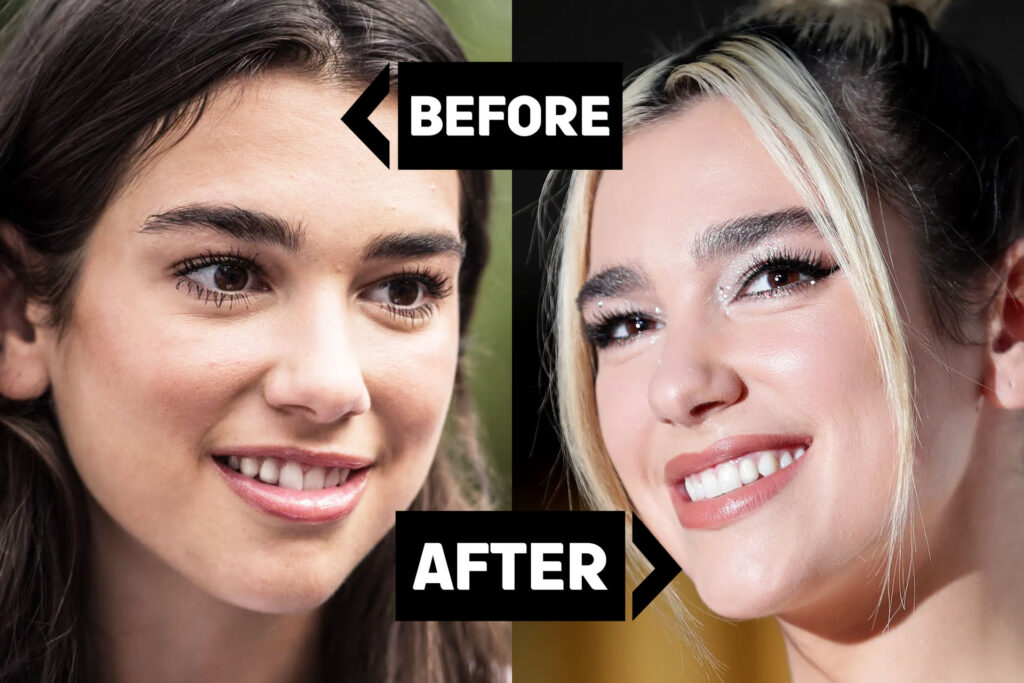
Dua Lipa Teeth has become one of the most curious and unexpectedly influential phrases circulating through digital culture. What began as a simple social media observation evolved into a broader conversation about smile aesthetics, celebrity image, and the psychology behind how we perceive facial features. Instead of being just another passing trend, this phrase has grown into a symbolic lens through which people explore beauty ideals, individuality, and the evolving relationship between natural looks and public identity.
This article examines why “Dua Lipa Teeth” emerged as a cultural reference point and how it reflects deeper shifts in aesthetic expectations. While maintaining a playful tone, it also incorporates scientific insights, digital culture analysis, and unique interpretations that go far beyond what typical online commentary provides.
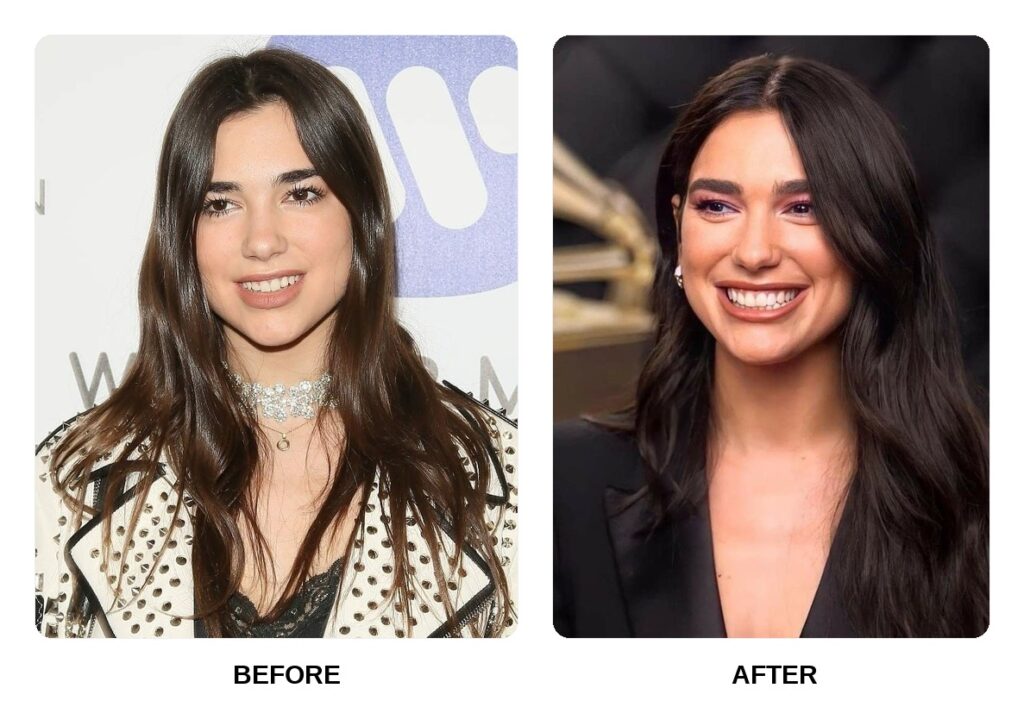
How “Dua Lipa Teeth” Became a Digital Aesthetic Reference
The rise of Dua Lipa Teeth across social platforms might seem surprising at first glance, but when viewed through the lens of modern media dynamics, it feels almost inevitable. Today’s digital audiences engage in what researchers call “micro-observation,” a phenomenon where the smallest facial details such as a slight curvature in a smile or the natural alignment of teeth become points of fascination.
In a culture where visual content dominates communication, celebrity features naturally morph into aesthetic templates. A distinctive smile, especially one widely captured in performances, interviews, and candid moments, becomes a recurring image that people associate with authenticity and charisma.
Several cultural studies suggest that the internet’s obsession with specific facial traits stems from a collective desire to decode personality through appearance. A smile is not merely a physical gesture; it is a communication tool, a representation of confidence, and a recognizable signature. Therefore, the digital amplification of a single smile reflects both curiosity and admiration.
The phrase “Dua Lipa Teeth” gained visibility in this hyper-visual environment, becoming both a reference point and a symbolic motif for discussing modern beauty norms.
The Science Behind Smile Perception and the “Dua Lipa Teeth” Effect
Scientific research on smile perception reveals that people evaluate far more than tooth structure. Facial symmetry, lip movement, eye engagement, and even micro-expressions influence the way a smile is interpreted. The intrigue around Dua Lipa Teeth aligns perfectly with this multidimensional perception.
Studies in emotional cognition show that the human brain is wired to analyze smiles almost instantly, detecting subtle cues that signal friendliness, confidence, and approachability. This makes smiles one of the most powerful nonverbal communication tools. It also explains why the public pays close attention when a celebrity’s smile gains viral attention.
Another fascinating factor is the rise of digital filters. Researchers have found that filtered imagery subtly reshapes people’s expectations of what a “perfect smile” should look like. The contrast between filtered perfection and natural expressions increases interest in real, unaltered smiles. In this context, the conversation around “Dua Lipa Teeth” reflects a refreshing shift toward appreciating individuality rather than chasing uniformity.
Thus, what appears to be a simple trend is actually tied to deeper psychological and aesthetic forces that shape the way modern audiences interpret facial features.
Why “Dua Lipa Teeth” Became a Style Inspiration for Younger Generations
For younger audiences, Dua Lipa Teeth is more than a catchy phrase it’s a style symbol. This generation increasingly celebrates authenticity, and a natural smile often represents confidence, character, and personal identity. As aesthetic preferences drift away from flawless uniformity, unique traits gain cultural value.
Digital ethnography research highlights that Gen Z’s approach to beauty is driven by “individualized imperfection,” a concept that values distinctive features as markers of originality. A smile that feels genuine, expressive, and unedited becomes a form of self-expression rather than a technical achievement.
This shift signals a new era in aesthetic culture, one that embraces the natural variations traditionally overlooked in mainstream beauty narratives. The fascination with “Dua Lipa Teeth” fits this framework perfectly. It reflects an appreciation for real charm something that resonates in an age saturated with polished imagery.
Instead of trying to copy celebrity features, many young people view such trends as encouragement to celebrate their own unique look. This represents a meaningful transformation in the global beauty conversation.
How a Single Smile Influences Worldwide Beauty Discussions
The global influence of a celebrity smile might sound whimsical, but it highlights the power of modern media ecosystems. The widespread use of the term “Dua Lipa Teeth” can be understood through three cultural drivers:
- A Highly Visual Media Landscape
People spend more time than ever interpreting faces through screens, naturally developing a sharper awareness of facial details. - The Viral Curiosity Economy
Small observations especially those related to famous figures can spread rapidly and evolve into larger conversations. - Digital Identity Formation
Celebrities function as visual icons, and their facial features become cultural touchpoints for identity and aesthetics.
When these factors intersect, a smile becomes more than an expression it turns into a symbol, a trend, and sometimes even a point of self-reflection for audiences around the world.
Interestingly, these discussions are no longer confined to entertainment spaces. They now appear in psychology forums, media studies research, and conversations analyzing how digital culture shapes perception.
The Digital Myth-Making Behind the “Dua Lipa Teeth” Narrative
The rise of Dua Lipa Teeth as an online concept shows how quickly a simple observation can transform into a digital myth. Internet users tend to recreate narratives through repetition, sharing the same image or idea until it becomes deeply rooted in the collective imagination. A single smile, when captured across countless performances and interviews, begins to feel symbolic. This is how the digital world constructs modern myths: not through grand stories, but through small visual details that gain unexpected cultural weight. In this case, the smile became an emblem of personality, confidence, and artistic identity, shaped by the emotional connection viewers form with the public figure. The more familiar a facial expression becomes, the more meaningful it appears, and this familiarity is what allowed the phrase “Dua Lipa Teeth” to evolve into something far bigger than a passing comment online.
Psychological Interpretations: What a Smile Symbolizes in Modern Identity
From a psychological standpoint, the growing fascination with Dua Lipa Teeth reflects the human tendency to interpret faces as windows into personality. A smile, even a brief one, influences perception on both emotional and cognitive levels. Studies on the halo effect suggest that expressive or genuinely warm smiles lead observers to assign positive traits to the person, often without realizing it. At the same time, emotional contagion plays a role: when people see an expressive smile repeatedly, especially from someone they admire, they experience an unconscious emotional response that mirrors the observed expression. This creates a subtle bond between viewer and celebrity, turning a facial feature into a kind of emotional connector. The result is a perception of authenticity and relatability, which explains why audiences may feel drawn not only to the artist but to the specific traits that define her public presence.
The Role of Media Images in Shaping the “Dua Lipa Teeth” Trend
The widespread interest in Dua Lipa Teeth is also a consequence of the overwhelming presence of visual content in modern media. Celebrities today appear in an endless stream of images performances, candid moments, livestreams, fan edits, and high-resolution close-ups. Each image adds another layer to the way the public understands and interprets facial expressions. As these visuals circulate continuously, certain features begin to stand out, becoming more recognizable and gaining symbolic value. The repetition of a specific smile across different contexts creates a sense of consistency and identity, while the sheer volume of imagery ensures that the smile becomes inseparable from the artist’s visual persona. This saturation of images shapes perception in subtle yet powerful ways, turning natural expressions into cultural references that are instantly understood by those who engage with them online.
Aesthetic Philosophy: What Natural Teeth Symbolize in a Digital World
At a deeper level, the fascination with Dua Lipa Teeth reflects a philosophical shift in society’s understanding of beauty. In a world where digital filters and editing tools constantly reshape visual expectations, natural features have gained new cultural value. A smile that appears unedited and expressive symbolizes a form of authenticity that feels increasingly rare. Slight asymmetries or unique characteristics are no longer seen as imperfections but as markers of individuality. This change in perspective represents a broader movement toward embracing natural aesthetics rather than idealized digital versions of beauty. A natural smile conveys emotional honesty, confidence, and personality, offering something genuine in contrast to the polished images that dominate social media. Within this context, phrases like “Dua Lipa Teeth” become shorthand for celebrating natural expressions in a filtered world.
Why Fans Analyze Celebrity Smiles More Closely Than Ever
The attention surrounding Dua Lipa Teeth can be partially explained by the changing relationship between audiences and public figures. As high-resolution cameras and digital platforms magnify every detail, viewers become more accustomed to noticing subtle facial features. Fan culture amplifies this phenomenon by encouraging close observation, not out of criticism but out of admiration and curiosity. Social media edits, aesthetic compilations, and slow-motion clips highlight specific expressions, drawing viewers toward the details that define a person’s charm. At the same time, people increasingly analyze their own appearances for online presentation, which naturally leads them to examine the features of those they admire. This shared culture of visual awareness creates a common aesthetic language, and in that language, certain expressions or smiles become symbolic. “Dua Lipa Teeth” has become one such symbol instantly recognizable and emotionally charged for those who follow the artist’s digital presence.
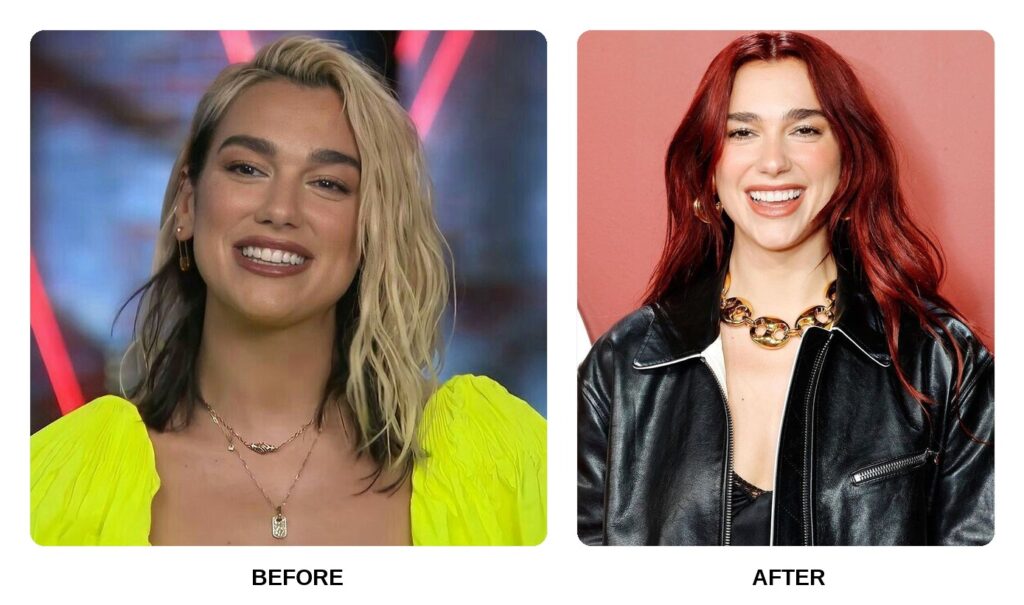
How “Dua Lipa Teeth” Reflects Shifting Attitudes Toward Celebrity Authenticity
The growing attention around Dua Lipa Teeth coincides with a larger shift in how audiences perceive celebrities. In the past, public figures were often expected to embody perfection, presenting an idealized version of beauty that felt distant and unattainable. Today, however, authenticity carries far more cultural weight. People want to see expressions that feel natural and spontaneous rather than constructed for the camera. A distinctive smile, especially one documented across countless unedited photos and videos, becomes proof of realness. When a celebrity maintains recognizable, human expressions in an era filled with digital alterations, it resonates with audiences searching for sincerity. In this sense, the fascination with this particular smile reflects the desire for genuine emotional expression from public figures, an element that has become surprisingly rare in the filtered age.
The Influence of Social Media Communities in Creating Aesthetic Trends
The expansion of Dua Lipa Teeth as a recognizable online term is also tied to how social media communities shape aesthetic conversations. Fan pages, edit accounts, reaction videos, and visual compilations act as micro-hubs of cultural production, each reinforcing particular features through repetition and creative reinterpretation. When a smile becomes a central element in these edits, it naturally gains symbolic meaning within the community. For many people, these communities form the foundation of their aesthetic awareness, influencing how they interpret expressions, personality, and beauty standards. Even those who discover the phrase casually encounter an already-built narrative shaped by thousands of shared images. As this narrative spreads across platforms, the smile becomes more than an expression; it transforms into a cultural cue that signals style, charisma, and individuality.
Visual Memory and the Symbolic Power of a Distinctive Smile
A key reason Dua Lipa Teeth continues to circulate is the concept of visual memory. When a facial feature appears consistently across many forms of media, it forms a lasting mental imprint. Over time, this imprint becomes part of how people instantly recognize and categorize a public figure. Visual memory explains why certain features like a smile, a hairstyle, or a specific gesture become iconic. It also illustrates why audiences may attach emotional significance to those features, associating them with particular moods, performances, or personal moments they have witnessed online. As these memories accumulate, the smile gains a symbolic function. It represents not only the artist but also the energy, confidence, and aesthetic that people associate with her. Thus, the phrase “Dua Lipa Teeth” becomes a shorthand for this entire cluster of impressions, layered with meaning through repeated exposure.
The Future of Aesthetic Conversations in the Digital Age
The continued interest in Dua Lipa Teeth offers a glimpse into the future of aesthetic discussions in the digital landscape. As technology advances and visual content becomes even more pervasive, the public will likely focus more on subtle facial details and expressions. At the same time, growing awareness of digital manipulation may drive people to value natural traits even more strongly. Conversations around smiles, natural features, and human expressions may become central themes in how identity and authenticity are discussed. Future generations could interpret beauty less through the lens of flawlessness and more through the lens of individuality. The evolving narrative around this smile hints at an aesthetic culture that appreciates nuance, character, and emotional depth, rather than only surface-level perfection.
A Collage of Culture, Identity, and Aesthetic Curiosity
In many ways, the story of Dua Lipa Teeth is a small but revealing reflection of modern culture as a whole. It blends visual fascination, digital myth-making, psychological interpretation, and changing beauty standards into a single phrase that carries surprising complexity. What began as a simple observation now represents an intersection of authenticity, emotion, and aesthetic identity. It invites people to reconsider how they perceive expressions in an increasingly curated world and challenges the notion that beauty must conform to uniform guidelines. The charm of this smile lies not only in its appearance but in the cultural conversation it has inspired one that values individuality, embraces natural expressions, and highlights the emotional connections formed through repeated visual encounters. Ultimately, the fascination with this smile is less about perfection and more about the power of a genuine, memorable expression in an age where authenticity is the rarest aesthetic of all.