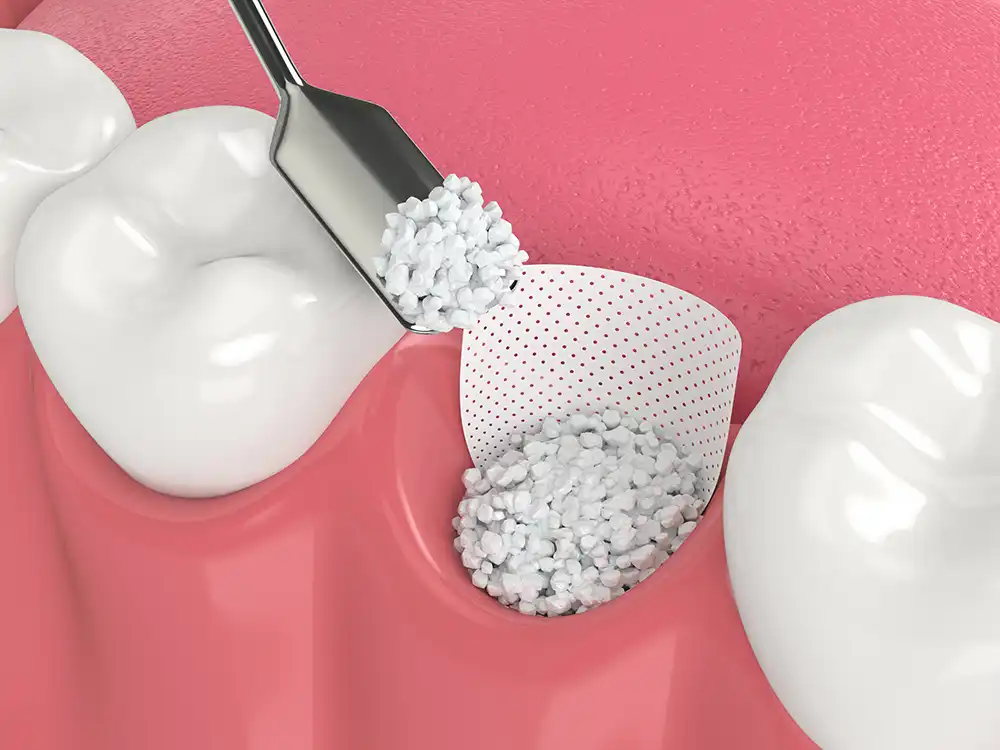
From implant planning to long term oral structure preservation, this procedure sits at the intersection of biology, technology, and patient centered care. Understanding Dental Bone Grafting is not about memorizing medical terms, but about grasping how bone, time, and treatment decisions interact.
In simple terms, Dental Bone Grafting refers to techniques designed to support or rebuild jawbone volume. Yet behind that simple definition lies a fascinating process involving cellular regeneration, material science, and careful clinical planning.
The Biological Logic Behind Dental Bone Grafting
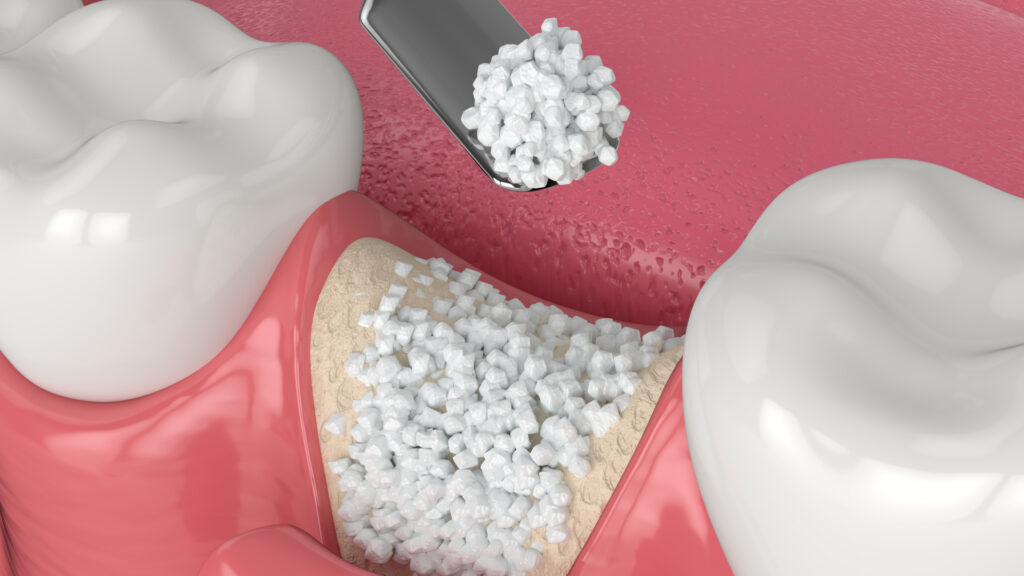
Bone is a living tissue, constantly adapting to stress and stimulation. When a tooth is lost, the jawbone in that area may gradually change. Dental Bone Grafting is built on the biological principle that bone can regenerate under the right conditions. Research in regenerative dentistry shows that bone responds positively when provided with a stable framework and biological signals.
From a scientific perspective, Dental Bone Grafting materials act as scaffolds. These scaffolds guide natural bone forming cells, allowing them to occupy the space and gradually integrate. Studies in oral biology suggest that this interaction between graft material and host bone plays a key role in long term structural stability. This is why Dental Bone Grafting is often discussed alongside implant planning and restorative dentistry.
Another important biological aspect of Dental Bone Grafting is vascularization. Blood supply supports cell migration and mineral deposition. Without it, even advanced grafting materials would struggle to integrate. This is why clinicians evaluate bone quality, soft tissue health, and healing capacity when considering Dental Bone Grafting approaches.
Types of Dental Bone Grafting Materials Explained
When people hear Dental Bone Grafting, they often assume there is only one material option. In reality, modern dentistry recognizes multiple categories, each with unique characteristics. Understanding these materials helps demystify the process.
Natural bone derived materials are often discussed in clinical literature on Dental Bone Grafting. These may originate from the patient or from carefully processed biological sources. Their advantage lies in compatibility and structural familiarity. Scientific reviews note that these materials often integrate predictably due to their similarity to native bone.
Synthetic alternatives also play a major role in Dental Bone Grafting. These materials are engineered to mimic mineral structures found in human bone. Research highlights their consistency and controlled resorption rates. In some analyses, synthetic grafts are praised for reducing variability while still supporting bone formation.
The choice of Dental Bone Grafting material is not arbitrary. It depends on anatomical needs, treatment goals, and timing considerations. By combining biological understanding with material science, Dental Bone Grafting continues to evolve as a refined dental solution.
Dental Bone Grafting and Implant Planning Synergy
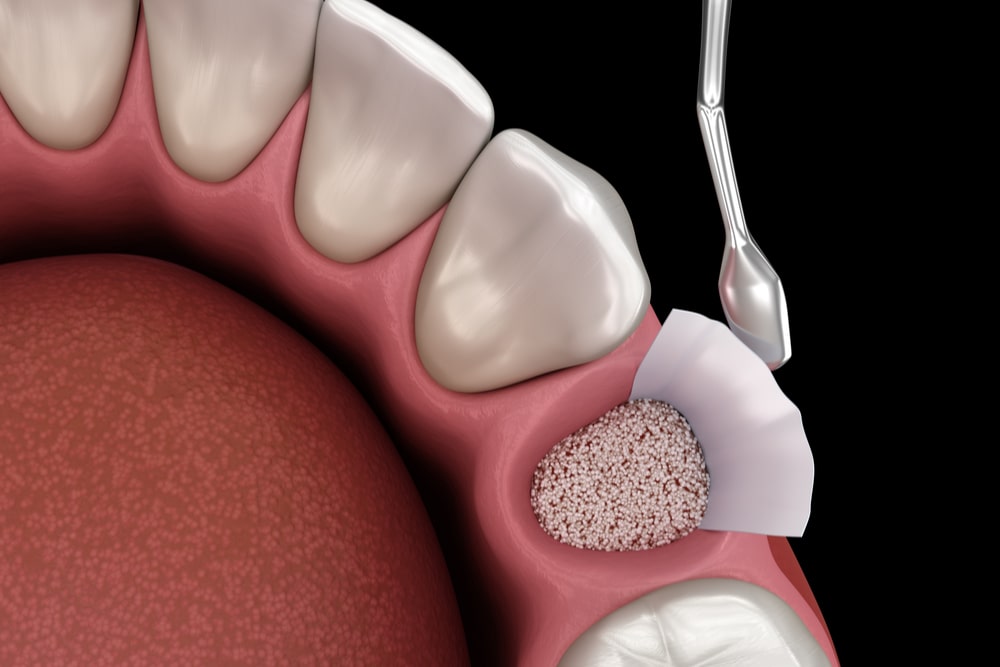
One of the most discussed contexts for Dental Bone Grafting is implant dentistry. Dental implants rely on stable bone support to function as intended. Without sufficient bone volume, implant placement may be compromised.
Clinical planning often evaluates whether Dental Bone Grafting can enhance the implant site. This does not automatically mean grafting is required, but it highlights how closely these procedures are linked. Research in implantology emphasizes that bone quality and quantity influence load distribution and long term outcomes.
Another interesting point is timing. Some protocols integrate Dental Bone Grafting simultaneously with implant placement, while others separate these steps. Scientific discussions suggest that both approaches can be effective depending on the biological environment. What matters most is careful assessment rather than a one size fits all mindset.
Healing Dynamics After Dental Bone Grafting
Healing is not a single moment but a sequence of biological events. Dental Bone Grafting initiates a cascade involving inflammation, cell recruitment, and gradual mineralization. Understanding this process helps explain why timelines can vary.
Early healing stages focus on stabilization and blood clot formation. This phase sets the stage for bone forming cells to migrate. In the context of Dental Bone Grafting, stability is often cited as a critical success factor in scientific observations.
Over time, graft materials interact with native bone. Studies describe a gradual replacement or integration process rather than an abrupt transformation. This explains why Dental Bone Grafting is often discussed in terms of months rather than days. The body works methodically, prioritizing structural integrity.
Risks, Limitations, and Scientific Debates
No scientific discussion of Dental Bone Grafting would be complete without acknowledging limitations. While the procedure is widely studied, outcomes can vary based on numerous variables. Bone metabolism, systemic health, and site specific conditions all play roles.
Some research debates focus on material resorption rates. If a Dental Bone Grafting material resorbs too quickly or too slowly, integration dynamics may change. This is why material selection continues to be a topic of academic discussion.
Another debated area is predictability. While many studies support the effectiveness of Dental Bone Grafting, researchers also emphasize the importance of individualized planning. These discussions contribute to ongoing innovation rather than undermining the procedure’s value.
Technological Advances in Dental Bone Grafting
Innovation has reshaped how Dental Bone Grafting is approached today. Imaging technologies allow clinicians to visualize bone architecture in remarkable detail. Three dimensional planning tools support more precise graft placement.
Biomaterials research also continues to expand the possibilities of Dental Bone Grafting. Surface treated grafts, growth factor integration, and composite materials are frequently explored in academic journals. These developments aim to enhance biological response while maintaining structural reliability.
Digital workflows further support Dental Bone Grafting by aligning planning, execution, and follow up. This integration reflects a broader trend in dentistry toward data driven and patient specific solutions.
Long Term Perspectives on Dental Bone Grafting Outcomes
Looking beyond immediate healing, Dental Bone Grafting is often evaluated for its long term contribution to oral structure. Research tracking outcomes over years suggests that graft supported bone can maintain volume under functional conditions.
From a patient perspective, Dental Bone Grafting is rarely an isolated topic. It intersects with aesthetics, function, and overall oral confidence. Scientific literature increasingly recognizes these broader quality of life considerations.