A bright smile is often associated with youth, confidence, and health. Many people choose veneers to achieve that polished look, expecting their teeth to stay permanently white. But what happens when staining appears months or years later? Can veneers actually be whitened like natural enamel, or is their color fixed forever?
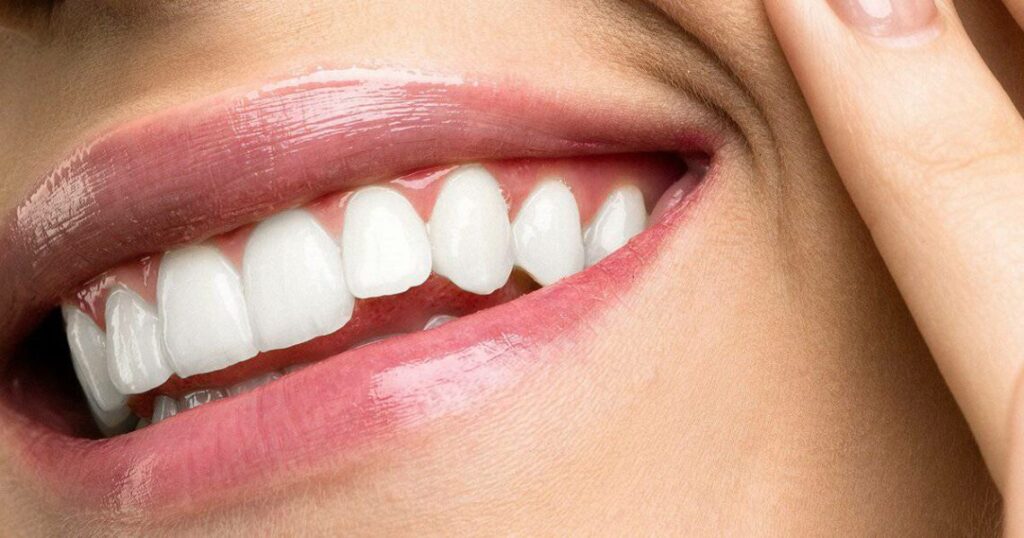
What Are veneers and Why Do They Look So Natural?
veneers are thin restorations bonded to the front surface of teeth to improve shape, symmetry, and color. They are commonly made from porcelain or composite resin. Both materials are designed to mimic enamel translucency by reflecting and scattering light in a similar way.
Porcelain laminates are fabricated in dental laboratories and fired at high temperatures. This process creates a dense ceramic surface that resists stains. Composite alternatives are applied directly and polished chairside. They are more affordable but slightly more porous, which means pigments may attach more easily over time.
From an optical standpoint, veneers appear bright because they combine color pigments with light transmission. Their shade is selected before bonding. Once attached, their color is relatively stable compared to natural enamel.
Do Whitening Products Work on veneers Like They Do on Teeth?
Whitening gels rely on peroxide molecules that penetrate enamel and break down internal pigments. Natural teeth contain microscopic tubules, allowing bleaching agents to diffuse inside and chemically lighten stains.
Ceramic veneers are different. Their surfaces are non porous and chemically inert. Because bleaching agents cannot enter the material, there is little or no whitening effect. In simple terms, the chemistry that works on enamel does not work on porcelain.
Composite veneers may show minimal improvement after polishing rather than bleaching. Surface stains can sometimes be reduced mechanically, but the base color remains unchanged. Therefore, whitening strips or trays mainly affect surrounding teeth, not the restorations themselves.
This mismatch can create uneven shades where natural teeth lighten while veneers stay the same.
Why Do veneers Change Color Over Time?
Although veneers are considered stain resistant, they are not completely stain proof. Discoloration usually comes from external rather than internal factors.
Several mechanisms contribute:
- Surface roughness that traps pigments
- Micro scratches from abrasive toothpaste
- Smoking related tar deposits
- Coffee, tea, or red wine exposure
- Aging of the bonding cement
Porcelain veneers resist deep staining but may collect superficial pigments. Composite options may absorb more color molecules because their resin matrix contains microscopic spaces.
Even the adhesive layer beneath veneers can darken slightly with time, subtly altering the overall shade. This is often mistaken for whitening failure, but it is actually material aging.
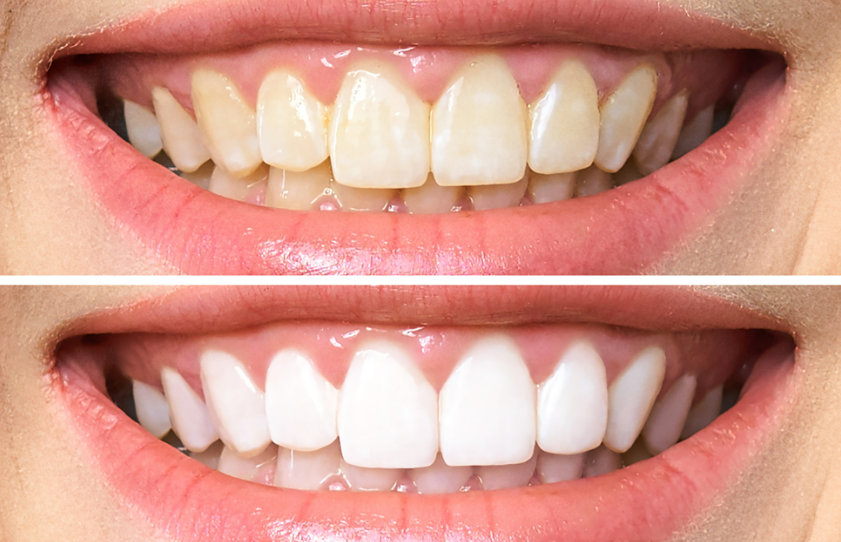
Professional Cleaning and Polishing for veneers
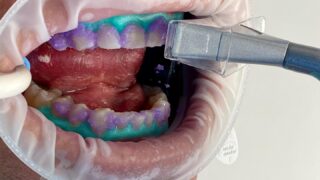
If veneers look dull rather than truly dark, professional polishing may restore brightness. Dental instruments and fine pastes can remove plaque, biofilm, and external stains without damaging the surface.
This process is mechanical rather than chemical. Instead of bleaching, the clinician smooths and cleans the outer layer. A smoother surface reflects light better, which visually enhances whiteness.
In many cases, patients are surprised at how much brighter their veneers appear after routine maintenance. It highlights an important distinction: sometimes the issue is buildup, not color change.
At Livera Clinic, preventive polishing is often recommended before considering replacement or aesthetic adjustments.
Replacement vs Adjustment: When veneers Cannot Be Whitened
When discoloration is intrinsic or the shade simply no longer matches personal expectations, whitening is not effective. In these situations, replacement becomes the predictable solution.
Here is a comparison table to clarify options:
| Situation | Possible Approach | Expected Outcome |
| Surface stains | Professional polishing | Brighter appearance |
| Mismatched natural teeth | Whitening natural teeth only | Possible uneven look |
| Intrinsic color change | Replacement of veneers | New shade selection |
| Minor roughness | Re polishing | Improved shine |
Replacing veneers allows complete control over shade selection. However, it involves additional cost and planning. Because of this, many people prefer preventive care first.
How to Keep veneers Bright for Years
Maintaining brightness is usually easier than correcting discoloration. While veneers are durable, daily habits still influence their appearance.
Consider these strategies:
- Use non abrasive toothpaste
- Avoid excessive whitening pastes
- Rinse after coffee or wine
- Schedule regular cleanings
- Limit smoking exposure
- Choose soft bristle brushes
These small steps reduce pigment accumulation and protect the glaze layer of veneers. A smoother surface equals better light reflection, which means a naturally brighter smile.
Consistency tends to matter more than intensive treatments.
The Science of Material Stability in Modern veneers
Recent laboratory studies suggest that modern ceramic veneers maintain color stability under simulated aging conditions. Researchers expose materials to thermal cycling, UV light, and staining solutions to mimic years of daily life.
Results often show minimal color change compared to natural enamel. This is one reason porcelain remains the preferred material for long term esthetics.
Composite veneers, while improving with newer nano hybrid technology, still show slightly higher pigment absorption. This does not mean they fail, but it explains why maintenance protocols differ.
From a scientific perspective, the durability of veneers depends more on material selection and surface finish than on whitening techniques.
Choosing the Right Shade Before Getting veneers
Because whitening afterward is limited, shade planning before placement becomes critical. Dentists often recommend whitening natural teeth first, then matching veneers to the newly brightened smile.
This sequence prevents future mismatches. If natural teeth darken later, they can be whitened again without affecting the restorations.
Careful planning transforms veneers from a short term cosmetic fix into a long term aesthetic investment. Shade selection, lighting conditions, and facial harmony all play roles in achieving a natural result.
A Balanced Perspective on Whitening and veneers
It is tempting to think of veneers as permanent white shields that never change. Reality is more nuanced. They are highly stable, yet still influenced by surface conditions and lifestyle.
Bleaching systems rarely modify their color. Cleaning, polishing, or replacement are usually more predictable approaches. With informed care and realistic expectations, veneers can maintain their brightness for many years.
At Livera Clinic, the goal is not simply whiter teeth, but sustainable aesthetics grounded in material science and individualized planning. Understanding how veneers behave empowers you to protect your smile rather than chase unnecessary treatments.
So, can veneers be whitened? Technically, not in the same way as natural enamel. Their shade is mostly fixed after placement. However, many cases of dullness respond well to professional cleaning or polishing. When color change is deeper, replacement offers the most reliable solution.
By learning how veneers interact with stains, light, and time, you gain control over the longevity of your results. Smart maintenance and thoughtful planning often matter more than whitening products.
A bright smile is not just chemistry. It is also care, consistency, and informed decisions.