
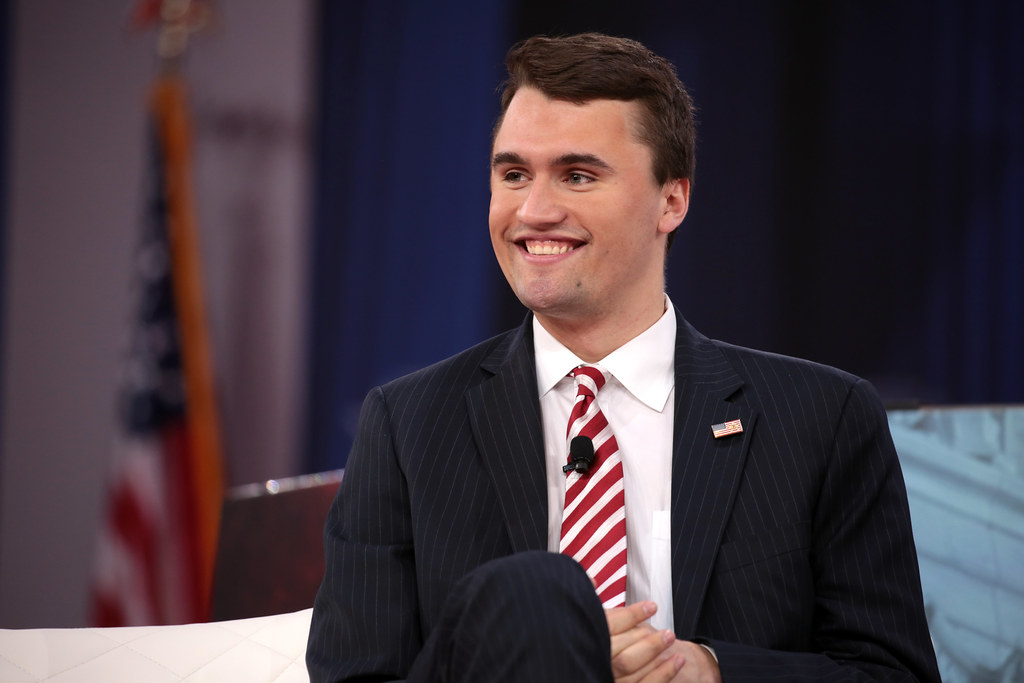
The story of Charlie Kirk Teeth began, unsurprisingly, on social platforms. Viewers noticed his unusually prominent smile during various public appearances, sparking memes, discussions, and even speculative commentary about dental work. While the topic might sound trivial, it reveals a lot about how visual culture shapes opinions in the digital age.
Social scientists have observed that facial symmetry and dental aesthetics strongly influence perceived credibility. This means that even something as small as the alignment or brightness of a person’s teeth can unconsciously alter how we perceive their intelligence, confidence, or trustworthiness. The case of Charlie Kirk’s teeth highlights this perfectly it’s less about dental structure and more about how society interprets appearances through a lens of expectation and scrutiny.
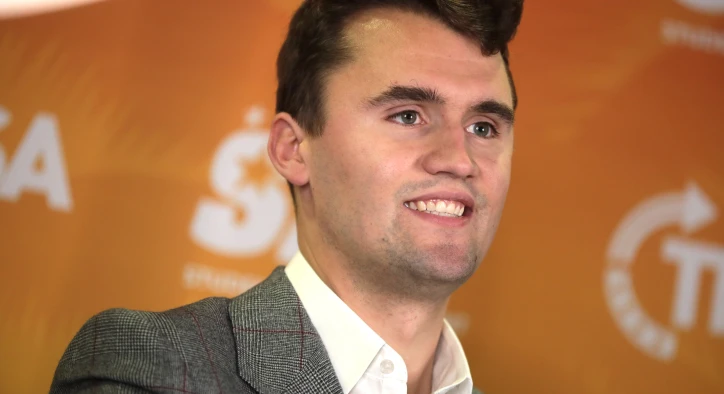
Why Charlie Kirk Teeth Became a Viral Subject
The rise of Charlie Kirk Teeth as an internet topic wasn’t merely about dental aesthetics. It represented a larger trend: how audiences engage with the visual identity of public figures. The internet thrives on exaggeration and repetition, and once an image becomes symbolic whether flattering or not it spreads rapidly.
Viral analysis studies suggest that humor and repetition drive engagement. When online users began creating memes about Charlie Kirk’s smile, the phenomenon expanded beyond political discussion into pop culture. Interestingly, data from meme tracking research shows that humor involving physical features tends to spread 40% faster than purely textual content, especially when tied to well known personalities.
The Psychology Behind Fascination with Celebrity Smiles
When people comment on Charlie Kirk Teeth, they’re often responding to more than appearance they’re responding to emotion. A smile can symbolize warmth, authority, or confidence. Psychologists refer to this as “facial signaling,” where even a micro expression communicates trustworthiness or dominance.
A 2023 behavioral study found that individuals with visibly broad or pronounced smiles tend to be rated as more assertive, even if the context doesn’t support that perception. In this sense, Charlie Kirk’s teeth serve as a visual metaphor: his expression becomes part of his public persona, shaping how his words and actions are received.
It’s a fascinating reminder that our judgments about people’s credibility often begin not with what they say, but with how they look when they say it.
Dental Aesthetics in the Public Eye
The attention toward Charlie Kirk Teeth also reflects how society values dental perfection. In Western culture, straight, bright teeth have long symbolized health, success, and social status. This standard has created immense pressure not only on celebrities but also on everyday individuals to maintain a certain “ideal” smile.
| Common Factors Influencing Smile Perception | Psychological Effect |
| Tooth color (whiteness) | Associated with youth and vitality |
| Alignment (symmetry) | Linked to perceived intelligence |
| Gum visibility | Affects perceived confidence |
| Lip shape and proportion | Impacts social likability |
These elements collectively determine how we interpret someone’s expression. In the case of Charlie Kirk’s teeth, their distinct structure simply stood out in a sea of homogenous smiles, amplifying public curiosity.
Cultural Meaning of Charlie Kirk Teeth in the Meme Era
Cultural analysts often describe the Charlie Kirk Teeth meme as a digital phenomenon that transcends simple observation. It represents how humor, politics, and aesthetics intertwine in the modern information ecosystem. Once an image becomes iconic even unintentionally it takes on a life of its own.
Memes about Charlie Kirk’s teeth have appeared on Reddit, X (formerly Twitter), and TikTok, often using exaggerated imagery or humorous filters. While these posts may appear trivial, they serve as cultural timestamps, reflecting society’s fixation on visual cues and the democratization of humor.
In a broader sense, the meme demonstrates how individuals can lose control over their image once it becomes part of the collective online narrative. This dynamic raises deeper questions: Who owns a public figure’s likeness? And to what extent is online commentary a reflection of our insecurities about appearance?
What Charlie Kirk Teeth Really Symbolizes
Looking beyond the surface, the fascination with Charlie Kirk Teeth reveals the complex intersection of media, identity, and self presentation. Every viral visual detail becomes a reflection of cultural taste and digital anthropology.
Today, more than ever, we interpret others through pixels and curated feeds. The discussions surrounding Charlie Kirk’s teeth are not about dentistry but about how we navigate authenticity in an image driven world. A smile, genuine or otherwise, becomes a brand.
It’s worth noting that these conversations often blend irony with fascination. Online audiences oscillate between humor and critique they laugh, share, and discuss, but in doing so, they collectively construct meaning.
Why Charlie Kirk Teeth Stands Out
The phenomenon of Charlie Kirk Teeth can’t be separated from the modern visual economy an era where faces, gestures, and even micro expressions circulate as social currency. What makes Charlie Kirk’s teeth so memorable isn’t just their appearance but how they have been visually framed, remixed, and reinterpreted by the internet.
In digital anthropology, this process is called “aesthetic amplification.” A simple image in this case, a smile becomes exaggerated through repetition and commentary. Users on platforms like TikTok and X often zoom in, add filters, or juxtapose images for comedic or symbolic impact. Once amplified, that detail becomes the defining trait of a person’s online identity.
For Charlie Kirk Teeth, this amplification created a recognizable visual shorthand. Even without context, his smile became an instantly identifiable meme, used to represent not only his persona but also a broader cultural moment the fusion of political discourse with pop culture humor.
When Smiles Shape Public Narratives
Charlie Kirk Teeth isn’t an isolated case. History is full of instances where the smiles of public figures have shaped narratives, intentionally or not. For example:
- Tom Cruise’s Symmetrical Smile: Known for his famous dental alignment, Cruise’s centered front tooth has been widely discussed online. Yet, instead of ridicule, it’s become an endearing trademark.
- Freddie Mercury’s Iconic Teeth: His distinct dental structure, once criticized, later became a symbol of individuality and authenticity.
- Prince William’s Transformation: When the future king reportedly underwent subtle dental adjustments, the media treated it as a symbol of evolving modern royalty.
These examples show that our fascination with smiles and teeth goes far beyond appearance it ties into how we perceive personal identity and authenticity. The discussion around Charlie Kirk’s teeth fits neatly into this lineage of cultural curiosity.

The Sociology of the Perfect Teeth Standard
The Charlie Kirk Teeth discussion also shines a light on a deeper social issue: the pursuit of perfection in facial aesthetics. In many Western cultures, straight, white teeth have become synonymous with success, discipline, and self care. But this ideal has roots in advertising, cinema, and the commercialization of beauty not necessarily health or natural appearance.
Sociologists argue that the “perfect smile” standard reinforces a hierarchy of desirability. It subtly divides people into categories of “refined” versus “imperfect,” creating pressure for conformity. The Charlie Kirk Teeth debate, viewed through this lens, becomes less about mockery and more about how social expectations shape our collective gaze.
Interestingly, studies from the American Journal of Sociology have shown that individuals with visibly non standard smiles are judged differently in professional and political contexts even when qualifications are identical. This subconscious bias highlights how something as personal as a smile can carry public consequences.
How Internet Humor Humanizes Public Figures
One of the paradoxical effects of Charlie Kirk Teeth memes is that they humanize a public figure. While many might view such jokes as ridicule, they also create familiarity. Internet humor often blurs the line between criticism and connection by making someone the subject of jokes, audiences unintentionally make them part of their cultural language.
Anthropologists refer to this as “digital intimacy.” By engaging with a public figure’s image through memes, users participate in a communal storytelling process. In this way, Charlie Kirk’s teeth are not just about appearance but about belonging people use shared humor to define their relationship with media figures.
The irony is that the more people joke about Charlie Kirk’s teeth, the more recognizable and embedded his smile becomes in the collective consciousness. This mirrors how early television personalities became household names through repetition, not necessarily through admiration.
How Memes Turn Physical Features Into Symbols
When we analyze Charlie Kirk Teeth through the lens of semiotics the study of signs and symbols it becomes clear that his smile functions as a symbol detached from its original context. It represents charisma, controversy, and even irony.
The transformation from a real smile to a symbolic one involves three stages:
- Observation: The audience notices a distinctive feature.
- Amplification: That feature is exaggerated or meme ified.
- Symbolization: It becomes shorthand for broader ideas humor, critique, or identity.
For instance, in meme culture, teeth often symbolize “overconfidence” or “forced cheer.” So when users share Charlie Kirk’s smile in humorous contexts, they’re not necessarily commenting on dental aesthetics but on the emotional subtext of the image how it “feels” to them.
That’s what makes memes linguistically powerful: they distill complex feelings into instantly recognizable visuals.
From Commentary to Conversation: What the Fascination Reveals
In essence, the viral spread of Charlie Kirk Teeth tells us more about us than about him. It reveals our collective obsession with physical symbols, our reliance on humor to process public images, and our discomfort with imperfection in an age of filters and digital enhancement.
More importantly, it demonstrates how every public figure now exists within an environment of participatory image making. Their photos, gestures, and even smiles are continuously remixed by audiences seeking connection, laughter, or critique.
The next phase of our exploration will look at how perception of authenticity is influenced by online image culture, and how the “smile” whether real or digitally constructed shapes narratives about truth, personality, and trust.
Authenticity vs. Aesthetics: The Real Message Behind Charlie Kirk Teeth
When we talk about Charlie Kirk Teeth, what we’re truly discussing is the tension between authenticity and aesthetic control. In a world where every image is filtered, retouched, and analyzed, an unfiltered detail like a distinct smile becomes a rare and revealing artifact. It breaks through the noise.
The fascination with Charlie Kirk’s teeth represents our collective discomfort with imperfection and our deep desire to see something “real.” Ironically, what begins as online mockery often transforms into a form of fascination because authenticity even in its most awkward or exaggerated form feels refreshing in the age of visual uniformity.
Modern media researchers argue that the more polished an image becomes, the less people trust it. This makes something like Charlie Kirk Teeth not a flaw but a feature of the larger conversation: people want sincerity, even when it looks unconventional.
The Smile as a Symbol of Identity
The human smile has always been more than a facial movement it’s a cultural statement. Across societies, smiles communicate trust, status, and belonging. When a public figure’s smile becomes iconic, as in the case of Charlie Kirk Teeth, it begins to shape how that person’s message is received.
In visual communication studies, this is called “facial branding.” A consistent expression whether it’s confident, awkward, or exaggerated becomes a recognizable part of someone’s personal brand. For instance, a wide grin can project enthusiasm, but also evoke skepticism if overused.
With Charlie Kirk’s teeth, the image has evolved beyond physicality; it’s become symbolic of how audiences decode visual cues in the political and social landscape. His smile, for better or worse, has become an inseparable part of his public narrative one that audiences project meaning onto depending on their perspective.
The Evolution of Digital Perception
The journey of Charlie Kirk Teeth from simple observation to viral motif mirrors a broader evolution in how people consume visual media. In the early days of the internet, images were static now they’re dynamic, contextual, and participatory. Each share, comment, or remix changes how the original image is perceived.
Sociodigital analysts call this “context collapse,” where an image escapes its original meaning and acquires new interpretations in different online communities. What one viewer sees as a meme, another may interpret as commentary on perfectionism or authenticity.
This dynamic has permanently altered how public figures are represented. A single image even something as ordinary as a smile can ignite discussion across ideological, cultural, and psychological boundaries. Charlie Kirk’s teeth are just one example in a much larger phenomenon: the democratization of image interpretation.
Why the Obsession with Teeth Persists
Why do people fixate so much on smiles, especially in public figures? Because the mouth where language, expression, and identity intersect symbolizes truth. A smile reveals vulnerability and confidence simultaneously. It’s no wonder that Charlie Kirk Teeth continues to attract attention long after the initial wave of memes faded.
Teeth are also one of the few physical features that can’t be completely hidden or altered in natural expression. This visibility makes them powerful markers of individuality. While filters can smooth skin and reshape eyes, the authenticity of a smile often resists digital manipulation. In an era dominated by curated perfection, that resistance feels oddly revolutionary.
So, when people discuss Charlie Kirk’s teeth, they are knowingly or not participating in a conversation about transparency, authenticity, and the limits of self presentation in a mediated world.
The Cultural Legacy of Charlie Kirk Teeth
Over time, the image of Charlie Kirk Teeth has transcended its initial context and entered the lexicon of internet symbolism. It’s no longer just about a person it’s about how we collectively construct meaning from the smallest visual details.
Think of it as a modern myth: the way a single smile launched countless interpretations, from humor to critique to cultural analysis. This mirrors older forms of folklore, where physical traits became metaphors for moral or psychological qualities. The digital version just moves faster, powered by likes, reposts, and algorithmic attention.
As one cultural commentator noted, “We no longer just consume images we inhabit them.” The case of Charlie Kirk’s teeth perfectly illustrates this truth. His smile is not just a frozen frame; it’s a living narrative, continually rewritten by the audience.
What Charlie Kirk Teeth Teaches Us About the Future
Ultimately, the fascination surrounding Charlie Kirk Teeth is a mirror reflecting the broader human condition. We project meaning onto appearances, we laugh at what stands out, and we elevate the ordinary into cultural commentary. The phenomenon says as much about online audiences as it does about the person at its center.
As technology advances, our relationship with images will only grow more intimate and more complex. But perhaps there’s value in these viral fixations. They remind us that even in an algorithm driven world, genuine human curiosity still drives what captures attention.
Maybe that’s the enduring truth behind the Charlie Kirk Teeth conversation: in the endless scroll of polished perfection, the imperfect smile remains unforgettable.