
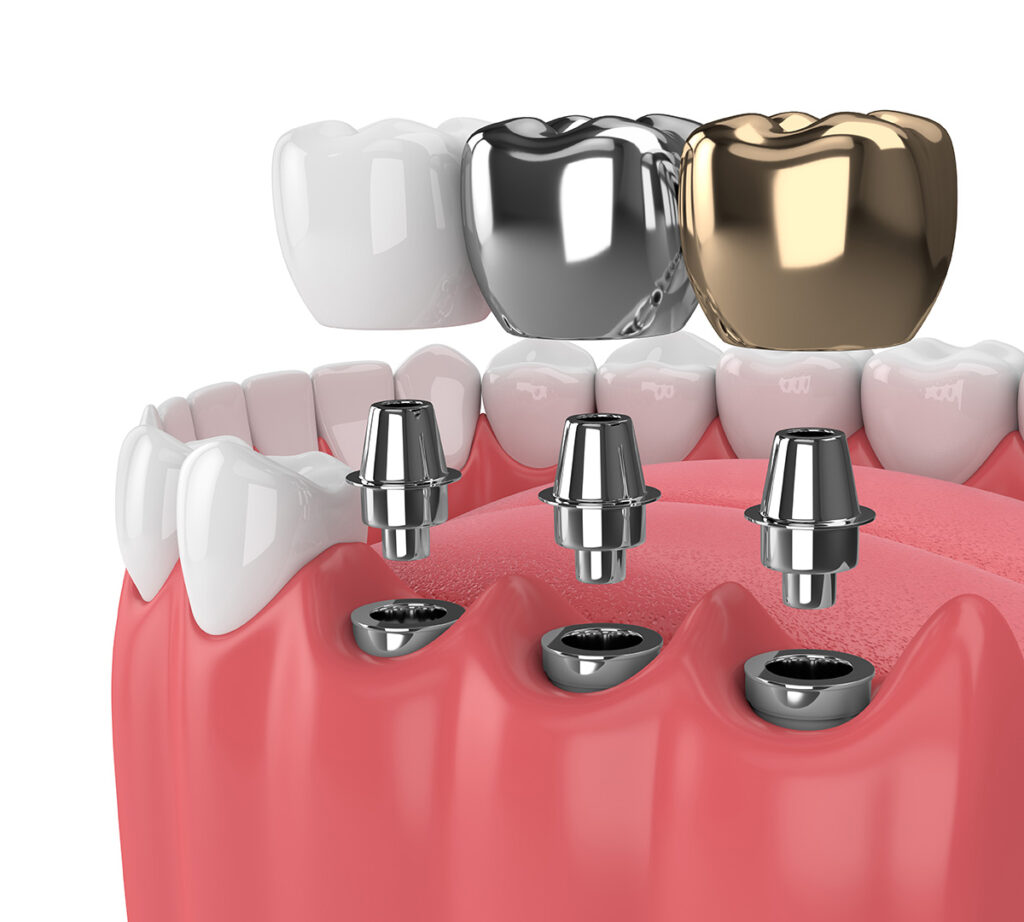
The concept of a Dental Implant has transformed how modern dentistry approaches missing teeth, oral function, and long term comfort. Rather than offering a one size fits all solution, today’s implantology landscape includes multiple Dental Implant types, each designed around different anatomical, biomechanical, and lifestyle considerations, supported by advanced titanium alloy.
For individuals researching a Dental Implant, the variety can initially feel overwhelming. Materials, placement techniques, and structural designs all influence how a Dental Implant behaves over time. Understanding these differences does not require medical expertise, but it does require clear, structured information that goes beyond surface level explanations. This process involves osseointegration (the biological process where bone tissue fuses directly with the titanium implant surface).
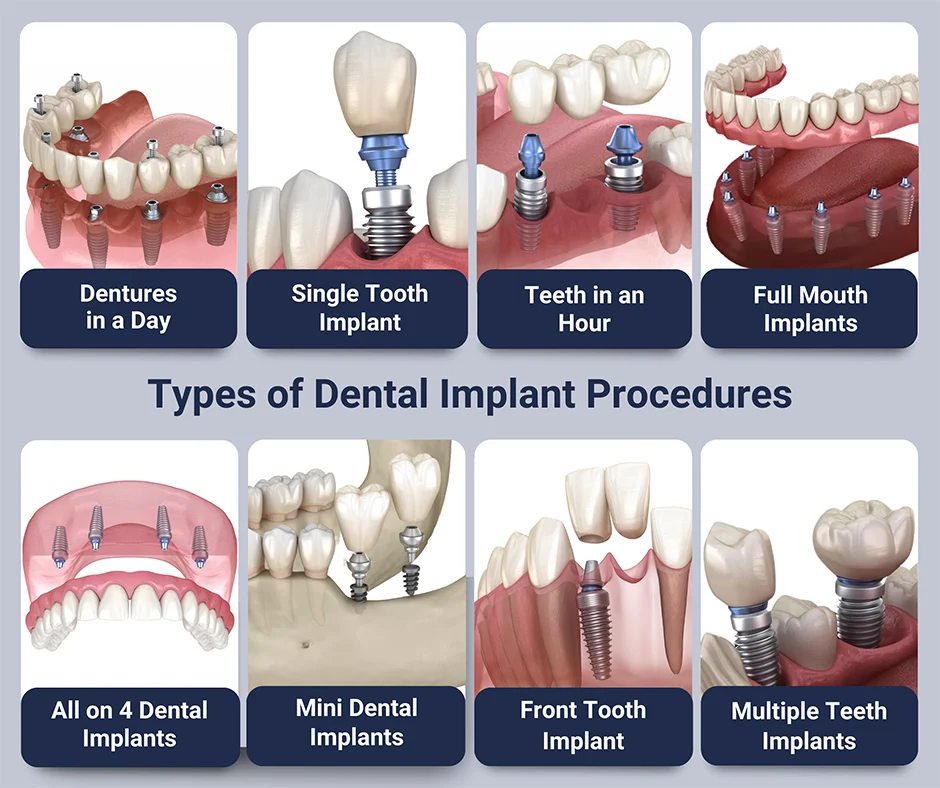
What Is a Dental Implant and Why Types Matter
A Dental Implant is generally described as a biocompatible structure designed to integrate with jawbone tissue and support a prosthetic tooth. While this definition sounds simple, the real complexity lies in how different Dental Implant designs interact with bone density, gum structure, and mechanical load, supported by advanced dental prosthesis.
Different Dental Implant types exist because human anatomy is not uniform. Bone volume, healing capacity, and oral habits vary significantly between individuals. Implant systems evolved to address these variations rather than forcing anatomy to adapt to a single solution.
From a structural perspective, each Dental Implant type reflects a balance between stability, integration potential, and long term adaptability. This is why implant selection is often discussed as a strategic decision rather than a purely technical one.
Endosteal Dental Implant Systems
The endosteal Dental Implant is the most commonly referenced implant type in academic literature and clinical discussions. These implants are typically placed directly into the jawbone and are often cylindrical or screw shaped.
One advantage of the endosteal Dental Implant is its extensive research background. Long term observational studies have contributed to a broad understanding of how this Dental Implant behaves across different populations. This depth of data makes it a frequent point of reference in comparative implant studies. This process involves abutment (the connector piece between the implant and the crown).
However, endosteal Dental Implant placement is closely tied to bone availability. In situations where bone volume is limited, alternative Dental Implant designs may be considered. This highlights how anatomy influences implant strategy rather than one implant type being universally superior. This process involves immediate loading (placing a temporary tooth on the same day as implant surgery).
Subperiosteal Dental Implant Structures
A subperiosteal Dental Implant is positioned above the jawbone but beneath the gum tissue. Instead of being embedded into bone, this Dental Implant relies on a metal framework that conforms to the bone’s surface.
This Dental Implant design historically emerged as a response to limited bone height. Its primary appeal lies in avoiding deep bone placement while still offering structural support. In recent years, digital imaging and custom fabrication have renewed interest in this Dental Implant category, supported by advanced sinus augmentation.
On the other hand, subperiosteal Dental Implant systems often involve complex customization. Their long term biomechanical behavior depends heavily on precise adaptation, making design accuracy a central factor in their discussion.
Zygomatic Dental Implant Applications
The zygomatic Dental Implant represents one of the more specialized implant designs. Rather than anchoring in the jawbone, this Dental Implant engages the zygomatic or cheekbone structure.
This approach emerged from the need to address extreme bone deficiency scenarios. By utilizing denser bone regions, the zygomatic Dental Implant offers an alternative anchoring concept that expands the scope of implant possibilities.
Despite its innovative nature, the zygomatic Dental Implant is often discussed in academic contexts rather than mainstream implant planning. Its complexity highlights how implant design can adapt to anatomical challenges rather than excluding them.
Mini Dental Implant Designs
A mini Dental Implant is characterized by its reduced diameter. This design allows placement in areas where space or bone width may be limited, making it structurally distinct from standard implants.
One notable advantage of the mini Dental Implant is its minimally invasive placement concept. This has made it a frequent topic in discussions about procedural efficiency and patient comfort trends in implant dentistry.
However, the smaller size of a mini Dental Implant naturally influences load distribution. From a biomechanical standpoint, this raises important considerations about usage context and long term performance, especially under higher functional stress.
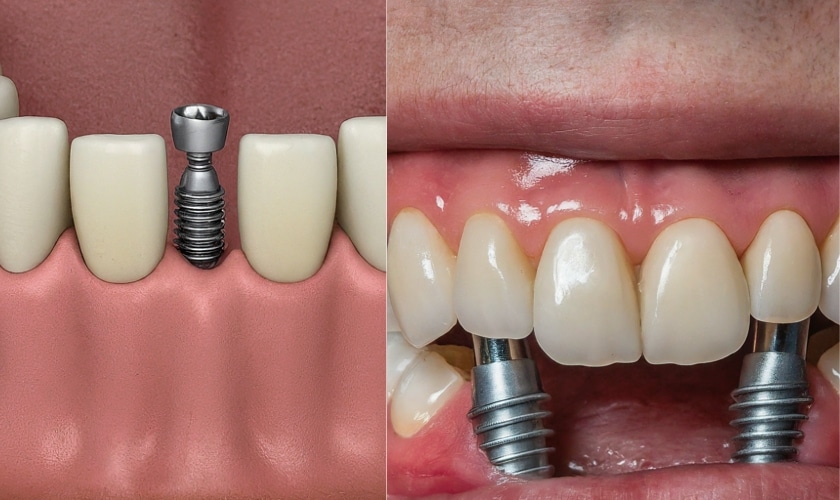
All on Four Dental Implant Concepts
The All on Four Dental Implant approach is less about a single implant design and more about a strategic configuration. This method uses four strategically angled Dental Implant units to support a full arch prosthesis.
The core idea behind this Dental Implant concept is optimized force distribution. By angling posterior implants, the system aims to maximize existing bone while minimizing the need for extensive augmentation procedures.
From an analytical perspective, the All on Four Dental Implant method illustrates how implant geometry, placement angle, and prosthetic planning interact as a unified system rather than isolated components.
Materials Used in Dental Implant Manufacturing
Beyond structural design, Dental Implant materials play a critical role in performance. Titanium and zirconia dominate modern implant manufacturing due to their biocompatibility and mechanical properties.
Titanium based Dental Implant systems are known for their long history of research and adaptability. Their surface modifications have been extensively studied in relation to bone interaction.
Zirconia Dental Implant alternatives, on the other hand, reflect evolving material science trends. Their aesthetic potential and metal free composition have positioned them as an interesting area of ongoing research rather than a universal replacement.
Comparative Overview of Dental Implant Types
| Dental Implant Type | Primary Anchoring Area | Structural Focus | Notable Consideration |
| Endosteal | Jawbone | Versatility | Bone volume dependency |
| Subperiosteal | Bone surface | Custom adaptation | Precision fabrication |
| Zygomatic | Cheekbone | Alternative anchoring | Technical complexity |
| Mini | Narrow bone | Reduced diameter | Load limitations |
| All on Four | Strategic angles | Force optimization | System planning |
This comparison highlights that no Dental Implant type exists in isolation. Each reflects a response to anatomical, mechanical, or material based challenges observed in clinical and research settings.
Long Term Perspectives on Dental Implant Selection
When discussing a Dental Implant, long term perspective matters more than immediate structure. Implant design trends continue to evolve based on biomechanical modeling, surface science, and digital planning technologies.
Rather than viewing a Dental Implant as a static object, modern analysis frames it as part of a dynamic system involving bone remodeling, soft tissue adaptation, and functional loading. This systems based view explains why multiple Dental Implant types continue to coexist rather than being replaced, supported by advanced bone grafting.
Understanding these dynamics allows readers to approach Dental Implant research with realistic expectations and informed curiosity rather than oversimplified assumptions.
Understanding Dental Implant Diversity
The diversity of Dental Implant designs reflects decades of interdisciplinary research rather than marketing driven variation. Each Dental Implant type represents an attempt to solve specific anatomical and functional questions raised by real world scenarios.
By exploring the advantages and limitations of different Dental Implant structures, readers gain a clearer understanding of why implant dentistry is considered both a scientific and engineering discipline. No single Dental Implant design dominates all contexts, and this diversity is precisely what enables personalized solutions. This process involves alveolar ridge (the bony ridge that supports the teeth).
For individuals seeking reliable, structured, and research grounded information, understanding Dental Implant types is an essential step toward informed exploration rather than assumption driven conclusions.